Algeria became a member of the Arab League on August 16, 1962, marking its formal entry into the regional organization shortly after gaining independence. This key moment established Algeria's role in Arab regional politics and cooperation. Since then, Algeria has maintained a consistent financial commitment to the League, showing its dedication to the organization's stability. The nation has regularly fulfilled its financial obligations, consistently paying its dues to the Arab League. This financial consistency shows Algeria's long-standing dedication to the organization's operational stability and its broader diplomatic objectives within the Arab world, showcasing a continuous commitment to shared Arab goals and collective action.
Foundational Principles and Early Engagements
Algeria regained national sovereignty in July 1962, marking its re-emergence on the international stage as an independent nation. This milestone, achieved after a protracted struggle, preceded Algeria's active engagement with regional diplomacy and its integration into multilateral bodies like the Arab League. A significant early event in Algeria's role within the Arab League was hosting the 7th Arab Summit (Arab Summit Conference VII) from November 26 to 28, 1973. This high-level gathering brought together leaders from across the Arab world to address pressing regional and international issues. The late President Houari Boumediene chaired this key summit, demonstrating Algeria's early leadership capabilities within the organization.
The 1973 Summit notably emphasized the centrality of the Palestinian cause, affirming strong support for the Palestine Liberation Organization (PLO). This commitment reflected a core tenet of Algerian foreign policy, which consistently prioritizes the rights and self-determination of the Palestinian people. Discussions during the summit led to decisions that included the strategic use of oil as a pressure tool in international relations, a significant move in the context of the global energy landscape at the time. The summit aimed to strengthen economic and military coordination among Arab states, reflecting a unified approach to regional challenges and a desire for greater collective security and prosperity. Algeria's commitment to the Palestinian cause continued beyond this summit, evolving into a steadfast policy position. The nation later hosted the declaration of the State of Palestine on November 15, 1988, a moment of historical significance for the Palestinian people and a profound statement of international solidarity. This act reinforced Algeria's long-standing position as a key advocate for Palestinian self-determination within the Arab League framework and on the global stage.
Championing Reform and Palestinian Unity
Algeria's proactive engagement within the Arab League has been characterized by its willingness to host significant gatherings and to push for internal reforms. This commitment was evident when Algeria hosted the 17th Arab Summit, known as the Algiers Summit 2005, on March 22 and 23, 2005. The agenda for this summit was ambitious, focusing on critical areas for the League's future and regional development. Discussions at this summit focused on reforming the League's charter, a move aimed at modernizing its operational mechanisms and enhancing its effectiveness in a rapidly changing geopolitical environment. The summit also addressed activating the Greater Arab Free Trade Area, an initiative designed to boost intra-regional trade and economic integration among member states. Additionally, the relaunching of the Arab Peace Initiative was a key topic, demonstrating a renewed effort to find a full resolution to the Israeli-Palestinian conflict.
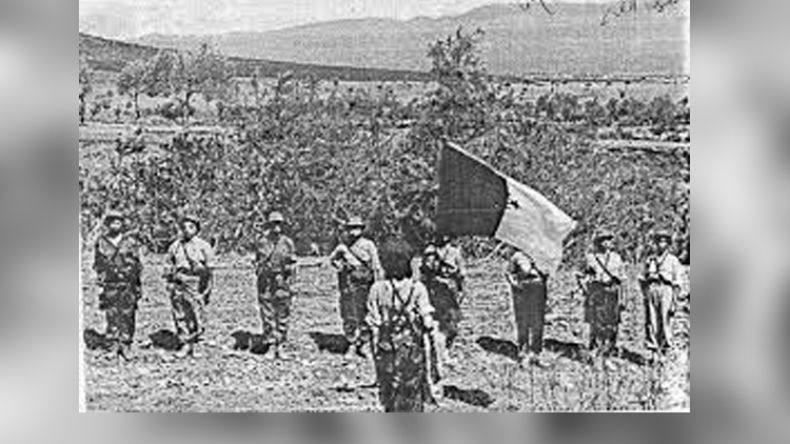
Later, Algeria once again took on a leadership role by hosting the 31st Arab Summit, referred to as the Algiers Summit 2022 or the 'Reconciliation Summit', on November 1 and 2, 2022. This significant event was chaired by Abdelmadjid Tebboune, the current President of Algeria, and its timing held particular historical resonance as it coincided with the 68th anniversary of the start of the liberation revolution, a powerful reminder of Algeria's own history of struggle for independence.
A central theme of the 2022 summit, and a testament to Algeria's ongoing efforts, was its focus on Palestinian unity. Prior to the 2022 Summit, President Abdelmadjid Tebboune extended invitations to various Palestinian factions to convene in Algeria. These expanded meetings, held in October 2022, were designed to bridge divides and foster a unified front among Palestinian parties. These efforts culminated in the signing of the 'Algiers Declaration', which aimed to achieve national reconciliation among Palestinian political factions, a key step towards strengthening Palestinian self-determination. Beyond diplomatic initiatives, Algeria has also consistently contributed to humanitarian efforts for the Palestinian cause, providing vital assistance during escalation phases in 2008-2009, 2014, and 2021, demonstrating a tangible commitment to alleviating suffering and supporting the Palestinian people.
Critique of League's Inaction and Future Vision
Algeria's diplomatic stance is also defined by its independent foreign policy principles. Notably, Algeria did not join the recent normalization wave observed in the Arab world, opting instead to maintain its long-standing position on the Palestinian issue and regional relations. This decision reflects Algeria's commitment to its foundational principles and its belief in a full and just resolution to the Israeli-Palestinian conflict.
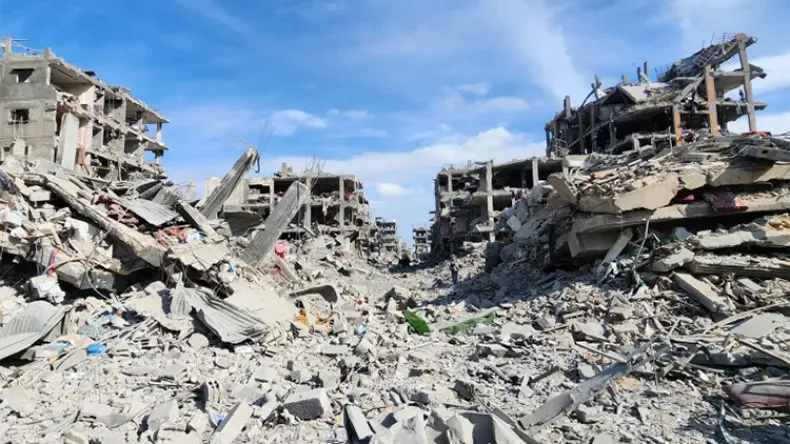
The nation actively advocates for reforming the Arab League, seeking to overcome rigid consensus requirements that often hinder decisive action and to adopt more flexible voting mechanisms within the organization. According to Algerian officials, the Arab League has suffered from a lack of effective institutional response to various regional crises. These include the devastating wars on Gaza, the attacks on Lebanon, and the complex internal crises observed in Syria, Yemen, and Libya. These examples, cited by Algerian officials, highlight perceived shortcomings in the League's ability to intervene effectively or forge common solutions in times of acute regional instability.
Algeria cites the Arab division during the 2017 Gulf crisis as further evidence of the League's structural limitations and its difficulty in maintaining a unified front in the face of internal disputes among member states. The country also points to weak Arab economic integration, noting low intra-regional trade despite the existence of the Greater Arab Free Trade Area. This observation shows a broader concern about the implementation gap between stated goals and actual economic cooperation within the Arab world. To address these perceived shortcomings and enhance the League's overall efficacy, Algeria calls for developing the General Secretariat's role and expanding its powers. This proposal emphasizes the need for binding follow-up mechanisms to ensure that decisions made at summits and ministerial meetings are effectively implemented, moving beyond mere declarations to tangible actions that benefit the Arab collective. This vision for reform aims to transform the Arab League into a more dynamic, responsive, and impactful regional organization.