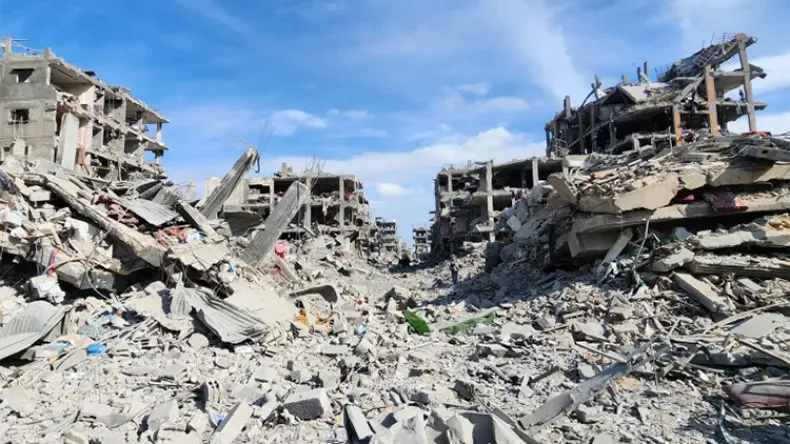
Gaza faces an "engineered scarcity" of water, described as creating an unlivable environment after approximately 90% of its water and sanitation infrastructure was destroyed over two and a half years of war due to Israeli policies and attacks. The collapse of the water system in Gaza has coincided with a severe deterioration of the health sector, as access to clean water is considered the cornerstone of public health. This critical situation is noted in a report by Doctors Without Borders (منظمة “أطباء بلا حدود”), which is the third such warning from the organization regarding policies against residents of the besieged Gaza Strip.
Systematic Destruction and Blockades
The destruction of water and sanitation infrastructure is described as a systematic and direct targeting of residents' means of survival, aimed at encouraging displacement. Reports indicated that one-third of requests to import water equipment, including pumps, sterilization units, and desalination units, were either rejected or ignored. Items such as pipes, fuel, cement, and chlorine are restricted by Israel, which classifies them as 'dual use' materials. Doctors Without Borders (MSF) reported that Israel frequently blocked essential infrastructure, such as water pumps, from entering Gaza in late 2025.
Earlier this month, shrapnel from an Israeli airstrike damaged the power line to the Deir al-Balah desalination plant, causing it to operate at 20% capacity for a week. A separate strike on the al-Zein well in northern Gaza killed one water engineer and injured four others, leading to structural damage at a critical water source. In mid-April, Israeli forces killed a water engineer and two drivers transporting water, and injured two other drivers, over a four-day period. The water crisis in Gaza is characterized as deliberate and political, rather than accidental. MSF is Gaza's second largest provider of water. An MSF report stated, "There are also not enough pipes available to create distribution networks." Gaza requires 100 trucks to empty septic tanks, but only 15 worn-out trucks remain operational.
Daily Struggle for Survival
Eighty percent of people in Gaza rely on water delivered by trucks to central distribution points, according to the WASH Cluster. The average daily supply across Gaza is only 7 litres of drinking water and 16 litres of domestic water per person. Many residents do not have access to even the minimum 6 litres of clean drinking water daily, despite humanitarian agencies estimating that individuals need at least 15 litres (4 gallons) daily for cleaning, washing, drinking, and bathing. In the Khan Younis area, one water truck serves more than 50 families, with deliveries occurring only once a week in the area of al-Qarara. Displaced Palestinians gathered to collect water from a truck at a makeshift tent camp in Khan Younis, southern Gaza Strip, on Thursday, April 30, 2026.
Beyond drinking water, the price of soap and other cleaning supplies has doubled over the last month in Gaza. A 7kg pack of laundry detergent, for instance, has risen from 50 shekels to 100 shekels or more. Children growing up in an environment lacking clean water are exposed to malnutrition, stunted growth, and weakened immunity, which can lead to higher mortality rates. The contamination of groundwater due to the destruction of sewage networks may persist for years, complicating future reconstruction efforts. Water shortages have significant consequences for Gaza’s 2.1 million people, fueling sewage overflows, sanitation failures, and the spread of infections.
Conflicting Narratives and Law
Israel states it provides clean water through three pipelines and allows passage from Egypt via a fourth, contributing to an estimated supply of 70,000 cubic metres a day, which provides roughly 30-33.3 liters per person. COGAT has stated it helped ensure pipelines can bring in enough water for sanitation, sewage, drinking, and washing, and has not limited bottled water. Reports indicate Israel no longer limits the import of water. Conversely, Doctors Without Borders (MSF) accused Israel of using water as a weapon of war and "systemically depriving" people. COGAT denied MSF's allegations, calling them "a desperate attempt to regain legitimacy." International humanitarian law prohibits the use of essential resources, including water, as a means of collective punishment and a tool for killing. Water shortages in Gaza have persisted more than six months after a ceasefire between Israel and Hamas stopped most of the fighting. Approximately 1.1 million people live in camps without sewage networks, relying on absorption pits that frequently overflow.