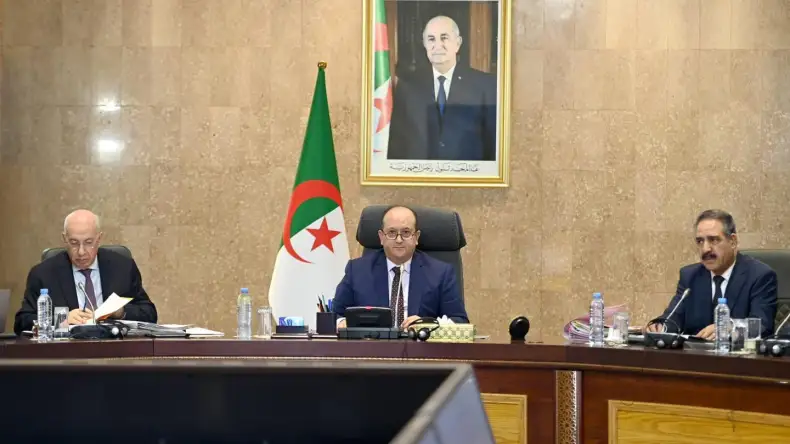
Prime Minister Seifeddine Ghrib chaired a government meeting on Wednesday, focusing on a full agenda that included health and development files. The high-level session was specifically dedicated to studying these vital files in detail and to following up on the progress of strategic projects across key sectors, notably transport and water resources. This gathering notes the government's continued commitment to national development and improving public services.
Health Sector Reforms
During the meeting, the government thoroughly reviewed a draft executive decree. This significant legislative proposal outlines the specific conditions and procedures that will govern the prescribing and dispensing of pharmaceutical materials intended for human use. The proposed decree directly addresses the critical regulatory framework essential for these processes within the national healthcare system, aiming to establish clear and enforceable guidelines. The initiative is designed to standardize practices across the pharmaceutical supply chain, ensuring both safety and efficacy in the distribution and application of medicines throughout the country. Officials indicated that the decree involves full guidelines, meticulously crafted to enhance pharmaceutical oversight and strengthen public health protections. While further details regarding the specific mechanisms and criteria included in the draft decree were not immediately released to the public, the detailed study of this document marks a significant and proactive step in updating health sector regulations. The government’s focused attention on this area shows a concerted effort to refine pharmaceutical management, improve patient safety, and ultimately enhance overall public health outcomes for all citizens. This move is expected to streamline processes and foster greater accountability within the medical supply chain.
Major Transport Infrastructure
A substantial portion of the meeting was dedicated to the transport sector, specifically the government's study of a draft executive decree. This decree is key as it aims to declare the public utility of a project involving the construction of a new, ambitious railway line. This extensive railway network is strategically planned to connect the capital city of Algiers with Tamanrasset, a major hub in the south, with particular attention given to the development of two critical sections: El Ménéa–Ain Salah and Ain Salah–Tamanrasset. The El Ménéa–Ain Salah section of the proposed railway line is designed to extend for a considerable distance of 410 kilometers, marking a significant contribution to the overall infrastructure development in the region. Following this, the Ain Salah–Tamanrasset section is projected to span an even greater length of 676 kilometers, further extending the network deep into the southern territories and enhancing regional connectivity. The entire strategic project for the new railway line is projected to exceed 2400 kilometers in length, aiming to fundamentally enhance connectivity, facilitate economic activity, and integrate various regions across the country. This large-scale project is envisioned as a cornerstone of national development, promising to revolutionize internal transport and logistics.
Water Resource Development
In the vital area of water resources, the government received a full progress report detailing the advanced stages of completion and connection work for the desalination plant outlet located in Fouka. This key project is specifically designed to substantially enhance the water supply to areas situated west of Algiers, addressing growing demands and ensuring water security for these communities. Officials also meticulously tracked the advancement of another significant initiative: a project focused on providing reliable drinking water to the town of Tin Zouatine, located in the remote In Guezzam Province. This essential water supply project sources its water from the Tinzrouft water field, aiming to effectively address the region's pressing potable water needs and improve living conditions for its inhabitants. Both projects show the ongoing and strategic efforts to strengthen the nation's water infrastructure, diversify water sources, and secure reliable access to essential water resources for both densely populated urban centers and more remote communities across the country. These initiatives are central to the government's long-term vision for sustainable development and public well-being.