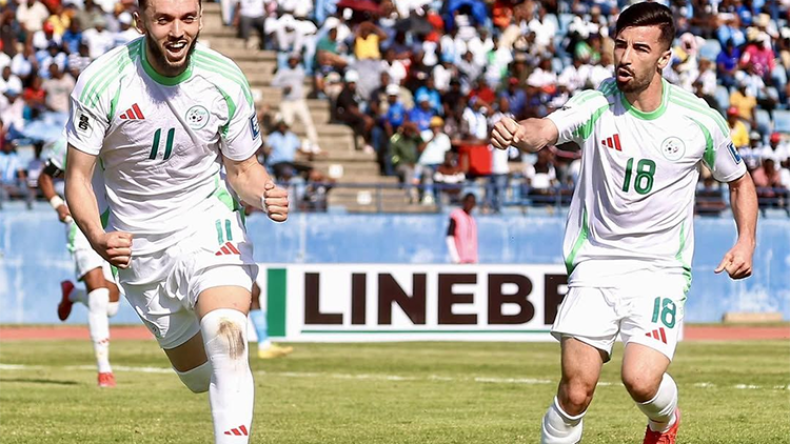
Algeria's national football team aims for improved results in the upcoming World Cup in America, building on its previous tournament experiences. The team hopes to achieve better results in this current World Cup, compared to its previous editions. The team has participated in four prior World Cup editions, with its most successful campaign occurring in the 2014 World Cup in Brazil. During that tournament, Algeria reached the Round of 16, marking its best performance in the competition's history and a significant milestone for Algerian football. These four appearances have spanned three continents: Europe (Spain 1982), Latin America (Mexico 1986, Brazil 2014), and Africa (South Africa 2010). This geographical spread notes the team's varied international exposure across different World Cup hosting nations, showcasing their participation in prestigious tournaments held in diverse global locations.
Historical Statistics and Milestones
Algeria's national team has played a total of 13 matches in the World Cup finals. Across these appearances, the team's offense scored 13 goals, while its defense conceded 19 goals. These statistics reflect the team's performance across all its World Cup campaigns, indicating a competitive but challenging record over the years. Algeria's heaviest World Cup victory occurred against South Korea, with a final score of 4-2. This 4-2 win against South Korea also stands as the heaviest victory achieved by an African team in the World Cup competition, a notable record for the continent and a point of pride for Algerian football. Conversely, Algeria's heaviest World Cup defeat was recorded against Spain during the 1986 Mexico edition of the tournament, providing a contrast to their moments of triumph and illustrating the varied outcomes of their international fixtures.
The team secured its first World Cup win against Germany in the 1982 edition, triumphing with a score of 2-1. This victory against a strong European opponent was a significant early achievement, particularly as it marked Algeria as the first Arab and African team to defeat a European opponent in the World Cup. Rabah Madjer scored Algeria's inaugural World Cup goal in that same 1982 match against Germany, etching his name into the nation's football history and setting a precedent for future Algerian goal scorers. The last goal scored by Algeria in the World Cup was by Abdelmoumene Djabou in the 2014 Brazil edition, also against Germany, during the Round of 16. This goal marked the conclusion of their most successful tournament run to date, showcasing their continued ability to challenge formidable European teams.
Several players have distinguished themselves as top scorers for Algeria in World Cup finals. Salh Assad contributed two goals in the 1982 World Cup, demonstrating his offensive prowess in the team's early appearances and establishing himself as a key player. In the 2014 Brazil World Cup, Islam Slimani and Abdelmoumene Djabou each scored two goals, playing key roles in the team's journey to the Round of 16 and contributing significantly to their record-breaking performance. Defender Rafik Halliche holds the record for the most capped player for Algeria in World Cup finals, having played in 7 matches across the 2010 and 2014 tournaments. His consistent presence shows his importance to the squad over multiple campaigns, showcasing his enduring commitment and experience on the world stage.
Key Tournament Moments
Algeria’s attack demonstrated its most prolific performance in the 2014 Brazil World Cup, scoring 7 goals during the tournament. This marked a significant increase from the 1982 World Cup, where the team netted 5 goals, including two against Germany and three against Chile, showcasing their offensive capabilities in that earlier competition and noting a period of strong attacking play. The only World Cup edition in which Algeria failed to score any goals was South Africa 2010, where the team registered one draw and two narrow losses, noting a challenging period for their attack and showing the variability of their performances. Analysis of goal-scoring patterns reveals that Algeria scored 7 goals in the first half and 5 goals in the second half across all its World Cup appearances, indicating a slightly stronger offensive output in the initial periods of their matches and suggesting a tactical approach in their play.
The team received only one penalty kick throughout its World Cup history, which was awarded against Belgium in the 2014 Brazil World Cup. This solitary penalty award reflects a particular aspect of their historical gameplay, indicating a relatively low number of penalty opportunities over their tournament participations. Historically, Algeria holds the distinction of being the first Arab and African team to defeat a European opponent, achieving a notable victory over Germany in the 1982 World Cup. This landmark achievement cemented their place in football history for both regions, demonstrating their capacity to overcome established footballing nations.
Algeria also became the first Arab team to qualify for the World Cup finals twice consecutively, participating in both the 1982 and 1986 editions of the tournament. This back-to-back qualification demonstrated a period of sustained success on the international stage, noting their consistent performance during that era. The 1982 Spain World Cup saw Algeria become the first team to achieve two wins in the group stage yet still fail to qualify for the second round of the competition. This unique scenario noted the intricacies of the tournament's format and the fine margins of progression, where despite impressive victories, qualification can be elusive. This participation in the 1982 Spain World Cup was one of the four World Cup editions Algeria has been a part of, spanning three continents including Europe, Latin America, and Africa.
Looking Ahead
Algeria's national team is now looking toward future World Cup qualifications with renewed determination, following its historical performances. The team aims to build on its past experiences, including the Round of 16 appearance in the 2014 Brazil World Cup, which remains their benchmark achievement and a source of inspiration. With four previous World Cup participations, Algeria seeks to enhance its standing on the global stage and consistently compete at the highest level, aspiring to surpass previous achievements. The upcoming tournament in America presents another opportunity for the team to demonstrate its capabilities and potentially surpass previous achievements, including the historic 2014 run. Coach Vladimir Petković will be instrumental in guiding the squad through the qualification rounds and preparing them for potential future competitions, leveraging his expertise to foster success. The team's past record, which includes victories against strong European opponents like Germany, provides a foundation for future aspirations and instills confidence in their ability to compete at the highest level. Players like Riyad Mahrez and Islam Slimani are expected to continue playing significant roles, contributing their experience and skill to the team's efforts and leading the charge for future successes. The objective remains to consistently qualify for the World Cup and surpass previous achievements, including the best performance seen in Brazil, setting ambitious goals for the future. The federation is focused on developing new talent while integrating experienced players to create a competitive squad capable of achieving these aspirations and making a lasting impact on the international football scene.