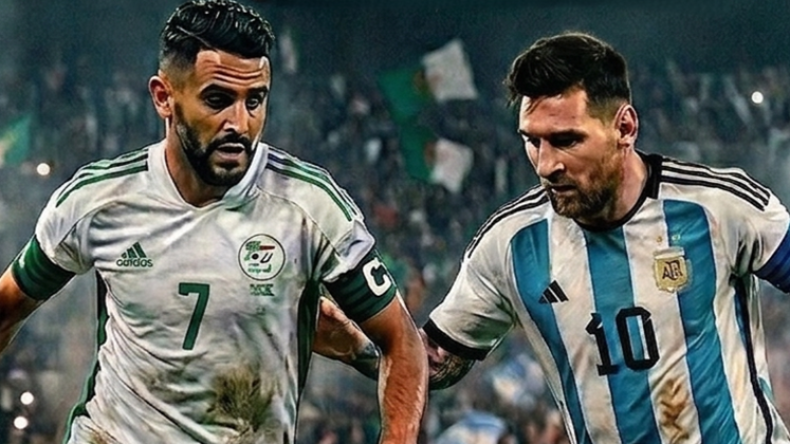
Algeria is set to face world champions Argentina in an upcoming football match scheduled for 2 AM Algerian time in Kansas City. This highly anticipated encounter pits a determined Algerian squad against a formidable Argentine side. The article notes that betting companies, experts, and computers have largely favored Argentina, leaving Algeria with a small margin for a surprise victory. The consensus from these predictive models often reflects historical performance and current team strength, placing the reigning world champions in a dominant position. "Before the match is played, the world has already played it. Betting companies have decided. Experts have explained. Computers have predicted. And the numbers have given Argentina almost everything, leaving Algeria a small margin called surprise," the article states. This sentiment shows the perception that the outcome is, for many, a foregone conclusion based on statistical analysis and conventional wisdom. It emphasizes that this match represents more than just a game for Algeria, portraying it as a confrontation with the idea that the future is typically granted to the strongest. For the Algerian team and its supporters, this fixture transcends the mere pursuit of three points; it becomes a symbolic battle against predetermined narratives. "This night, in Kansas City, Algeria does not face the world champions alone. It faces an idea wider than the match: that the future is usually granted to the strongest, and that others must enter the dream with caution, as if they were passing guests in a story written for others." This perspective frames the match as an opportunity to defy expectations and challenge the established order in international football.
Echoes of Past Upset Victories
Algeria has a history of performance against formidable opponents, demonstrating a remarkable capacity for resilience and delivering unexpected results on the grandest stages. Notably, in 1982, Algeria secured a historic victory against West Germany in Gijon, a match that remains a significant upset in football history and a source of immense national pride. This triumph against a European giant, then considered one of the world's elite footballing nations, showcased Algeria's potential to overcome seemingly insurmountable odds. The team also demonstrated resilience against Germany, a perennial powerhouse, in the 2014 World Cup, pushing the European powerhouse into extra time before ultimately being defeated. That particular encounter, though ending in a loss, was widely lauded for Algeria's tenacious performance and their ability to match Germany's intensity for extended periods. These past encounters highlight Algeria's capacity to challenge highly-ranked teams, despite predictions favoring their opponents. Such historical precedents serve as a potent reminder that while pre-match analyses might lean heavily towards one side, the spirit and determination of an underdog can often rewrite the script. The upcoming match against Argentina draws parallels to these historical moments, where Algeria faced significant odds but managed to create memorable performances that resonated far beyond the final whistle. These instances form a key part of the national team's identity, fueling the belief that another upset is always within reach.
The Unpredictability of the Game
Football, by its very nature, is a sport where outcomes are not always predetermined by statistical models or expert opinions. This inherent unpredictability is precisely what captivates billions of fans worldwide, turning every match into a potential spectacle of unexpected twists and turns. While entities such as betting companies frequently calculate probabilities, assigning a high likelihood of victory to one side over another based on extensive data and algorithms, the actual events on the pitch can defy these predictions with startling regularity. The inherent human element, coupled with moments of individual brilliance, strategic shifts, or even unexpected errors, can alter the course of a match dramatically. A single misplaced pass, a moment of goalkeeping heroics, or a sudden tactical masterstroke from a coach can fundamentally change the momentum and eventual result of a game. This dynamism is often cited as a core reason for the sport's global appeal, as it keeps fans engaged with the possibility of an underdog triumphing against formidable odds, proving that nothing is truly certain until the final whistle.
Even when a team like Argentina, featuring a player of Lionel Messi's caliber, enters a match as the overwhelming favorite, the narrative of the game can diverge from expectations. Messi, despite being 38 years old, still possesses the ability to conjure match-winning moments, yet even his presence does not guarantee victory. Such scenarios show the idea that while pre-match analyses provide a framework, they cannot fully account for the confluence of factors that unfold during 90 minutes of play, including the emotional intensity, the physical demands, and the sheer luck that can swing a game. The potential for an upset remains a constant, a reminder that every team, regardless of its ranking or historical performance, must earn its victory on the field through sheer effort and execution. This fundamental unpredictability ensures that each fixture, including the one between Algeria and Argentina in Kansas City, carries its own unique tension and possibility for a memorable outcome, keeping fans on the edge of their seats until the very end. It is this very essence of football that allows dreams of upset victories to persist, even against the world's best.
A Symbol of National Pride
The upcoming football match pitting Algeria against Argentina in Kansas City carries significant weight for Algeria, extending beyond the mere competition on the field. This encounter is not just another friendly or competitive fixture; it is imbued with deep national significance. Argentina holds the title of reigning world champion, an achievement that amplifies the symbolic nature of this encounter for its opponent. Facing the current best team in the world provides an unparalleled platform for Algeria to test its mettle and demonstrate its capabilities on an international stage. The fixture represents an opportunity for Algeria to challenge a globally recognized football powerhouse, a team that commands respect and attention from every corner of the globe.
The national team has also seen a notable addition to its ranks, with Luca Zidane, son of legendary French footballer Zinedine Zidane, opting to represent Algeria internationally. This decision shows a powerful connection to Algerian heritage within the sport, bringing a touch of star power and a compelling narrative to the squad. Players like Zidane contribute to the narrative of national pride associated with the team's performance, as their commitment to the Algerian colors resonates deeply with fans. The presence of such figures can galvanize support and intensify the emotional investment of fans in results, turning every match into a collective experience of hope and aspiration.
Further adding to the dynamics of the match is the continued presence of star player Lionel Messi for Argentina, who is 38 years old. Despite his age, Messi remains a central figure for the Argentine squad, a living legend whose every move is scrutinized and celebrated. His participation ensures the match attracts substantial global attention, drawing eyeballs from football enthusiasts who might otherwise overlook such a fixture. For Algeria, facing a team with a player of Messi's stature, even in the later stages of his illustrious career, elevates the perceived challenge and the potential glory of an upset victory. The match in Kansas City is therefore viewed through a prism of national identity and the prospect of defying significant odds against a world champion side, embodying the hopes and dreams of a nation.