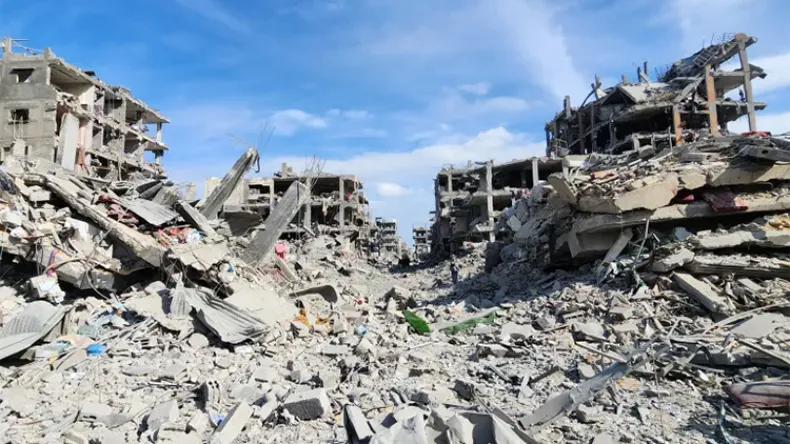
Israeli forces moved yellow concrete blocks westward in the Shuja'iyya neighborhood on 11 October 2026, positioning the barriers near Salah al-Din Street. This action marks a visible shift in military infrastructure within the area. The Gaza Human Rights Center reports that Israeli forces currently control or restrict access to over 70% of the Gaza Strip's 365 square kilometer area. These findings indicate a significant expansion of military influence across the territory. The center’s data accounts for the total land mass affected by these movement limitations. Residents in the vicinity of Shuja'iyya remain subject to these ongoing changes as military presence evolves.
Military Control and Expansion
Negotiators established the 'Yellow Line' as part of a ceasefire agreement on 10 October 2025. This demarcation remains a reference point for territorial boundaries within the region. Brigadier General Liron Betto, commander of the Gaza Division, stated on 1 October 2026 that Israeli forces control approximately 63% of the Gaza Strip. The Israeli military has also established approximately 40 new military sites in the Gaza Strip as of 1 October 2026. These sites represent the latest infrastructure developments recorded by the military command. Israeli forces continue to maintain these positions across the territory to manage movement and operational security. These figures reflect the status of military deployments as reported by the Gaza Division command at the start of October.
Recent Movements in Shuja'iyya
Israeli forces placed new concrete blocks on Al-Qa'qa' Street in the Shuja'iyya neighborhood on 17 October 2026. These physical barriers alter transit routes for residents living in the area. Military activity extended further on 21 October 2026, when Israeli forces expanded movements into the vicinity of the old clinic located east of Al-Maghazi camp. These deployments represent ongoing changes to the operational environment in the territory. Israeli personnel maintain these positions to manage movement and site security near the camp. The shifts in Shuja'iyya and Al-Maghazi constitute the most recent adjustments to military infrastructure recorded by the Gaza Human Rights Center as part of its assessment of territorial control.
Targeting Shelters and Civilians
Israeli drones targeted a shelter near the Yellow Line east of Khan Yunis with incendiary shells on 8 October 2026. This attack resulted in the displacement of 17 families. Later in the month, Israeli drones dropped incendiary bombs on displaced persons' tents. These incidents occurred on 25 October 2026 near the eastern ends of Omar Al-Mukhtar and Al-Wahda streets in Gaza City. The Gaza Human Rights Center identified these events as part of its recent monitoring of military activities affecting civilian populations. Both operations involved the use of incendiary munitions against sites where displaced individuals were residing. These actions represent the documented use of aerial assets against shelters in the territory during October.