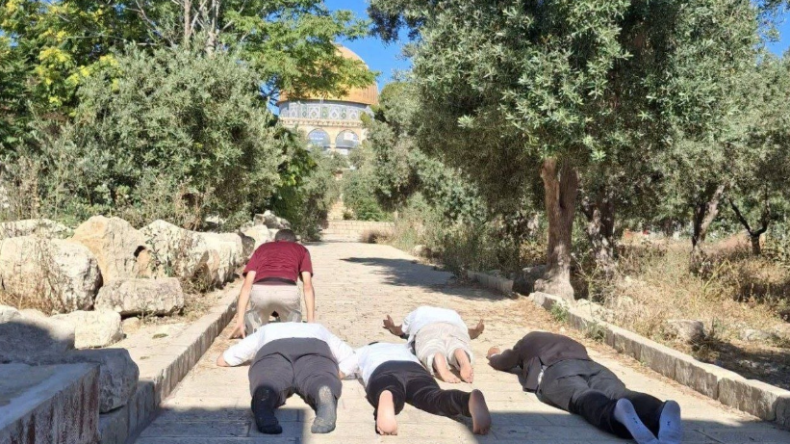
Extremist settlers stormed the courtyards of Al-Aqsa Mosque in occupied Jerusalem on Thursday, marking another instance of heightened tensions at the holy site. A total of 123 settlers carried out incursions into the mosque compound and roamed its courtyards. These incursions were meticulously planned and executed under the direct protection of Israeli forces, ensuring the settlers' access and activities within the sacred precinct. During these incursions, a number of settlers performed what is known as "epic prostration" in the eastern area of Al-Aqsa Mosque, specifically opposite the revered Dome of the Rock prayer area. This act of prostration is considered a provocative religious ritual within the Islamic holy site. The presence and actions of the settlers, particularly their performance of religious rites, occurred under the visible and active protection of Israeli forces, a detail that consistently draws criticism and condemnation from Palestinian authorities.
Escalating Incursions and Rituals
Al-Aqsa Mosque has recently witnessed a noticeable escalation in settler incursions, a trend that has become increasingly frequent and assertive. These incursions are consistently accompanied by the performance of various Talmudic rituals, including dances and songs, carried out openly inside its courtyards. These activities unfold amidst strict security measures imposed by Israeli forces, which facilitate the settlers' entry and protect their actions. The security detail ensures that settlers can perform their rituals without interference, often leading to confrontations with Palestinian worshippers and guards.
A specific incident on June 7 saw dozens of extremist settlers storm Al-Aqsa Mosque through the Mughrabi Gate, which is the only gate accessible to non-Muslim visitors under Israeli control. Upon gaining entry, the intruders performed group prayers and rituals that included songs and dances within the mosque compound. These actions are viewed by Palestinian and Islamic authorities as direct provocations and violations of the mosque's sanctity. Adding to the provocative nature of their incursion, the intruders raised occupation flags in the western courtyard area of Al-Aqsa Mosque during their entry, a move that further inflamed tensions and showed their political and religious agenda. The systematic nature of these incursions, coupled with the performance of religious and nationalistic acts, contributes significantly to the volatile atmosphere surrounding the holy site.
Recent Surge in Activity
The month of May recorded a noticeable increase in the number of intruders, with thousands of settlers entering the mosque through the Mughrabi Gate. This period saw a substantial increase in the number of individuals gaining entry to the Al-Aqsa Mosque compound. During this specific month, thousands of settlers successfully gained entry through the Mughrabi Gate, indicating a significant organizational effort behind these incursions. This marked a noticeable surge in activity compared to previous months, both in terms of the sheer volume of individuals and the frequency of their visits. The heightened frequency of these entries, coupled with the provocative rituals performed, contributes directly to the escalating tensions surrounding the holy site in occupied Jerusalem, a flashpoint in the Israeli-Palestinian conflict.
Context of Al-Aqsa Tensions
The settlers performed Talmudic rituals under the explicit protection of the Israeli occupation forces. These activities are not isolated incidents but rather contribute to the ongoing and deeply rooted tensions surrounding Al-Aqsa Mosque in occupied Jerusalem. This site holds immense religious significance, considered holy by both Muslims and Jews, making it a focal point of inter-communal and political friction. Such actions often draw immediate and strong condemnation from Palestinian authorities and religious bodies, who consistently view them as severe provocations and flagrant violations of the mosque's sanctity and the existing status quo. The consistent and visible presence of Israeli forces during these rituals not only enables the settlers' actions but also shows the sensitive and often volatile security situation within the compound, noting the power dynamics at play in the contested holy site.