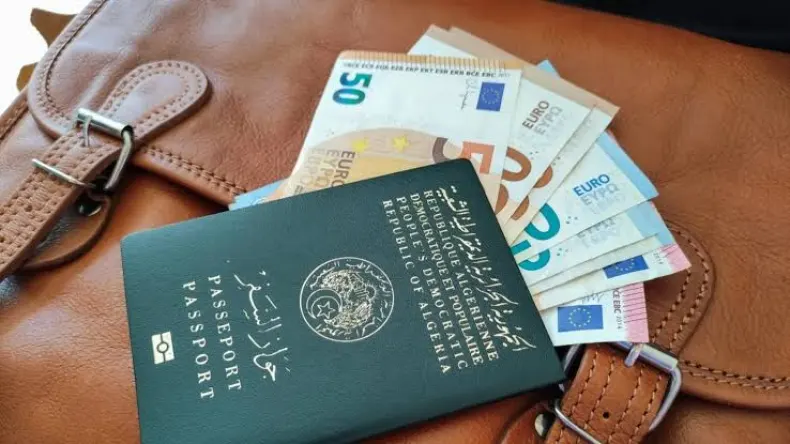
The Court of the Economic and Financial Penal Pole in Algeria has issued collective penalties against individuals implicated in a network that manipulated the 750-euro travel grant. This significant legal action by the Court of the Economic and Financial Penal Pole shows the seriousness with which authorities are addressing financial fraud. The court's decision, handed down this week, concludes a significant investigation into systemic fraud involving the misappropriation of funds designated for travelers. Penalties for those involved in the illicit scheme range up to seven years in prison, reflecting the severity of the financial crimes committed. The network operated by illicitly exploiting the travel grant system, diverting public funds and engaging in capital violations. The travel grant, valued at 750 euros, was intended to assist travelers, but its manipulation led to widespread financial irregularities.
First Case Sentences Detailed
In the initial phase of the legal proceedings, sentences for eight defendants involved in the travel grant manipulation network reached up to seven years of effective imprisonment, alongside significant financial penalties. These penalties were imposed after a thorough examination of the evidence presented. Defendant “F.I.” received a sentence of seven years of effective imprisonment and was ordered to pay a fine of 500,000 Algerian Dinars. This particular sentence notes the most severe punishment meted out in this first case. Another defendant, “K.H. ” was handed a five-year effective prison sentence and a fine of 500,000 Algerian Dinars, reflecting another substantial penalty for their involvement in the scheme.
Further judgments included two defendants, each sentenced to three years of effective imprisonment and a fine of 100,000 Dinars. These sentences indicate varying degrees of culpability among the accused. Two additional defendants received one-year effective imprisonment sentences and fines of 200,000 Dinars each, further detailing the range of judicial outcomes. In contrast, three defendants were acquitted of all charges brought against them in connection with the case, demonstrating that not all individuals implicated were found guilty. The verdicts conclude the first set of decisions following the investigation by the Court of the Economic and Financial Penal Pole into the manipulation of the 750-euro travel grant.
Second Case Sentences Detailed
In the second case related to the fraud and manipulation of the travel grant, sentences for 22 defendants reached up to five years of effective imprisonment. This larger group of defendants faced a full legal process. Fines imposed in this instance included sums of 500,000 Algerian Dinars, 100,000 Algerian Dinars, and 50,000 Algerian Dinars, indicating a structured approach to financial penalties. Defendant “J. Abdel Razzaq,” along with three other defendants, each received five years of effective imprisonment and a fine of 500,000 Algerian Dinars. This group faced the most stringent penalties within this second case, showing their significant roles in the illicit activities.
Sixteen defendants were each sentenced to one year of effective imprisonment and fined 50,000 Dinars. This substantial number of individuals received consistent sentences for their involvement. The Court of the Economic and Financial Penal Pole also acquitted two defendants in this second case, clearing them of all charges after reviewing the evidence. The judgments follow the court's ongoing efforts to address the manipulation network that exploited the 750-euro travel grant system, reinforcing the judiciary's commitment to combating financial crime.
Context and Charges
The travel grant at the center of the cases was valued at 750 euros, a sum that was systematically exploited by the network. In the first legal proceedings, charges included forming an organized criminal association for capital violations from and to abroad, alongside abuse of office. These charges reflect the complex nature of the financial misconduct uncovered. For the second case, prosecutors brought charges of forming a criminal association to illegally obtain the travel grant and violating capital movement from and to abroad. Both sets of charges highlight the serious legal infractions committed by the individuals involved in manipulating the travel grant system.