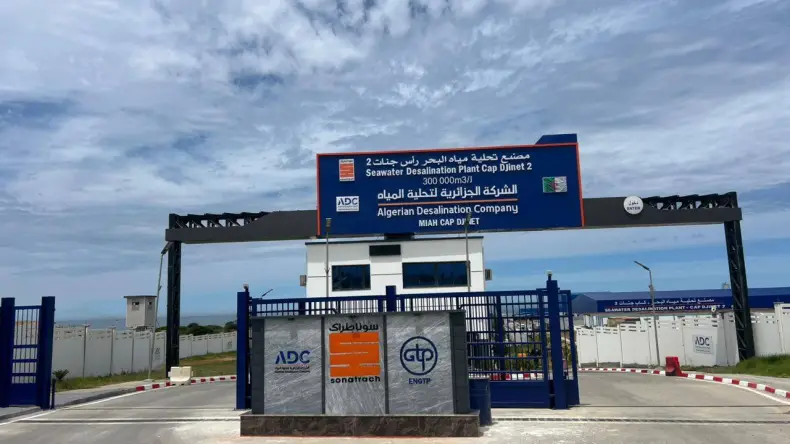
The Algerian Water Desalination Company, a Sonatrach group branch, announced Monday the full reactivation of the "Cap Djinet 2" seawater desalination plant. This significant announcement confirms the plant's return to full service, a key development for Algeria's water infrastructure. Operations resumed "normally, and according to the approved technical and organizational protocol, after the completion of the scheduled annual periodic maintenance process," the company stated in its official communication. The plant is now operating "at its full production capacity of 300,000 cubic meters per day, ensuring the continuity of water supply and enhancing service stability, especially with the current increase in demand," according to the company. The company reiterated "its permanent commitment to maintaining the optimal readiness of its strategic facilities, according to the highest standards of quality and performance, contributing to supporting and strengthening national water security."
Maintenance and Reactivation Process
The reactivation of the Cap Djinet 2 desalination plant proceeded normally, adhering strictly to approved technical and regulatory protocols. This process followed the successful and timely completion of the facility's scheduled periodic annual maintenance. The plant had undergone a planned period of production stoppage specifically for this essential annual preventive maintenance. This full maintenance program was meticulously designed to ensure the plant's sustained operational efficiency and long-term reliability, particularly in anticipation of periods with increased water demand. Algerian Water Desalination Company engineers and technicians executed the necessary tasks with precision, bringing all critical systems back online. The careful adherence to established procedures and stringent safety measures ensured a smooth transition back to full production capacity. This systematic approach is critical for the continuous and reliable operation of strategic infrastructure like desalination plants, which play a vital role in national water security. The company's unwavering commitment to these rigorous protocols further shows its focus on maintaining exceptionally high standards of performance and operational readiness for its facilities.
National Desalination Capacity Boost
The Cap Djinet 2 plant is currently operating at its full production capacity of 300,000 cubic meters per day. This substantial output is a key component of Algeria's expanded water supply network. This facility is one of five new complexes that have collectively increased Algeria's total seawater desalination capacity to an impressive 3.7 million cubic meters per day. This significant expansion positions Algeria as the leading nation in Africa for seawater desalination capacity, a testament to its strategic investments in water resources. Algeria now ranks second in the Arab world in this vital sector, following only Saudi Arabia in terms of overall capacity. This substantial increase in desalination capabilities directly contributes to national water security and is designed to effectively meet the growing demand for potable water across the country. The integration of these new plants, including Cap Djinet 2, represents a major step forward in securing a stable and sustainable water supply for Algeria's population and industries.
Commitment to Service Reliability
The Cap Djinet 2 desalination plant underwent a scheduled period of production stoppage for its annual preventive maintenance, the Algerian Water Desalination Company confirmed. This routine interruption, meticulously planned in advance, is an integral part of the facility's operational protocol. It is specifically designed to ensure the plant's long-term efficiency, reliability, and continuous optimal performance. The maintenance work is critical for strategic infrastructure of this magnitude, particularly given the plant's indispensable role in providing a stable water supply to a significant portion of the region. Such planned stoppages allow for full checks, essential repairs, and necessary upgrades to be carried out on the plant's intricate systems, ensuring all components function optimally and efficiently. Adherence to a strict, proactive maintenance schedule is a key aspect of the company's overarching strategy to bolster national water security and effectively meet increasing demand for water resources. The successful and timely completion of this annual maintenance period shows the company's steadfast commitment to maintaining the plant's operational readiness and upholding the highest performance standards.