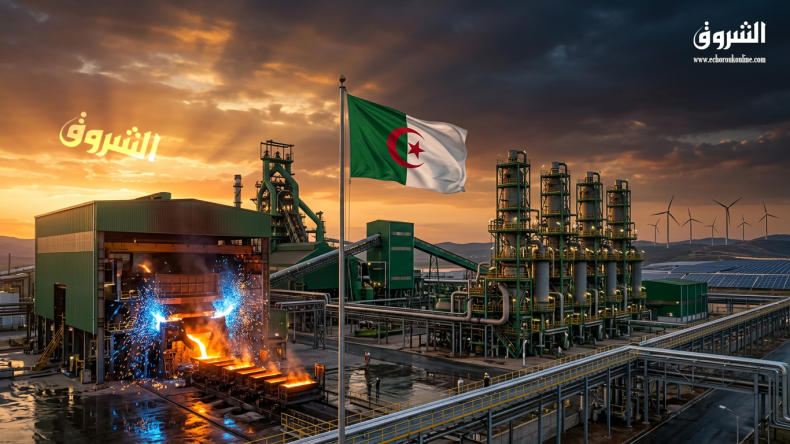
Algeria is advancing its capacity for reduced iron production, positioning itself as a significant player in the Middle East and North Africa region. This development shows Algeria's growing influence in the regional industrial landscape. According to a report compiled by Global Energy Monitor, Algeria ranks second regionally in planned expansions for reduced iron, demonstrating its commitment to modern steelmaking processes. The report indicates that Libya currently leads the region with a substantial capacity of 11 million tons per year in this sector. Egypt follows in third place, possessing an approximate capacity of 3 million tons annually. These regional capacities highlight the increasing adoption of direct reduced iron technology across North Africa and the Middle East.
The Direct Reduction Process
Reduced iron projects utilize the direct reduction of iron technology, a key method in contemporary steel production. This method involves producing high-purity sponge iron, which can reach an impressive purity of up to 98%. The process achieves this by employing reducing gases such as hydrogen and carbon monoxide. These gases are critical for removing oxygen from iron ore at temperatures below its melting point, resulting in a porous form of iron. This high-purity sponge iron is directly usable in electric arc furnaces for steelmaking, streamlining the production process. The direct reduction of iron technology is central to modern steel production, offering a more environmentally conscious alternative to traditional blast furnace methods that rely heavily on coking coal. This innovative approach significantly contributes to reducing carbon emissions in the iron and steel industry, aligning with global efforts towards industrial decarbonization.
Regional and Global Landscape
Algeria's focus on reduced iron production enhances its position among countries contributing to the transition towards low-emission steel production. This strategic move is particularly significant given the global shift in steel manufacturing methods. Globally, the capacities under development for steel production are distributed between different methods. Blast furnaces, a more traditional approach, account for 57% of these new capacities, totaling 319 million tons per year. In contrast, direct reduced iron technology, which is central to Algeria's expansion and represents a more sustainable pathway, accounts for 43% of global development, amounting to 240 million tons per year. This distribution reflects an ongoing and critical shift in the global steel industry's approach to production methods, moving towards more sustainable and efficient processes.
Algeria's Strategic Position
Algeria's projects for reduced iron production possess an approximate capacity of 5 million tons per year. This substantial capacity contributes significantly to the nation's rising profile in the regional and global reduced iron sector. The country's strategic developments align with broader industry trends favoring direct reduced iron technology for steelmaking, positioning Algeria as a key player in the industry's evolution. This commitment to advanced production methods not only strengthens Algeria's industrial base but also reinforces its role in promoting sustainable practices within the global steel market.
Future Trends in Steelmaking
Future capacities in steelmaking are projected to increasingly adopt hydrogen as a key reducing agent. Approximately 19% of these future capacities are expected to rely on hydrogen-based processes, indicating a significant and accelerating shift towards lower-emission production methods within the industry. This trend aligns with broader international efforts to decarbonize heavy industries globally, with hydrogen emerging as a key component in achieving these environmental goals. The adoption of hydrogen in steelmaking represents a major step towards reducing the carbon footprint of one of the world's most energy-intensive industries.