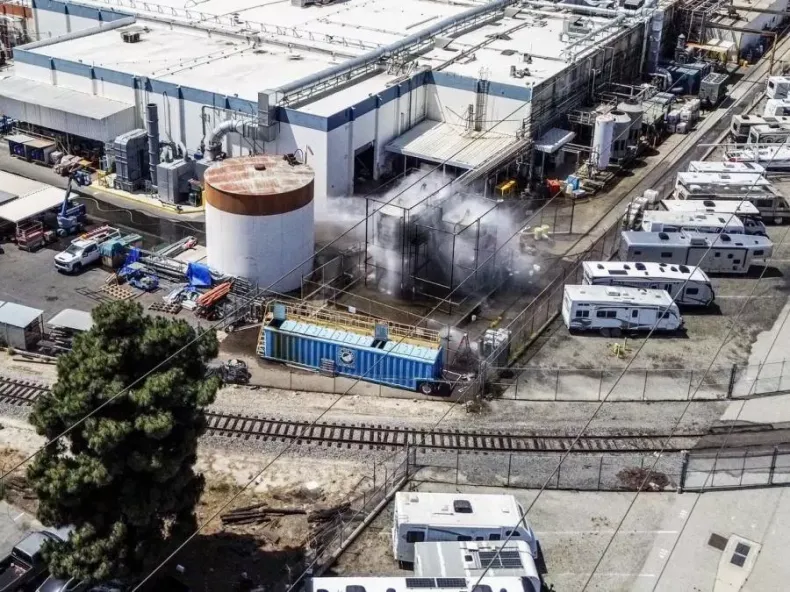
Approximately 40,000 residents in California were ordered to evacuate their homes on Friday following a chemical leak. The large-scale evacuation affects areas within the state, prompting a significant response to ensure public safety. This measure was enacted to mitigate potential risks associated with the hazardous material, which authorities have identified as methyl methacrylate. The directive for approximately 40,000 people to evacuate their homes shows the severity of the situation and the immediate priority placed on public health and safety.
Details of the Chemical Threat
The chemical leak in California poses a significant threat, with authorities warning it could provoke an explosion. Such an event would send toxic fumes over a vast inhabited area, according to official statements. The source of the concern is a 26,000-liter tank of methyl methacrylate that is currently leaking. Methyl methacrylate is a liquid and flammable chemical primarily used in plastic manufacturing. Its hazardous properties include flammability and the potential to release toxic fumes upon combustion, making an explosion a critical concern for emergency responders. The potential for both an explosion and the wide dispersal of toxic fumes has prompted the large-scale evacuation efforts, aiming to move residents out of harm's way before any such event might occur. The volume of the leaking substance, 26,000 liters, further notes the scale of the potential environmental and health impact.
Evacuation and Response Efforts
The evacuation order concerns approximately 40,000 people in California, though authorities have noted that thousands are refusing to leave their homes despite the directive. This non-compliance presents an additional challenge for emergency services, who are working to ensure the safety of all residents. Response teams are actively working to establish barriers aimed at preventing the toxic product from contaminating local waterways or reaching the ocean. These preventative measures are key for protecting sensitive ecosystems and ensuring the long-term environmental integrity of the affected region. Officials have confirmed that, as of the latest reports, no injuries have been reported in connection with the chemical leak, a testament to the rapid response and evacuation efforts, despite the challenges posed by some residents' refusal to evacuate.
The ongoing efforts focus on containment and mitigation to safeguard both the population and the environment from the methyl methacrylate. Local emergency services are coordinating the setup of protective measures around spill sites and potential drainage paths. The primary objective is to contain the hazardous substance and minimize its spread, especially towards sensitive ecological areas and public water sources. Authorities continue to monitor the situation closely, managing both the technical challenges of the leak and the public's adherence to evacuation protocols. The establishment of physical barriers is a key component of this strategy, designed to create a buffer against environmental contamination.
Location and Chemical Background
The chemical leak is specifically situated in a locality within Orange County, located in the southern suburbs of Los Angeles. This regional detail places the incident in a densely populated area of Southern California, showing the urgency of the evacuation orders. Orange County is a significant metropolitan area, and the proximity to Los Angeles elevates concerns about the potential reach of the hazardous material, should it spread beyond the immediate vicinity. Authorities are concentrating their efforts on managing the incident within this specific geographical context, considering the local infrastructure and population density. The affected area’s characteristics inform the strategies for containment and public safety measures, with particular attention paid to wind patterns and potential drainage routes that could carry the chemical towards residential areas or natural water bodies. The presence of such a large quantity of methyl methacrylate in an industrial facility within a populated region notes the ongoing risks associated with chemical storage and transportation near communities.