Brazil hosted the 1950 FIFA World Cup, marking the tournament's return after a 12-year hiatus caused by World War II. The competition reached its dramatic climax in the final match, where the host nation, Brazil, required only a draw against Uruguay to secure the championship title. This key moment would become etched in football history as the "Maracanazo."
A World Cup Reborn
The 1950 FIFA World Cup tournament spanned from June 24 to July 16, marking the competition's post-war revival. Matches were distributed across six Brazilian cities. These host cities provided the venues for the global spectacle, drawing fans from across Brazil and the participating nations. A total of 13 teams participated in this edition, a smaller number compared to later tournaments, reflecting the lingering challenges of post-war recovery and international travel. Six European countries made the journey to Brazil by ship to compete. These nations included Yugoslavia, Sweden, Switzerland, England, Spain, and Italy, undertaking significant travel to participate in the global event. Their arrival by sea noted the logistical challenges of international travel in the mid-20th century for such a large-scale sporting event, with teams enduring long voyages across the Atlantic.
Absences and Withdrawals
Italy, the 1938 champion, received an invitation to participate in the tournament, despite the difficulties faced by European nations in the aftermath of the war. Germany was notably absent from the competition, having been described as the instigator of the World War, and was not invited to participate. France also did not attend, marking its first absence from the World Cup, a decision that further reduced the European contingent. Argentina boycotted the event due to its request to host the tournament being denied, leading to a significant South American absence from the competition. Additionally, Hungary, widely considered the strongest team at the time, did not participate, an absence that many believed deprived the tournament of one of its most formidable contenders. Several Asian and African countries withdrew from the tournament after actively participating in the qualifying rounds, further impacting the field of competitors and limiting the global representation in the final stages. These withdrawals showed the complex political and logistical landscape of the immediate post-war era.
Tournament Progression
The structure of the 1950 World Cup saw teams divided into groups for an initial stage. Group D of the tournament featured only two teams, Uruguay and Bolivia, a unique setup for a World Cup group. Uruguay secured a dominant 8-0 victory over Bolivia in their sole group stage match, a result that propelled them into the next round with considerable momentum. Host nation Brazil began its campaign with a commanding 4-0 win against Mexico in the first group stage, immediately establishing themselves as strong contenders. Brazil subsequently drew 2-2 with Switzerland during the group stage, a result that momentarily tempered their early dominance. The Brazilian team then defeated Yugoslavia 2-0 in another decisive group encounter, securing their progression. Spain demonstrated a strong performance in its group, winning all three of its matches. The Spanish team scored a total of six goals while conceding only one across its group stage fixtures, showcasing both their offensive prowess and defensive solidity.
The Decisive Final Stage
The final stage of the 1950 FIFA World Cup was conducted as a mini-league format, a departure from the knockout stages seen in other tournaments, designed to determine the champion. Brazil began this stage decisively, defeating Sweden 7-1, a result that sent a clear message about their championship aspirations. Uruguay, also competing in the final round, drew 2-2 with Spain in one of their encounters, a hard-fought match that kept their title hopes alive. Brazil continued its dominant form, securing a 6-1 victory over Spain, further cementing their position at the top of the mini-league heading into the final match. In another key match, Uruguay defeated Sweden 3-2, setting the stage for the dramatic final encounter.
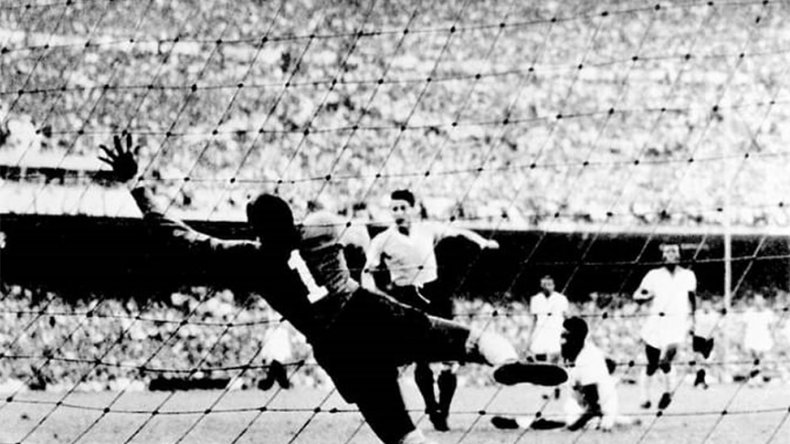
The tournament's decisive match, often referred to as the "Maracanazo," saw Brazil lose to Uruguay 2-1 at the Maracanã stadium in Rio de Janeiro. This stunning upset occurred despite Brazil needing only a draw to win the title, shattering the hopes of the home crowd in an unforgettable moment of sporting history. The atmosphere in the Maracanã, filled with approximately 200,000 spectators, turned from joyous anticipation to profound shock. In the match for third place, Sweden secured the position in the competition by defeating Spain 3-1, concluding the unique 1950 FIFA World Cup.