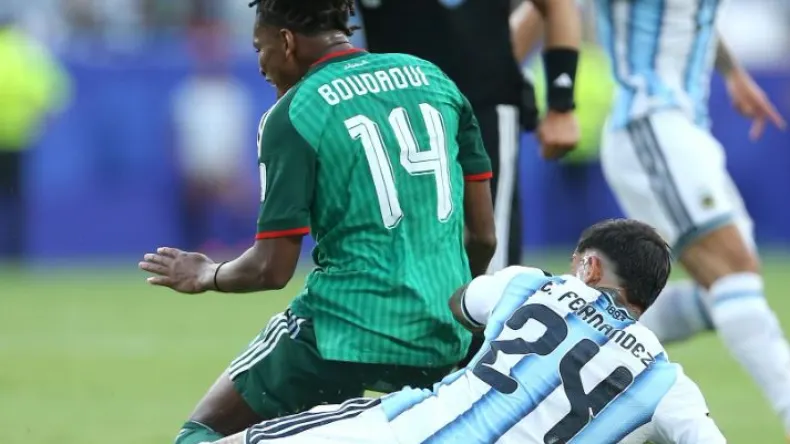
Algeria's national football team experienced a defeat against Argentina in the current year's World Cup, struggling to maintain parity with their opponents. The match saw Algeria's squad losing after initially holding their ground for the first quarter of an hour. This recent defeat against Argentina marked a challenging start to their campaign. The result has drawn attention to the team's performance on the international stage, particularly within the context of World Cup competitions. This recent loss contributes to a broader discussion regarding the team's readiness and capabilities in high-stakes tournaments. The early stages of the game provided a brief period of resistance from the Algerian side before Argentina secured control, ultimately leading to a significant defeat for the national team.
Past Opening Match Struggles
Algeria has a documented history of poor starts in World Cup tournaments, with a pattern of difficulty in their initial matches. This history shows a recurring challenge for the team when commencing major international competitions. Historically, the team has lost their opening match in their last three World Cup participations, with notable exceptions being the 1982 victory against West Germany and a draw against Ireland in 1986. These exceptions stand out against a backdrop of consistent early setbacks. In the 2010 World Cup held in South Africa, the national team commenced its campaign with a 1-0 loss to Slovenia. This particular defeat against Slovenia marked a difficult start for the squad, setting a challenging tone for their tournament aspirations. Four years later, in the 2014 World Cup, Algeria again lost its opening fixture, this time against Belgium. The 2014 tournament's opening match against Belgium continued this trend of early setbacks, further noting the team's struggles in their initial World Cup encounters.
The 1986 World Cup in Mexico saw the national team begin the competition differently, securing a 1-1 draw against Ireland in their first game. This result contrasted with later tournaments, offering a glimmer of a more positive start. A significant historical moment for Algerian football occurred in the 1982 World Cup in Spain, where the national team achieved a surprising victory against West Germany in their opening match. This triumph remains one of the most celebrated moments in Algerian football history, demonstrating the team's potential to upset formidable opponents. However, the 1982 tournament also saw Algeria suffer an unexpected defeat against Austria later in the group stage, illustrating the unpredictable nature of World Cup football even after a momentous victory. The draw in the first match of the 1986 World Cup could potentially have provided a foundation for further draws against formidable opponents like Brazil and Spain, though the team's overall performance did not progress as hoped, indicating missed opportunities. This pattern of mixed results in opening fixtures, particularly the tendency for losses, has become a recurring theme in Algeria's World Cup narrative.
Lessons from Recent Defeats
Algeria lost their opening match in the current year's World Cup against Argentina, marking a fresh instance in their history of challenging starts. This 3-0 defeat marks the second occasion Algeria has lost by this scoreline in their World Cup history; the first instance was against Spain in the 1986 World Cup in Mexico during the third group stage match. Argentina's Lionel Messi scored a hat-trick against Algeria in the current year's game, a performance that undoubtedly contributed to the decisive scoreline. Looking at previous tournaments, the team's performance in the 2014 World Cup saw a loss against Belgium in the opening fixture. However, Algeria subsequently achieved a significant victory against South Korea and a key draw against Russia, which resulted in their qualification for the round of 16. This demonstrated the team's capacity for resilience and recovery after an initial setback, proving that an early loss does not necessarily dictate the entire tournament outcome. In the 2010 World Cup, Algeria drew against England and maintained a competitive stance against the USA, though they conceded a late goal in that match. This particular match against the USA in the 2010 World Cup noted how fine the margins can be at this level, as the team could have held on or even surprised their opponents had they avoided the late concession. The ability to learn from these close encounters and significant defeats is critical for future success.
Looking Ahead to Jordan and Austria
The Algerian national team must learn from its significant 3-0 defeat against Argentina, with the intention of achieving a substantial improvement starting with their upcoming match against Jordan, followed by the game against Austria. This heavy loss serves as a key learning experience, demanding a thorough analysis of tactics and performance. Coach Petković is tasked with guiding the squad through these fixtures, and his leadership will be instrumental in reshaping the team's approach and boosting morale. The team's performance in these matches is seen as key for their preparations, offering immediate opportunities to implement adjustments and demonstrate progress.
The focus is on ensuring the team's readiness for future international competitions, particularly for the next major global football event. The 2026 World Cup is frequently referred to as the 'global gathering' (العرس العالمي), noting its immense importance in the football calendar and the national aspirations tied to it. The upcoming games against Jordan and Austria are integral steps in this long-term preparation, offering opportunities for the team to regroup, experiment with strategies, and implement lessons learned from the recent loss. Petković's leadership will be key in shaping the team's strategy and morale moving forward, as he aims to instill a renewed sense of purpose and tactical discipline following the challenging encounter with Argentina. These preparatory matches are vital for building confidence and cohesion, laying the groundwork for a stronger performance in future World Cup cycles.