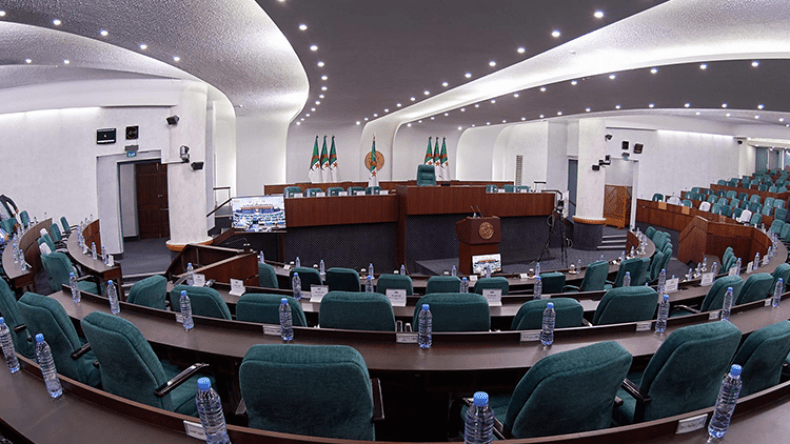
Algeria's Constitutional Court has finalized the results of the legislative elections held on July 2, 2026. This significant step officially confirms the composition of the new legislative body. The new National People's Assembly is scheduled to convene for its inaugural session on August 2, 2026. This gathering will mark the beginning of the tenth legislative term for the lower house of the Algerian parliament, ushering in a new period of legislative activity and political representation. The certification of election results paves the way for the new assembly to begin its legislative duties, setting the stage for the upcoming parliamentary agenda. The official announcement by the Constitutional Court provides the necessary legal basis for the transition and the subsequent formation of the Assembly's leadership.
Inaugural Session Procedures
The procedures for the commencement of the legislative term and the election of the Parliament's leadership are clearly defined within Algeria's constitutional framework. Article 133 of the Constitution stipulates that the legislative term formally commences on the fifteenth day following the Constitutional Court's official announcement of the final election results. This constitutional provision ensures a structured transition period before the new assembly begins its work. The inaugural session of the assembly will be presided over by the oldest deputy, who will be assisted by the two youngest deputies. This specific arrangement ensures a blend of experience and new representation at the very start of the legislative term.
This provisional office, comprising the oldest and two youngest deputies, is tasked with overseeing the election process for the Parliament's president. Their role is key in ensuring fairness and adherence to established procedures during this foundational election. The process for electing the president involves several steps, beginning with the opening of nominations, followed by the announcement of candidates, and ultimately, a vote among the deputies. These steps are designed to be transparent and democratic, allowing all eligible deputies to participate in selecting their leader.
Should only one candidate be nominated for the presidency, the voting will be conducted publicly, and the candidate will require a simple majority to secure the position. This open voting method applies in cases where there is broad consensus on a single candidate. However, if there are multiple candidates, the voting process will be secret, necessitating an absolute majority in the first round for a candidate to be elected. The secret ballot ensures privacy and allows deputies to vote according to their conscience without external pressure. An absolute majority, meaning more than half of the total votes, is required to ensure a strong mandate for the elected president in the initial round.
If no candidate achieves an absolute majority in the initial round, a second round of voting will take place. In this subsequent round, a simple majority of the deputies present will be sufficient for election. This mechanism ensures that a president is eventually chosen even if a clear winner does not emerge in the first round. In the event of a tie in votes between candidates, age will serve as the deciding factor, with the older candidate being declared the winner. This tie-breaking rule provides a clear and unambiguous method to resolve deadlocks.
Constitutional Framework and Government Formation
Algeria's constitutional framework outlines the process for government formation following legislative elections, particularly addressing scenarios where the parliamentary landscape shifts. Article 110 of the Constitution states that if legislative elections result in a parliamentary majority different from the presidential majority, the President of the Republic is mandated to appoint the Prime Minister from that parliamentary majority. This provision ensures alignment between the executive and legislative branches in such scenarios, fostering governmental stability and responsiveness to the will of the electorate expressed through the legislative vote. This mechanism is designed to prevent political gridlock and ensure that the government can effectively implement policies with parliamentary support. The Prime Minister, once appointed, holds significant responsibilities in leading the government, overseeing its various ministries and departments, and implementing the national agenda.
Article 113 of the Constitution further defines the relationship between the Prime Minister and the President, stating that the Prime Minister has the authority to submit the government's resignation to the President of the Republic. This constitutional clause provides a clear mechanism for the dissolution of a government at the Prime Minister's initiative, subject to presidential approval. This allows for flexibility in governance, enabling a government to step down if it loses confidence or if there is a need for a new political direction. These articles collectively establish the foundational procedures for political transitions and the exercise of executive power in Algeria's parliamentary system, emphasizing both accountability and the structured operation of democratic institutions. The clear definition of roles and responsibilities within the Constitution helps to maintain order and predictability in the political process.
Election Irregularities and Party Performance
The Constitutional Court president, Laila Assalawi, acknowledged that certain irregularities were identified in voting stations during the July 2, 2026 legislative elections. These issues, though noted, were addressed through established legal procedures. These irregularities resulted in the cancellation of votes for several political parties in specific instances where violations were deemed significant enough to affect the outcome. Despite these reported irregularities and the subsequent cancellations, key political formations maintained their standing in parliamentary representation. This indicates that while localized issues occurred, they did not fundamentally alter the broader political landscape as reflected in the overall election results.
Parties such as the National Liberation Front, the Democratic National Rally, the Future Front, and the Society for Peace Movement and National Construction continued to hold their leading positions following the certification of results. Their continued prominence shows their established presence and support base within the Algerian political system. The court's decision to certify the overall election outcome, while noting specific issues, allows for the formation of the new legislative body. This certification is a critical step in upholding the integrity of the electoral process and ensuring the timely establishment of the new National People's Assembly. The finalization of these results now allows the focus to shift to the legislative work ahead and the formation of the Assembly's leadership.