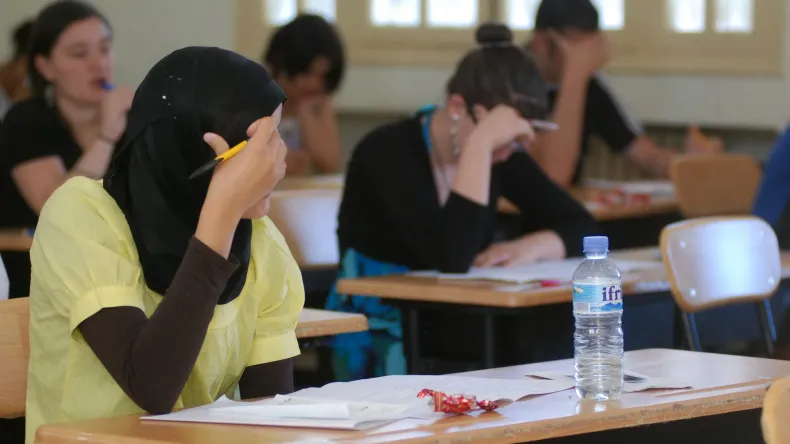
Algerian courts have recently issued sentences against individuals involved in attempts to undermine the integrity of Baccalaureate exams, reflecting a firm stance against academic fraud. In Tlemcen, a court sentenced two defendants to four years of effective imprisonment for their roles in cheating during the examinations. This significant judgment shows the judicial system's commitment to ensuring fairness and preventing illicit activities that compromise the examination process. Separately, the Biskra Court also addressed related cases concerning exam irregularities, indicating a broader effort across the country to tackle such issues.
Tlemcen Case Details
In Tlemcen, security services initiated an investigation after receiving a phone call reporting a candidate using a mobile phone during the Baccalaureate exam at Al-Arabi Ben M'hidi High School. The report specifically detailed a candidate caught in the act, prompting immediate action from authorities. An initial investigation subsequently uncovered a voice recording on the candidate's phone. This compelling evidence featured a second defendant, detailing an attempt to leak answers for the Baccalaureate exam. The recording provided key insight into the coordinated effort to compromise the examination's integrity. The Tlemcen Court handled the proceedings for the case, meticulously reviewing the evidence presented. Both defendants were ultimately brought before the Tlemcen prosecution. They were charged with attempting to undermine the integrity of the Baccalaureate exam through the use of automated data processing systems, a serious offense that carries significant penalties under Algerian law. The charges noted the sophisticated methods employed by those attempting to cheat.
Biskra Case Details
The Biskra court ordered the detention of two defendants accused of leaking the Arabic Language and Literature exam subject. This detention stemmed from a complaint filed by the Directorate of Education of the Wilaya of Biskra. The complaint specifically concerned a candidate, H.M. At Al-Arabi Ben M'hidi High School, from whom a suspicious case of leaking Baccalaureate questions via Bluetooth was detected. H.M. Was found with a hidden Bluetooth earpiece during the examination, a common tool used in sophisticated cheating schemes. Initial investigations into the incident revealed that H.M. Had made a phone call to obtain exam answers with the assistance of her sister, H.Z. Using Bluetooth technology. This discovery detailed the collaborative nature of the cheating attempt. Both defendants were subsequently brought to justice under flagrante delicto procedures, which allow for immediate legal action when an offender is caught in the act or immediately after committing a crime. They faced charges of leaking exam subjects and answers through remote communication means and were placed in detention pending further legal proceedings.
Legal Proceedings and Sentences
For their involvement in attempts to undermine the integrity of Baccalaureate exams, each defendant was sentenced to 4 years of effective imprisonment. The Tlemcen court issued this sentence against the two defendants, emphasizing the severity of their actions. The court ordered immediate detention for the individuals, alongside the confiscation of all seized items related to the cheating incidents. This order included mobile phones, earpieces, and any other electronic devices used in the illicit activities, ensuring that tools of fraud are removed from circulation. This sentence of 4 years of effective imprisonment was handed down following full proceedings, where all evidence was considered. Separately, in the Biskra case, the trial for the defendants accused of leaking exam subjects was scheduled to commence on Monday, June 8, 2026. This date was set for the legal proceedings concerning the alleged use of remote communication means to disseminate exam content, indicating the detailed judicial process that will unfold. The cases show judicial responses to exam fraud, sending a clear message that attempts to compromise the integrity of national examinations will be met with serious legal consequences.