Algeria convened a significant coordination meeting on Thursday, June 18, 2026, to meticulously review the progress of the integrated phosphate project, a strategic national initiative situated in Belad Hadba, Tebessa Province. The meeting focused intently on the development of this large-scale endeavor, which is poised to become a cornerstone of the nation’s industrial and export capabilities. This ambitious project aims to commence the production, marketing, and export of its initial phosphate shipments during the first quarter of an unspecified year, marking a truly significant and transformative step for the nation's vital resource sector. The detailed discussions during the meeting showed the multifaceted nature of the project and the extensive coordination required for its successful implementation.
Phosphate Resources and Processing
Algeria's Eastern Phosphate Basin is recognized for its substantial geological resources, which are estimated at over three billion tons, positioning Algeria as a key player in global phosphate reserves. Within this vast basin, the Belad Hadba mine alone contains exploitable reserves of approximately 841 million tons, providing a strong foundation for long-term extraction and processing operations. The project's enrichment units are specifically designed with a high capacity to process about 10 million tons of raw phosphate annually. This intensive processing will, in turn, yield approximately 6 million tons of marketable enriched phosphate each year, ready for further conversion or direct export. The scale of these operations notes the strategic importance of the Belad Hadba site to the national economy.
A advanced chemical conversion complex is currently under construction at the Wadi El Kébir industrial pole, located in Souk Ahras Province. This advanced complex is projected to have an impressive annual production capacity of four million tons of various high-demand fertilizers. This includes a full range of phosphate fertilizers, such as Diammonium Phosphate (DAP), Monoammonium Phosphate (MAP), and NPK compounds, all essential for modern agriculture. Additionally, the complex will play a key role in manufacturing nitrogenous fertilizers, notably Urea, further diversifying Algeria's agricultural input production. Beyond finished fertilizers, the facility will also manufacture critical intermediate materials, including sulfuric acid, phosphoric acid, and ammonia, which are vital for supporting its extensive internal production processes and potentially for other industrial applications. The integration of intermediate material production within the complex ensures a self-sufficient and efficient operational model.
Infrastructure Development
Key accompanying infrastructure for the integrated phosphate project includes the development and upgrade of the Eastern railway line. This vital railway network connects key industrial and port cities: Annaba, Souk Ahras, Tebessa, and Belad Hadba. Spanning a significant distance of 422 kilometers, this railway is meticulously designed to facilitate the high-volume transport of raw materials from the mine to the processing complex, and finished products to the export port. Substantial progress has been recorded across various sections of this extensive railway project, with work advancing steadily on track laying and the construction of major technical structures. This includes the development of numerous bridges and tunnels along the designated route, which are essential for navigating the diverse terrain and ensuring efficient, uninterrupted flow of goods.
Separately, significant work has also commenced on the expansion of the phosphate quay at Annaba port. This critical port development involves extensive and strategic dredging operations, which are being undertaken to enhance navigability for larger vessels and to significantly increase the port's overall capacity. Concurrently, extensive land reclamation efforts are underway to create additional operational space, necessary for handling the increased volume of phosphate products and other cargo. These full infrastructure initiatives are absolutely key for supporting the strong logistics and export capabilities of the integrated phosphate project. They are designed to ensure the efficient movement of raw materials from extraction sites and finished products to international markets, thereby maximizing the project's economic impact. The coordinated development of these sophisticated transport and port facilities shows the project's broad scope and intricate planning, extending well beyond the mining and processing sites themselves to encompass the entire supply chain.
Project Integration and Goals
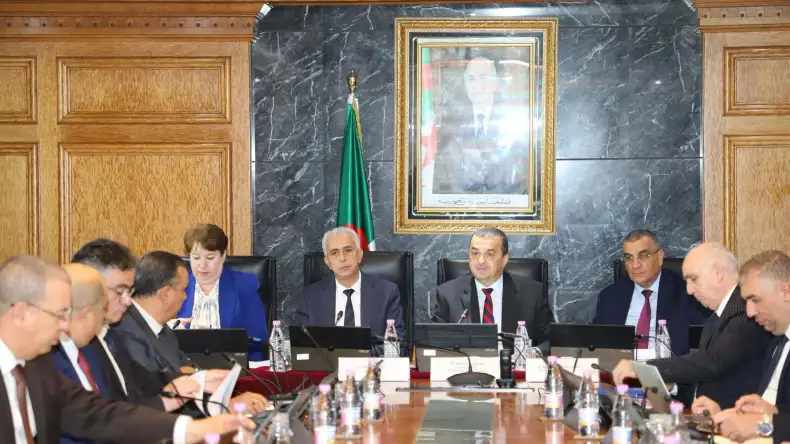
The high-level coordination meeting was robustly chaired by Minister of State and Minister of Hydrocarbons Mohamed Arkab, alongside Minister of Public Works and Basic Infrastructure Abdelkader Jalaoui, and Minister of Mines and Mining Industry Mourad Hanifi. During the discussions, officials consistently emphasized that the successful integration of the project's various components is considered absolutely key for its overall success and long-term viability. These integral components include the Belad Hadba mine, which serves as the primary source of raw material; the Wadi El Kébir conversion complex, where advanced processing takes place; the dedicated rail transport infrastructure, which ensures smooth movement of goods; and the expanded Annaba port quay, the gateway for international export. The meticulously coordinated development of these interconnected elements is seen as essential for ensuring efficient and streamlined operations from the initial stage of extraction all the way through to final export, solidifying Algeria’s position in the global phosphate market.