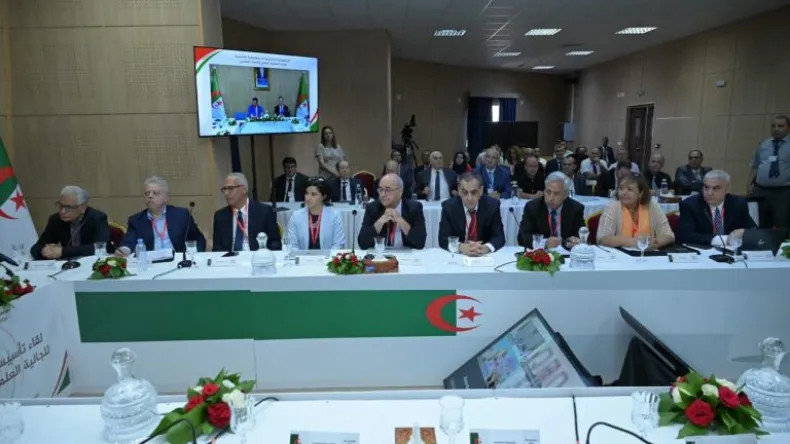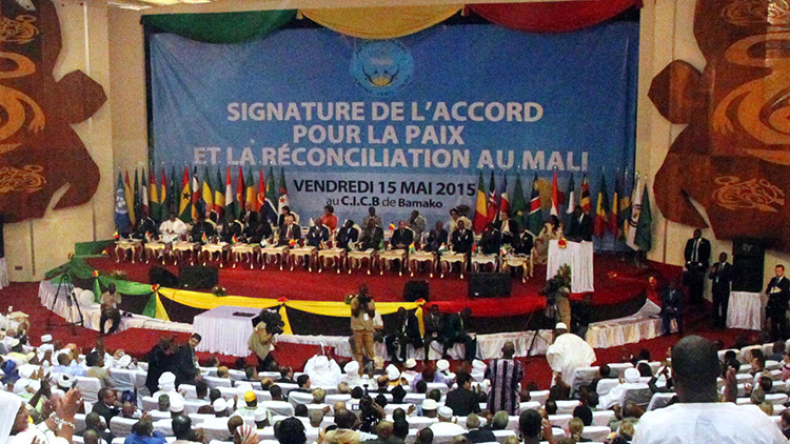
Algeria and Mali announced on July 10, 2026, the restoration of diplomatic relations, marked by the reopening of airspace and the return of their respective ambassadors. This development follows extensive behind-the-scenes negotiations between the two nations. The peace and reconciliation agreement, which had previously been a source of tension between Algeria and Mali, is now central to renewed discussions. This news was published on July 13, 2026.
Historic Ties Rekindled
Researchers and financial experts in Mali view the overcoming of previous diplomatic tension between Algeria and Mali, marked by the return of their ambassadors and the lifting of the airspace ban, as the re-establishment of a "brotherly neighborly relationship deeply rooted in history." Ibrahim Jougourta stated that the return of bilateral relations was expected at any moment. He added that the relations are historical and strong, deeply rooted in history.
The relationship experienced its strongest period during the era of the late President Moussa Traoré, who regularly spent his holidays in Algeria alongside the late President Houari Boumediene. Indeed, the relations witnessed their best stages during the era of the late President Moussa Traoré, who used to spend all his holidays in Algeria, alongside the late President Houari Boumediene. Algeria has provided assistance to Malians in solving their problems since the early 1960s, a role it has continued to play until today. The researcher acknowledged that Algeria served as a historical mediator in the crisis that affected Mali from 1991 to 2015. Despite diplomatic challenges, humanitarian, commercial, and cultural exchanges between the two countries did not completely cease. Financial elites in Mali have praised the restoration of bilateral relations with Algeria.
Diplomatic Breakthrough Details
The recent negotiations between Algeria and Mali were likely mediated by third parties or involved high-level meetings, as the simultaneous announcement of measures suggests a prior political agreement rather than improvisation. The simultaneous announcement on July 10, 2026, which materialized through the reopening of airspace and the return of the two countries' ambassadors to their diplomatic activities, reflects in-depth negotiations that took place behind the scenes. These negotiations were likely mediated by third parties or high-level meetings, as the simultaneity of the measures excludes improvisation and indicates a prior political agreement. The closure of airspace, a measure taken during the diplomatic strain, complicated military operations and logistical exchanges in the region. According to Ibrahim Jougourta, the closure of airspace complicated military operations and logistical exchanges.
Abdoule Sogodogo, a lecturer and researcher at the University of Kouroukanfoga in Bamako, noted that regional circumstances, such as insecurity in the Sahel, noted an urgent need for a resolution after the bilateral relations crisis emerged. The normalization of ties between the two nations requires strong political leadership from both sides to be sustained. This normalization requires strong political leadership from both sides.
Ibrahim Jougourta indicated that several countries might have contributed to resolving the crisis and restoring relations. He specifically mentioned Niger and Russia, identifying Russia as a strategic ally for Mali and Niger, and a "brotherly" nation to Algeria. Jougourta pointed to the role of some countries that may have contributed to resolving this crisis and restoring relations, mentioning Niger and Russia, the strategic ally of Mali, Niger, and "brotherly" Algeria.
Peace Agreement Prospects
Malian political analyst Ibrahim Jougourta did not dismiss the possibility that the transitional military council in Bamako could agree to resume work on the peace and reconciliation agreement. This accord was originally signed between the Malian state and Azawad northern opposition factions. Jougourta indicated that the researcher believes the Malian side would not refuse to revisit the agreement, "even if not fully," when Algerian partners intensify their efforts regarding the 2015 peace and reconciliation agreement signed in Algeria under UN auspices. Regarding the return to work on the peace and reconciliation agreement signed in Algeria under UN auspices in 2015, the researcher believes that "when the Algerian partners intensify their efforts, the Malian side does not refuse to return to the agreement, even if not fully." There may be initiatives and negotiation sessions between the government and the Azawad Liberation Front, under Algerian sponsorship, to resolve outstanding issues. The peace and reconciliation agreement was indeed one of the reasons that contributed to the tension between Algeria and Mali. According to Jougourta, overcoming the bilateral relations challenges between Algeria and Mali would "give dynamism the opportunity to rebuild the peace process on new foundations within a full framework for national reconciliation, led by Malians themselves, with support and guidance from Algeria." In his opinion, overcoming bilateral relations between the two countries would "give dynamism the opportunity to rebuild the peace process on new foundations within a full framework for national reconciliation, led by Malians themselves, with support and guidance from Algeria."
Future Cooperation and Stability
Bilateral relations between Algeria and Mali are expected to witness "intensity in cooperation in the future, not limited to the two countries, but extending to the rest of the Sahel countries, especially regarding security control in the region," according to Ibrahim Jougourta. He predicted that bilateral relations would witness "intensity in cooperation in the future, not limited to the two countries, but extending to the rest of the Sahel countries, especially regarding security control in the region." He stressed the need to establish "bilateral and multilateral consultation frameworks to confront cross-border challenges facing the two countries." Dr. Ahmedou Touré, Director of the Center for Research on Governance, Mediation, and Security in the Sahel, considers the restored relations a reflection of "the desire of both countries to reorganize strategically based on common interests and a unified vision for the stability of the Sahel region, and a tangible measure reflecting mutual diplomatic maturity." Touré viewed this as "a victory for pragmatic diplomacy and a historic opportunity to consolidate a win-win strategic partnership for all, an opportunity that must be exploited quickly through tangible initiatives: bilateral summits, hybrid mediation forums, and cross-border development projects." He considered what happened as "a victory for pragmatic diplomacy and a historic opportunity to consolidate a win-win strategic partnership for all, an opportunity that must be exploited quickly through tangible initiatives: bilateral summits, hybrid mediation forums, and cross-border development projects." According to Ahmed Touré, this development "paves the way for the resumption of direct exchanges and facilitates the rebuilding of trust between the two parties and enhances Mali's sovereignty, while allowing Algeria to confirm its historical role as a key partner in the Sahel region." This outcome is seen as a win-win strategy for both countries, opening the door for strengthening cooperation in the economic, energy, and infrastructure sectors. This is a win-win strategy for both countries, as it opens the door wide for strengthening cooperation in the economic, energy, and infrastructure sectors.