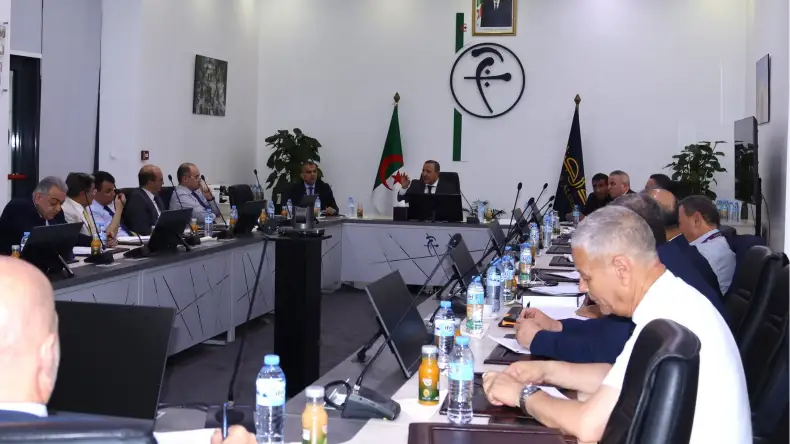
The Bank of Algeria issued a new directive on Monday evening, July 13, instructing authorized banks to facilitate the issuance of international payment cards for Algerian citizens seeking foreign exchange for travel abroad. This move, which grants the right to foreign exchange via international or dedicated payment cards, follows a meeting held earlier on Monday by Mohamed Lamine Lebou, Governor of the Bank of Algeria, with the country's authorized banks. During this key meeting, Governor Lebou conveyed specific instructions to the authorized banks, emphasizing the importance of streamlining the process for citizens to obtain foreign exchange for their international journeys. The directive from the central bank explicitly grants Algerian citizens the right to access foreign exchange for travel abroad through the use of either international payment cards or specially designated dedicated cards. This development represents a significant shift in how travel allowances are managed and disbursed, aiming to modernize financial transactions for Algerian travelers.
President Abdelmadjid Tebboune had previously given instructions in a cabinet meeting on Sunday for the travel foreign exchange allowance, estimated at 750 euros, to be paid exclusively via bank card. The decision to mandate bank cards for the foreign exchange allowance was made after authorities registered "serious abuses" that led to a drain of hard currency. These abuses, which involved illicit practices and unauthorized transfers, prompted the government to seek a more secure and traceable method for distributing the allowance. The shift to an exclusive bank card system is a direct response to these concerns, aiming to enhance transparency and accountability in foreign exchange transactions. This measure is intended to curb the illegal outflow of hard currency and ensure that the allocated funds are used strictly for their intended purpose of facilitating legitimate travel.
Card Issuance and Usage Rules
The new directives specify that the foreign exchange allowance can be credited to either Visa or Mastercard cards. Travelers are not required to obtain a new international payment card, as existing cards can be utilized for this purpose. This flexibility aims to ease the transition for citizens who already possess such cards. For families, guardians of minors are permitted to receive the foreign exchange allowance on their own cards, covering up to two children per family. This provision acknowledges the practicalities of family travel and simplifies the process for parents or legal guardians.
Authorized banks will issue international payment cards or dedicated cards specifically for foreign exchange transactions, with these cards being valid for a minimum of three years. This extended validity period is designed to reduce administrative burdens and provide long-term convenience for frequent travelers. To access the foreign exchange allowance, applicants must possess a national currency bank account. The equivalent amount in Algerian Dinars must be paid via written payment within seven working days prior to the scheduled travel date. This requirement ensures that the funds are properly accounted for and linked to a verifiable domestic financial source. Required documentation for obtaining the allowance includes a round-trip travel document, a valid passport, a visa if applicable, and proof of income. These documents are essential for verifying the applicant's travel plans and eligibility for the allowance. Currently, twelve public and private banks are involved in granting this foreign exchange allowance to Algerian citizens. This involvement of multiple banking institutions is intended to ensure broad accessibility and efficient processing of applications across the country. The full set of rules aims to create a structured and secure framework for the distribution and use of travel foreign exchange.
Allowance Details and Restrictions
The foreign exchange allowance may be utilized for expenses incurred abroad and for online purchases directly related to the purpose of travel. This broad scope of use ensures that travelers can cover various costs associated with their international journeys, from accommodation and transportation to essential online bookings. Any unused balances from the allowance will remain in the beneficiary's account, available for future travel. This feature provides significant flexibility, allowing travelers to retain unspent funds without forfeiture, which can then be applied to subsequent international trips. However, specific conditions apply to the allowance's use and return. If a traveler returns to Algeria before completing seven days abroad, or if the planned travel is canceled, the full amount of the foreign exchange allowance must be returned. This condition is in place to prevent misuse and ensure that the allowance is genuinely tied to actual international travel of a certain duration.
The annual maximum foreign exchange allowance has been set at the equivalent of 750 euros for adults, defined as individuals aged 19 years and older. For minors, specifically those aged 12 to under 19 years, the annual maximum allowance is capped at the equivalent of 300 euros. These limits apply to the total amount of foreign currency an individual can access through the new system within a year. These differentiated limits reflect varying travel needs and responsibilities between adult and minor travelers.
Further clarification on the process for accessing these funds was issued by the Bank of Algeria. On July 19, 2025, the central bank announced that individuals planning to benefit from the foreign exchange allowance for trips exceeding seven days are required to book the necessary funds at least three working days before their scheduled departure. This booking requirement aims to streamline the process and ensure the availability of funds for travelers, preventing last-minute complications. The allowance's design ensures that funds not spent during a trip are not forfeited, providing flexibility for future international travel. The regulations specify clear age-based distinctions for the maximum permissible allowance, ensuring different travel needs are addressed within the new framework. This structured approach is expected to bring greater order and predictability to foreign exchange management for travelers.
Combating Abuse and Enforcement
On August 8, 2025, the Bank of Algeria reiterated its stance against any action designed to divert the intended use of the foreign exchange allowance. This directive shows the central bank's commitment to ensuring the proper utilization of funds allocated for travel abroad, preventing their misuse or illegal circulation. The reiteration of the prohibition signals an ongoing effort to maintain the integrity of the new payment card system and to curb illicit financial activities that could undermine the country's economic stability. Authorities aim to ensure that the foreign exchange is exclusively used for legitimate travel-related expenses, aligning with the objectives of the recent financial reforms. This strong stance is key for upholding the credibility and effectiveness of the new system.
President Abdelmadjid Tebboune oversaw a meeting on February 10, 2025, specifically addressing the application of the new increase in the travel allowance. The meeting focused on the practical implementation of the revised foreign exchange limits and the procedures involved in making these funds accessible to Algerian citizens. This high-level oversight indicates the government's direct involvement in the rollout and monitoring of the new financial measures, emphasizing the importance placed on their effective execution. Discussions likely centered on ensuring smooth operations for both banks and travelers, addressing any operational bottlenecks that might arise during the initial phases of the new system. The President's engagement notes the national significance of these financial adjustments.
In early December of the previous year, President Tebboune had issued an order to raise the tourist allowance, setting it at an annual equivalent of 750 euros for adults and 300 euros for minors. This decision marked a significant adjustment to the previous allowances, aiming to provide more substantial financial support for Algerian citizens traveling internationally. Additionally, President Tebboune ordered the Hajj allowance to be set at 1000 dollars, reflecting specific provisions for religious pilgrimage. These changes were part of a broader initiative to facilitate legitimate foreign exchange access while simultaneously combating illicit money transfers, which had previously plagued the system. The full reforms aim to strike a balance between supporting citizens' travel needs and safeguarding national financial resources.
Failure to comply with the directive regarding the proper use of the foreign exchange allowance can result in severe penalties. Individuals found to be in violation of these regulations face the forfeiture of their right to foreign exchange for a period of five years. This administrative sanction is a significant deterrent, impacting future travel plans for those who attempt to circumvent the rules. Beyond this administrative sanction, non-compliant individuals also risk legal prosecution. This dual approach of administrative and judicial consequences notes the seriousness with which authorities view the diversion or abuse of the foreign exchange system. The measures are intended to act as a strong deterrent against any attempts to exploit the new payment card directives for unauthorized purposes, thereby protecting the integrity of Algeria's financial system and its foreign exchange reserves.