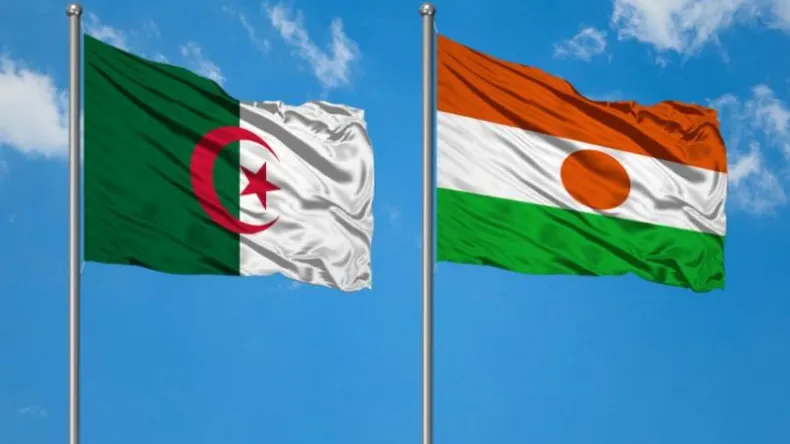
Algeria decided to deploy a detachment of military units to Niger to protect energy and economic facilities. Algerian institutions finalized the decision to send these forces on 25 October 2026 and 26 October 2026.
Professor Bana Ibrahim stated regarding the deployment: "إن القرار الذي اتخذته المؤسسات الجزائرية يومي 25 و26 أكتوبر 2026 يعكس إرادة سياسية تهدف إلى إضفاء بُعد عملي على هذه العلاقات المتجذرة." (The decision taken by Algerian institutions on 25 and 26 October 2026 reflects a political will aimed at giving a practical dimension to these deep-rooted relations.) The military units will operate to secure infrastructure critical to both nations as part of this strengthened cooperation. This deployment marks a significant evolution in the bilateral security framework between the two neighboring countries, as both Algiers and Niamey seek to formalize their joint efforts in safeguarding shared strategic interests. The decision to mobilize these units reflects a coordinated response to the evolving requirements of regional stability and the protection of vital assets located within the territory of Niger.
Strategic Military Deployment Rationale
Professor Bana Ibrahim serves as the head of the Geopolitical and Environmental Committee at the Advisory Council for Refoundation in Niger. Regarding the legal framework of the recent military deployment, he stated: "أما من الناحية الدستورية، فإن هذا القرار يكتسي أهمية خاصة؛ إذ تستند الجزائر إلى الأحكام التي أُدرجت في دستورها لعام 2020 للسماح بإرسال قوات عسكرية إلى الخارج." (As for the constitutional aspect, this decision is of particular importance; Algeria relies on the provisions included in its 2020 constitution to allow the sending of military forces abroad.)
This military cooperation between the two nations is designed to secure the Trans-Saharan gas pipeline project. Protecting this infrastructure remains a primary objective of the units deployed to the region, according to the strategic planning shared by Algerian and Nigerien authorities. The initiative represents a shift toward more direct oversight of critical economic assets situated across the shared border areas. By establishing a physical presence, the military units are tasked with ensuring the integrity of the pipeline route, which is considered a cornerstone of future energy cooperation. The collaboration between the two nations involves a full approach to site security, integrating intelligence sharing with active ground surveillance to mitigate potential threats to energy installations.
Logistical support for the Nigerien army has also expanded beyond the recent troop movements. Algeria delivered four helicopters to the Nigerien army in August 2026. These aircraft were provided to enhance the operational capacity of the Nigerien forces, specifically for border monitoring and the protection of industrial sites. The delivery serves as a component of the broader defense alignment between Algiers and Niamey. By bolstering the aerial surveillance capabilities of the Nigerien army, the provision of these four helicopters allows for more rapid response times and improved situational awareness across the vast, arid regions where key economic facilities are located. This sustained engagement shows the deepening reliance on shared defense resources to maintain the security of the energy corridor and broader territorial integrity.