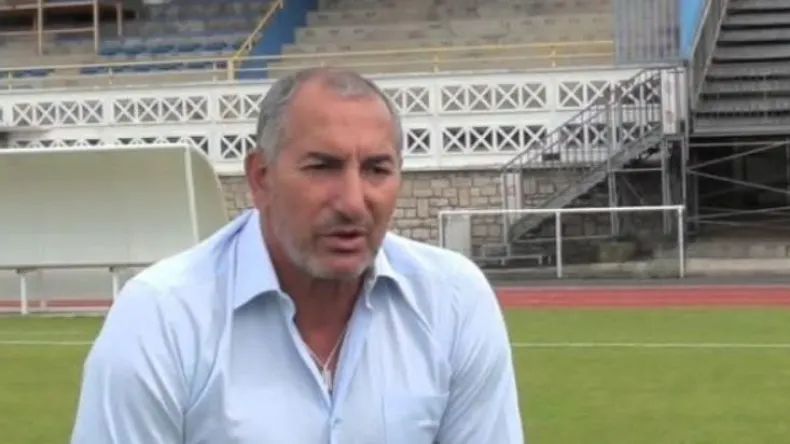
Algerian former international player Nourredine Kourichi has claimed that an Austrian player refused to collude in a 1982 World Cup match against West Germany. Kourichi identified Walter Schachner, an Austrian player, as the individual who declined to participate in the alleged match-fixing. The claims shed new light on the controversial fixture, often referred to as the "Disgrace of Gijón," which saw West Germany defeat Austria 1-0, eliminating Algeria from the tournament. Kourichi's statements regarding the player's refusal to collude have brought renewed attention to one of football's most infamous incidents.
The 'Gijón Disgrace'
Officials from Germany and Austria reportedly conspired to arrange a 1-0 victory for Germany during the 1982 World Cup in Spain, a result that allowed both teams to advance to the second round at Algeria's expense. The match, played on June 25, 1982, in Gijón, quickly drew international condemnation. This alleged collusion, which saw both European teams progress while Algeria was eliminated from the tournament, quickly became known as the 'Gijón disgrace' within the international sports press due to the perceived unsportsmanlike conduct. The outcome of the match ensured that both West Germany and Austria secured their places in the next stage of the competition, leaving Algeria, who had already played their final group game, out of contention. The strategic nature of the 1-0 scoreline, achieved early in the game and followed by a period of minimal attacking play, fueled suspicions among fans and commentators alike.
Following the widespread controversy and public outcry, FIFA implemented a significant rule change to prevent similar incidents from occurring in the future. The global football governing body subsequently mandated that all teams within a group play their final group stage matches simultaneously. This measure was introduced specifically to eliminate the possibility of teams knowing the exact result they needed to achieve qualification, thereby reducing the incentive for collusion or playing for a predetermined outcome. This rule change, a direct consequence of the "Disgrace of Gijón," remains a standard practice in international football tournaments to this day, ensuring fairness and integrity in the final group stage fixtures.
Schachner's Refusal and Character
Nourredine Kourichi attended the match in the Spanish city of Gijón on June 25, 1982, from the stands. He observed the game closely, including the performance of the players involved. Kourichi later described Walter Schachner, the Austrian player who reportedly refused to participate in the alleged collusion, in detail. Schachner was characterized as a left winger who consistently exerted maximum effort throughout the match. Kourichi noted Schachner's evident courage and determination on the field, which he suggested aligned with the player's refusal to engage in any unsportsmanlike conduct. This portrayal emphasizes Schachner's perceived integrity within the controversial fixture often dubbed the "Disgrace of Gijón." Kourichi's personal observation reinforced his belief that Schachner acted with a strong sense of fair play, standing apart from the alleged arrangement between the two national teams.
Kourichi's Stance on Reconciliation
Nourredine Kourichi recently discussed an invitation extended to former German goalkeeper Toni Schumacher by an Algerian newspaper. Kourichi stated in an interview with the French magazine 'Onze Mondial' that Schumacher attended the event, which Kourichi characterized as a "so-called reconciliation." Kourichi himself refused to participate in this initiative, indicating his deep-seated feelings about the incident. He clarified his stance, stating that the "shameful incident" could not be erased by a mere "coffee or tea session." His refusal showed his belief that the events of the 1982 World Cup match held a significance beyond casual reconciliation efforts. Kourichi's comments highlight the lasting impact of the "Disgrace of Gijón" on those directly affected, particularly the Algerian team and its supporters, and his conviction that true reconciliation would require more substantial acknowledgement or atonement for the alleged collusion.
Modern Football Reflections
Walter Schachner, now 69 years old, has reflected on modern football. He previously told the local newspaper 'Abseits' that his pride prevented him from approaching a club president for a job. Schachner also expressed surprise at the large number of coaching staff present in today's football compared to earlier eras. His observations offer a glimpse into the changing landscape of professional football, contrasting the simpler structures of his playing days with the complex, multi-personnel setups common in contemporary clubs. Schachner's comments suggest a preference for the more straightforward approach to the sport prevalent during his career.