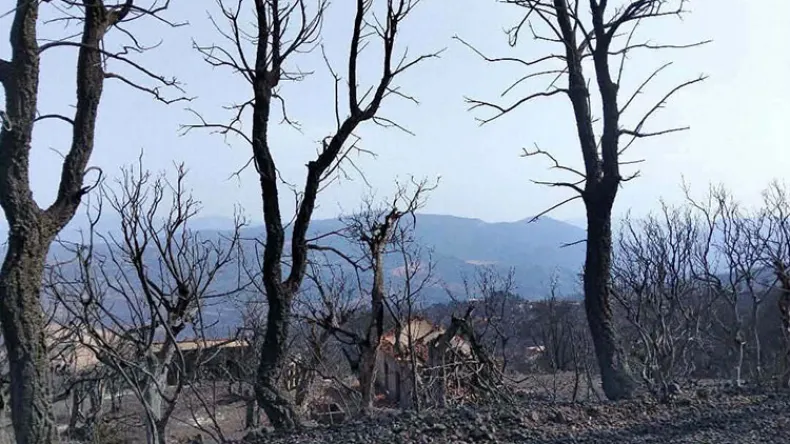
Wildfires have consumed large areas of forest in Jijel and other provinces, leading to increased concerns about subsequent natural disasters. Experts are now warning of a heightened risk of floods and landslides in these regions, as reported on September 11, 2026. The blazes have altered landscapes, reducing natural barriers against heavy rainfall and potentially destabilizing soil in affected areas. This pressing concern shows the critical need for immediate and long-term strategies to mitigate these evolving dangers.
Understanding the Post-Fire Hazard
Experts in disaster management warn that burnt areas are more susceptible to water runoff and the formation of floods and torrents with the return of rainfall. When vegetation burns, the soil loses its capacity to stabilize and absorb rainwater. This reduced absorption allows water to move faster across the surface, carrying soil and ash. The severity of the risk varies, contingent on factors such as soil type, the terrain's slope, the intensity and size of the wildfire, and the volume of rainfall occurring within a short period. Each of these elements plays a key role in determining the potential for devastating hydrological events.
Heavy and sudden rainfall represents the most concerning scenario for areas that have lost their protective vegetation cover. The absence of plant life means there is nothing to slow down the water's flow or hold the soil in place. Eroded soil and sediment can accumulate in wadis and drainage channels following such events, which reduces their capacity to manage water flow. This accumulation subsequently increases the likelihood of local floods or sudden torrents in the affected regions. The dramatic alteration of the landscape after a fire fundamentally changes how water interacts with the ground, creating conditions ripe for disaster.
The transformation of the soil's properties post-fire is a major contributor to this increased hazard. The heat from wildfires can create a water-repellent layer in the soil, further reducing its ability to absorb moisture. This phenomenon, coupled with the loss of roots that bind the soil together, makes the surface highly vulnerable to erosion. Consequently, even moderate rainfall can trigger significant surface runoff, leading to flash floods and debris flows that can be far more destructive than those occurring in undisturbed environments. Understanding these complex interactions is vital for accurate risk assessment and effective mitigation planning.
Vulnerable Locations and Communities
The risk of post-wildfire flooding and landslides is particularly elevated in sloping areas adjacent to valleys and residential communities. These topographical features naturally funnel water and debris, making them especially hazardous after fires have stripped away protective vegetation. Locations situated directly below slopes, near wadis, ravines, and established water flow paths face the highest vulnerability, especially if these areas sustained significant damage from recent fires. The combination of steep gradients and denuded land creates a perfect storm for rapid water movement and sediment transport.
Authorities have issued specific advice for residents in these susceptible zones. Citizens, particularly those residing in mountainous and rural areas close to wadis, are urged not to underestimate warnings regarding heavy rainfall. The seemingly innocuous start of a rain shower can quickly escalate into a dangerous torrent in a post-fire landscape. They are advised against attempting to cross wadis when water levels are high, as such actions can be extremely dangerous in post-fire landscapes. The force of floodwaters, often laden with debris, can be immense and unpredictable, posing a serious threat to life and property. Public awareness and adherence to safety guidelines are critical in preventing tragedies.
Urgent Preparedness and Prevention
Local authorities are urged to conduct field surveys of burnt areas before heavy rains. These surveys should focus on identifying potential accumulation points for debris and ensuring the cleaning of drainage channels to prevent blockages. This proactive measure aims to mitigate immediate flood risks by maintaining the capacity of natural and engineered water pathways. Such preparatory work is key for managing the altered hydrology of fire-scarred regions.
Effective coordination among civil protection agencies, municipalities, forestry services, and public works departments is recommended. Such collaboration is essential for developing full risk maps that highlight vulnerable areas and inform targeted prevention strategies. These maps would delineate zones most susceptible to flooding and landslides following wildfires, providing a vital tool for emergency responders and urban planners. Integrated efforts ensure a holistic approach to disaster readiness.
Reforestation efforts are considered a necessity for disaster prevention, extending beyond environmental rehabilitation alone. Replanting burned areas helps restore the soil's stability and water absorption capacity, thereby reducing the long-term risk of erosion and flooding. This approach integrates ecological restoration with community safety, recognizing that healthy ecosystems are fundamental to natural hazard mitigation. While a long-term solution, early planning and implementation of reforestation are critical.
Proactive measures are needed to address the aftermath of fires, recognizing that areas can swiftly transition from being at risk of fire to facing significant water and erosion hazards. This shift necessitates a change in disaster management focus, moving from fire suppression to anticipating and managing subsequent hydrological dangers. The imperative is to implement full strategies that span the entire disaster cycle, from prevention and preparedness to response and recovery, ensuring communities are resilient in the face of these complex and evolving threats.