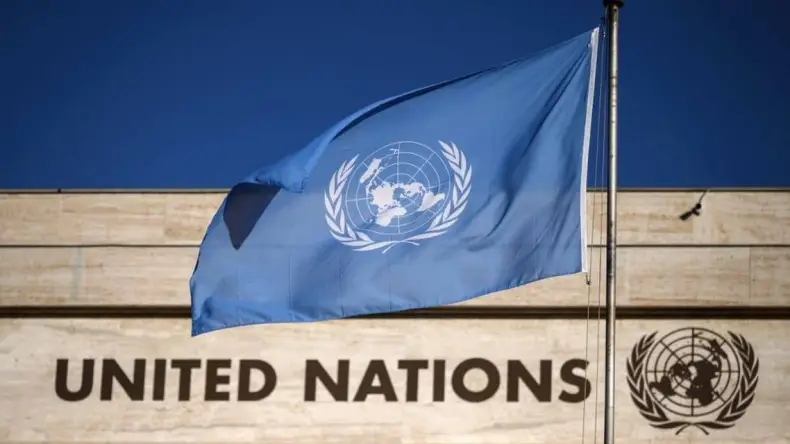
The United Nations General Assembly recently passed a resolution, advanced by Togo, aiming to correct the global geographical map imposed by Europeans over five centuries. This decisive vote occurred as Russian Foreign Minister Sergei Lavrov discussed the "evils of Europe" (شرور أوروبا) that have influenced the world for more than 500 years. Lavrov specifically articulated his views on the "evils of Europe" that have been flowing into the world for over five centuries, a sentiment that resonates with historical grievances. The overwhelming vote by the UN General Assembly on the project advanced by Togo seeks to rectify the geographical map of the world that Europeans have imposed on others for five centuries.
Historical Roots of Global Discontent
The fall of Al-Andalus in 1492 CE stands as a significant historical event, often cited as a turning point in the relationship between the Western and Muslim worlds. This event, specifically the fall of Al-Andalus in 1492, marked the end of centuries of Muslim rule on the Iberian Peninsula. Historians frequently point to this period as the beginning of a new era of European expansion and a decline in Muslim political power in the region. The year 1492 is also recognized for coinciding with the voyages of Christopher Columbus, further emphasizing a shift in global dynamics. This historical juncture is sometimes referenced when discussing the long-term impacts of European actions on other civilizations. The memory of Al-Andalus continues to resonate in contemporary discussions about historical grievances and the legacy of colonialism, noting the enduring impact of these foundational historical shifts.
Contemporary Crises and Value Conflicts
The current German government is described as importing foreign workers to sustain its aging economy while simultaneously pushing its people into what is termed an existential war with the Russians. This perspective suggests that the current German government brings in foreign workers to support its aging economy, only to then involve its populace in a conflict that is almost existential with the Russians. Within Germany, the Alternative für Deutschland (AfD) party is characterized as expelling "intruders" who contribute to the nation's economy, while also seeking cooperation with Russia. This party is noted for pushing out what it calls "intruders" from the country's resources, even though these individuals contribute to its economy, while simultaneously extending a hand of cooperation to Russia. Separately, those who claim a lineage to Musa (Moses) today, identified as Zionists in Palestine, are asserted to contradict the teachings of Musa and are engaged in what is described as a war of annihilation against the region's populations. This assertion states that those who claim descent from Moses today—the Zionists in Palestine—are acting contrary to Moses' teachings and are waging a war of extermination against the peoples of the region.
The Need for Muslim Collective Vision
Politicians in Muslim nations lack a sustained, lifelong strategic vision for the concept of "Ummah," according to some observers. This perspective suggests that a collective, unified approach is absent in their long-term planning. Reliance on the individual capabilities of fragmented small states is deemed insufficient to resolve their problems when confronted by existential threats. The notion is that relying on the specific capabilities of small, fragmented states is insufficient to solve their problems when faced with existential dangers. This viewpoint argues that such states, acting in isolation, cannot effectively address the significant dangers they face, showing the perceived need for a broader, more unified approach.
Media's Role in Shaping Narratives
Since 2005, El-Chourouk Media and Publishing House (مؤسسة الشروق للإعلام والنشر) launched one of the first news websites in Algeria and the Arab world. This media outlet, since 2005, introduced one of the earliest news websites in both Algeria and the broader Arab world. This media outlet contributes to the broader information landscape, influencing discussions and perceptions within the region by providing an independent platform for news and commentary.