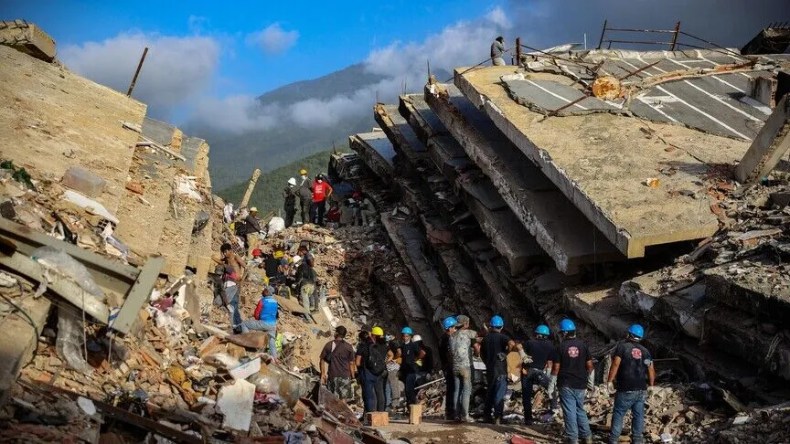
The death toll from powerful earthquakes that struck northern Venezuela last month has risen significantly to 2,645. This updated and tragic figure was officially announced on Friday by the Venezuelan Ministry of Communication and Information. These devastating seismic events, which included two major earthquakes measuring magnitude 7.2 and 7.5, hit the South American country on June 24, causing widespread destruction and loss of life across several regions. The Ministry's announcement shows the severe impact these natural disasters have had on the nation, as rescue and recovery efforts continue.
Scale of Disaster
The scale of the disaster is becoming increasingly clear as authorities compile full data. The tremors affected a total of 885 buildings across the impacted areas, leaving many structures compromised. Among these, a staggering 189 buildings completely collapsed, according to official reports from the Venezuelan government. This extensive structural damage has displaced thousands and complicated rescue operations. Since the initial disaster, the region has experienced a continuous series of seismic activities, with 890 aftershocks having been recorded, further exacerbating the precarious situation for residents and rescue teams alike. The two powerful earthquakes that initiated this crisis struck with alarming proximity, occurring only 39 seconds apart, effectively delivering a dual blow to the affected communities. The magnitude 7.5 earthquake, the more powerful of the two, was centered 23 kilometers southeast of Yumare, a town located in Yaracuy state, indicating a significant impact zone within that region. The second seismic event, a magnitude 7.2 earthquake, occurred just 23.9 kilometers northeast of San Felipe. San Felipe is also situated within Yaracuy state, further noting a concentrated area of impact and extensive damage within this specific state. The close proximity and high magnitudes of these quakes contributed to the widespread destruction observed.
Rescue and Aid Efforts
In the immediate aftermath of the devastating earthquakes, extensive rescue operations were launched. These efforts have led to the successful rescue of 6,462 people from collapsed structures and hazardous environments so far, a testament to the dedication of emergency responders. Emergency aid has been swiftly distributed to provide critical relief to 86,117 families across the affected areas, addressing immediate needs such as shelter, food, and medical supplies. The response has also seen significant international cooperation, with more than 3,300 international rescuers mobilized to assist in the complex and challenging disaster response efforts. These international teams have brought specialized skills and equipment, augmenting local capabilities. Domestically, Caracas authorities confirmed the deployment of nearly 30,000 agents and responders from various agencies throughout the region for ongoing rescue and assistance operations. These personnel are working tirelessly to locate survivors, provide medical attention, and help communities begin the long process of recovery.
Official Update
The latest official update from the Venezuelan Ministry of Communication and Information reported that 12,666 people have been injured in the earthquakes, adding to the growing human toll. This update comes as rescue and relief efforts continue across the affected regions, with authorities diligently working to provide care and support. Authorities have been compiling a full picture of the disaster's impact, which includes both fatalities and injuries, alongside the extensive damage to infrastructure. The government's latest figures provide a clearer estimation of the human toll following the seismic events that struck northern Venezuela, enabling a more targeted and effective response. Teams of medical personnel and emergency responders are still actively engaged in providing care and assistance to those affected, working to address the extensive needs arising from the widespread damage and displacement. The Ministry emphasized the ongoing nature of these efforts, stating that operations will continue as the full scope of the disaster becomes clearer and the long-term recovery needs are assessed. The commitment to aiding all affected citizens remains a top priority for the government.