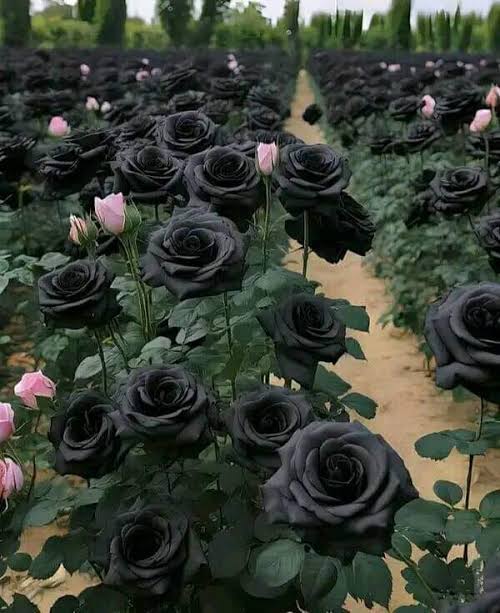
The Karagül, a unique rose variety native to the Halfeti district of Şanlıurfa, Turkey, is distinguished by its exceptionally dark petals. Its name, "Karagül," translates directly to "black rose" in Turkish. The petals of this rare bloom are so deeply pigmented they appear black to the eye, though they are a very deep burgundy that shifts to black depending on the light and the season. This striking appearance has captivated botanists and visitors alike, making it a subject of both scientific interest and cultural fascination.
A Rose of Unique Hue
The Karagül rose is indigenous to Halfeti, a village situated within the Şanlıurfa province in southeastern Turkey. This specific variety of rose exhibits a distinctive blooming pattern, unfolding in two primary phases throughout the year. Its deepest black hue is observed during the spring months, presenting an almost velvety, inky black color. As the summer season advances, the rose gradually transitions, revealing a deep red color. This seasonal color change is one of its most remarkable characteristics, adding to its mystique.
Botanists have attributed the Karagül's unique coloration to a confluence of specific environmental factors present in its native habitat. These include limestone-rich soils, which provide a particular mineral composition essential for the rose's development. Additionally, a specific mineral composition found in the Euphrates river water plays a key role in nourishing the plants. The climate of Halfeti, characterized by hot summers and cold winters, further contributes to the ideal growing conditions. The interaction of these elements – the unique soil, the specific water composition, and the distinct climate – is understood to be key for the development of its intensely dark pigmentation. When efforts are made to cultivate the Karagül outside of the Halfeti region, the rose consistently loses its characteristic black hue. In such circumstances, it reverts to the appearance of an ordinary dark red rose, failing to replicate its unique visual trait. This sensitivity to its environment shows the specific conditions required for the Karagül to maintain its distinctive appearance, noting the irreplaceable nature of its native ecosystem.
Halfeti's Submerged Past
In the 2000s, the construction of the Birecik Dam on the Euphrates River led to the partial submergence of the old village of Halfeti. This development significantly altered the landscape, impacting the local environment and the Karagül rose's cultivation. The dam's construction resulted in a reduction of cultivable land, further increasing the rarity of the unique black rose variety. The environmental changes introduced by the dam's reservoir created new challenges for maintaining the specific conditions required for the Karagül to thrive, as its natural habitat was significantly altered.
As a direct consequence of the dam project, residents of the submerged old village were relocated to a new settlement. This new village was constructed at a higher elevation, ensuring the community could continue to reside in the Halfeti district and rebuild their lives. Despite the relocation and the changes to the landscape, the historical remnants of the old village remain a visible feature of the area. Under calm weather conditions, the ruins of the original Halfeti are discernible underwater, offering a stark reminder of the district's altered past and the profound changes brought about by the dam. This submerged heritage continues to shape the identity of the region, intertwining the Karagül's story with the district's recent history of transformation and resilience in the face of environmental and social upheaval.
Symbol of Resistance and Tourism
For the displaced inhabitants of Halfeti, the Karagül rose has become an emblem of quiet resistance. Its ability to maintain its unique identity only within its native soil mirrors the community's enduring connection to their ancestral land despite relocation. In Turkish tradition, the black rose is widely recognized as a symbol of mourning, reflecting the community's loss of their original village and way of life. However, it also embodies hope and perseverance, much like the community's efforts to preserve their heritage.
Beyond its cultural significance, the Karagül has emerged as a significant attraction for Turkish tourism. Visitors travel to Halfeti, often by boat on the Euphrates River, specifically to witness the roses in their natural habitat and learn about their unique story. This influx of tourism provides an important economic lifeline for the region. A small number of local families are responsible for cultivating the roses and protecting the unique plants, passing down traditional knowledge and ensuring the species' survival. Their dedicated efforts are key for the continued existence of this rare botanical marvel. Recognizing its unique status and ecological importance, Turkish authorities have officially classified the Karagül as a protected plant species, safeguarding its future and ensuring its preservation for generations to come. This protection shows the rose's importance not just as a local treasure, but as a national heritage.