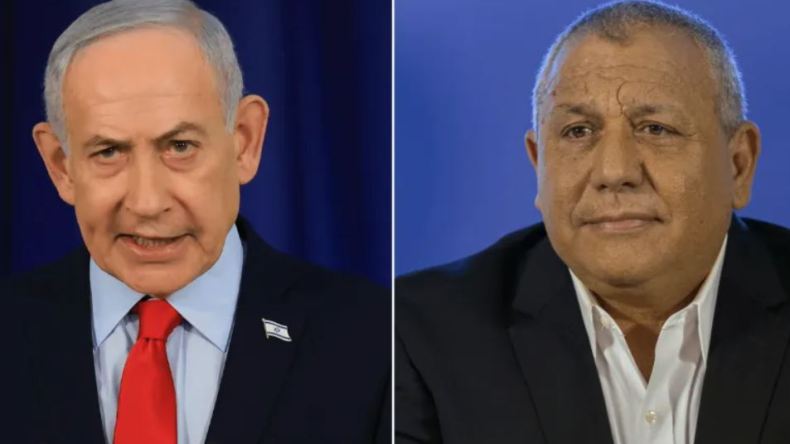
Gadi Eisenkot assumed the position of Chief of Staff of the Israeli Army on 16 February 2025, succeeding Benny Gantz. His appointment marks a shift in the leadership of the Israeli military establishment while Benjamin Netanyahu continues to govern. Mohamed Boualrawiah addressed the political implications of this transition, stating: "What excites the Arab parties to ally with Eisenkot? If the purpose of this is to bring down the Netanyahu government and search for an alternative, then the alternative represented by Eisenkot is like choosing the bad to succeed the worse, but there are no guarantees and no trust in the Israeli leadership." This transition follows the departure of Benny Gantz, leaving Gadi Eisenkot to manage the military structure under the current government. The dynamics between these two figures represent a complex internal struggle within the Israeli state, often characterized by tactical maneuvering rather than fundamental ideological disagreement.
Military Roots and Career Path
Gadi Eisenkot entered military service at age 18, eventually serving as a squad leader during the Israeli invasion of Lebanon in the early 1980s. This early period of service provided the foundation for his long-term integration into the military hierarchy. His progression through the ranks included a tenure as commander of the Golani Brigade, where he served between 1997 and 1998. During this time, the brigade operated under his direct leadership, cementing his reputation within the defense establishment.
Human rights organizations and various observers have accused the Golani Brigade of responsibility for the massacre in the Shuja'iyya neighborhood. These allegations specifically cite events that occurred in December 2023 and December 2026. The association of the brigade with these specific incidents remains a point of contention in public discourse regarding the military’s conduct. The recurrence of these allegations across different years notes the ongoing scrutiny directed at the units Gadi Eisenkot has led throughout his career.
Political maneuvering has defined Gadi Eisenkot’s transition from military service to the broader national sphere. He established four specific conditions for any potential political alliances he might consider. First, he demands recognition of Israel as a Jewish, democratic, and liberal state based on equality. The inclusion of this condition suggests a desire to anchor his political platform in a specific definition of the state's identity. Second, he requires a commitment to the values of the Declaration of Independence. By invoking this document, he seeks to align his political objectives with the foundational principles established at the inception of the state. Third, he insists on mandatory military or civil service for all citizens. This condition reflects his background as a career military officer and his emphasis on national duty. Finally, he calls for the total elimination of Hamas's military capabilities. This final requirement serves as a central pillar of his security policy, indicating that his strategic outlook remains focused on the eradication of specific military threats. These conditions function as the primary framework through which Gadi Eisenkot evaluates potential political partners, shaping the landscape of his engagement with the current government led by Benjamin Netanyahu.