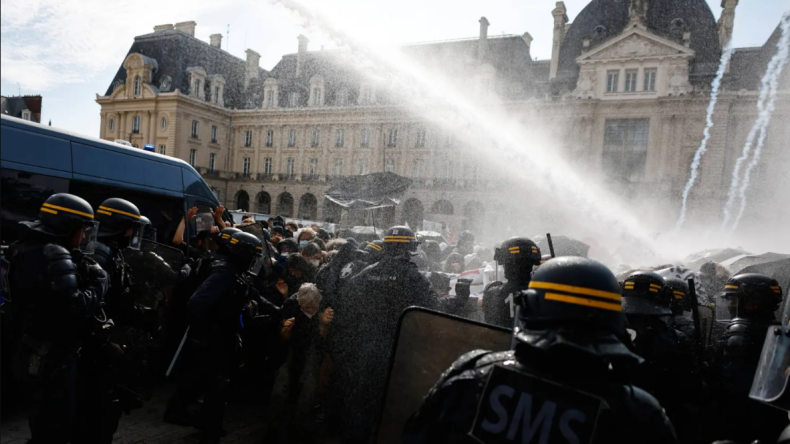
French authorities deployed 70,000 police and gendarmes across the country on 24 October to manage widespread protests. This security presence marks a 20% increase in personnel compared to the mobilisation seen during the demonstrations on 17 October. Interior Minister Laurent Nunez stated that "no major incident has occurred" as security forces maintained positions in major cities including Paris, Lyon, Mulhouse, Nancy, Besançon, and Orléans. Authorities continue to monitor the demonstrations, which have prompted heightened vigilance from government officials. The deployment of these 70,000 personnel represents a strategic effort by the state to maintain public order and control the flow of demonstrators in urban centers. By increasing the number of officers by 20% relative to the previous week’s events, the government sought to establish a visible deterrent against potential disruptions.
Police Response and Arrests
French police arrested 135 people during the demonstrations held on 24 October. Authorities conducted these arrests as part of efforts to manage the crowds across the country. The arrests were executed as police units patrolled the streets to enforce public safety regulations.
Officers confiscated various items from protesters, including metal balls, lead balls, fireworks, and slingshots. The inventory of seized objects also included steel balls, improvised weapons, a katana sword, and air weapons. The discovery of these specific items led to heightened scrutiny of the items being carried by individuals participating in the gatherings.
Security forces in Lyon engaged directly with participants in a prohibited area. Police used tear gas to disperse a group of approximately 150 people gathered at the site. This intervention in Lyon was part of the broader nationwide strategy to prevent unauthorized assemblies in designated zones.
Impact on Cultural Institutions
Prominent cultural institutions in Paris shuttered their doors on 24 October to address rising security concerns stemming from the ongoing protests. Officials at the Louvre confirmed that the museum would remain closed to the public throughout the day as security forces managed demonstrations across the city. The Musée d'Orsay also ceased operations, citing the need to ensure the safety of visitors and staff amid the unrest. These closures restricted access to two of the most visited sites in the country while police maintained a significant presence in the capital. Government authorities implemented these measures as part of an effort to minimize potential risks to heritage sites and crowds during the period of civil disorder. By closing these institutions, officials aimed to prevent large gatherings from forming near high-profile landmarks.
Economic Context and Dialogue
Moody's maintained France's sovereign credit rating following an assessment of the nation's financial outlook. The agency cited expectations that the government will implement a budget designed to reduce the national deficit. This decision by Moody's provides a perspective on the nation's fiscal stability amidst the current civil activity.
President Emmanuel Macron held a meeting with representatives of student organizations on 23 October 2026. The discussion focused on education-related grievances presented by the group members. This meeting took place one day before the large-scale mobilization of police forces. The dialogue between President Emmanuel Macron and the student representatives served as an official channel to address the specific concerns raised by the student organizations regarding the state of the education system.