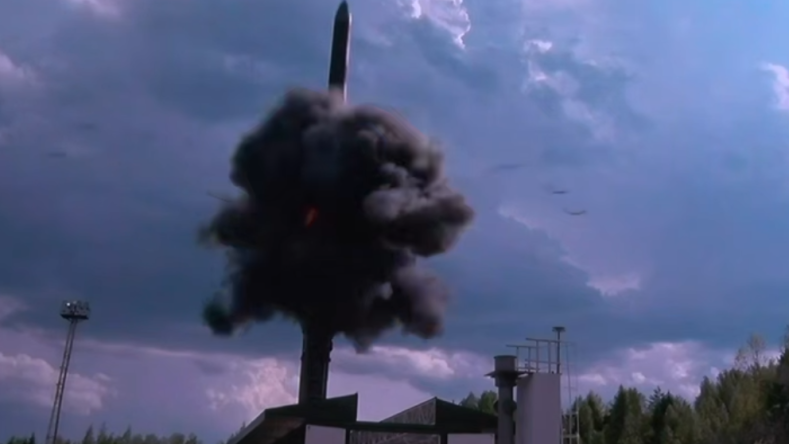
Russia's Ministry of Defense announced on Thursday the successful conclusion of joint "Nuclear Deterrence" exercises with Belarus. The drills, which took place from May 19 to May 21, involved the launch of strategic and hypersonic missiles. These launches were conducted from land, sea, and air platforms as part of the extensive exercise program. The exercises were designed to test and enhance the readiness of both nations' strategic forces and their ability to operate in a coordinated manner. According to the Ministry's statement, the maneuvers achieved all their stated objectives, demonstrating the high level of training and interoperability between the Russian and Belarusian armed forces.
Missile Launches Across Domains
During the exercises, a "Yars" intercontinental ballistic missile was launched from Plesetsk Cosmodrome, targeting the Kura range in the Kamchatka Peninsula. This launch showcased the capabilities of Russia's land-based strategic missile forces. Concurrently, a Russian strategic nuclear submarine also launched a "Sineva" intercontinental ballistic missile from the Barents Sea, demonstrating the efficacy of the naval component of the strategic deterrent. The "Sineva" missile launch further showed the multi-domain nature of the drills. A Russian frigate deployed a "Zircon" hypersonic missile from the Barents Sea, which successfully struck the Chizha test site. This particular launch noted the advanced capabilities of Russia's hypersonic missile technology in a maritime context.
Strategic "Tu-95MS" bombers were involved, launching air-to-ground hypersonic cruise missiles as part of the drills. These long-range bombers demonstrated their capacity to deliver high-precision strikes from the air. "MiG-31" fighter jets further contributed by carrying out launches of "Kinzhal" hypersonic missiles. The "Kinzhal" launches emphasized the air force's role in the joint deterrence strategy, showcasing its speed and precision. A Belarusian crew participated in the exercises by performing a practical ballistic missile launch using the "Iskander-M" system, demonstrating its operational capabilities and the integration of Belarusian forces into the joint exercise framework. The "Iskander-M" system's deployment by Belarusian personnel showed the close military cooperation between the two countries.
Scale of Military Mobilization
More than 64,000 military personnel participated in the joint exercises concluded by Russia and Belarus. This substantial number of participants reflects the large-scale nature and strategic importance of the drills. The exercises involved over 7,800 pieces of military equipment across various branches, noting the full deployment of assets. This extensive mobilization included more than 200 missile launch platforms, demonstrating a significant deployment of strike capabilities from diverse locations. The presence of such a large number of launch platforms emphasized the readiness and scale of the strategic forces involved. Airpower integration featured 140 aircraft, contributing to the exercises' multi-domain scope and ensuring air superiority and support for ground and naval operations.
Naval forces were also prominently involved, with 73 surface ships taking part in the maneuvers. These vessels played a key role in the maritime components of the exercises, including missile launches and defensive operations. Additionally, the exercises incorporated 13 submarines, of which 8 were strategic submarines, noting the significant underwater component of the joint operations. The involvement of strategic submarines further showed the nuclear deterrence aspect of the drills, showcasing the capabilities of the underwater fleet. The combined deployment of land, air, and naval assets, along with a substantial number of personnel and equipment, showcased the depth and breadth of the military cooperation and defensive readiness of Russia and Belarus.
Context and Significance
Russia and Belarus concluded their joint "Nuclear Deterrence" exercises, which involved significant military mobilization across multiple domains. The drills, conducted from May 19 to May 21, featured launches of strategic and hypersonic missiles from land, sea, and air platforms. Participants included over 64,000 military personnel and more than 7,800 pieces of military equipment, showing the scale of the joint military effort. The exercises saw the launch of a "Yars" intercontinental ballistic missile, a "Sineva" intercontinental ballistic missile from a strategic nuclear submarine, and a "Zircon" hypersonic missile from a frigate. Strategic "Tu-95MS" bombers and "MiG-31" fighter jets also deployed hypersonic cruise missiles, demonstrating a wide array of advanced weaponry. A Belarusian crew conducted a practical ballistic missile launch using the "Iskander-M" system, noting their active participation and integration. The maneuvers incorporated more than 200 missile launch platforms, 140 aircraft, 73 surface ships, and 13 submarines, with 8 being strategic submarines, illustrating the full nature of the drills across all military branches.