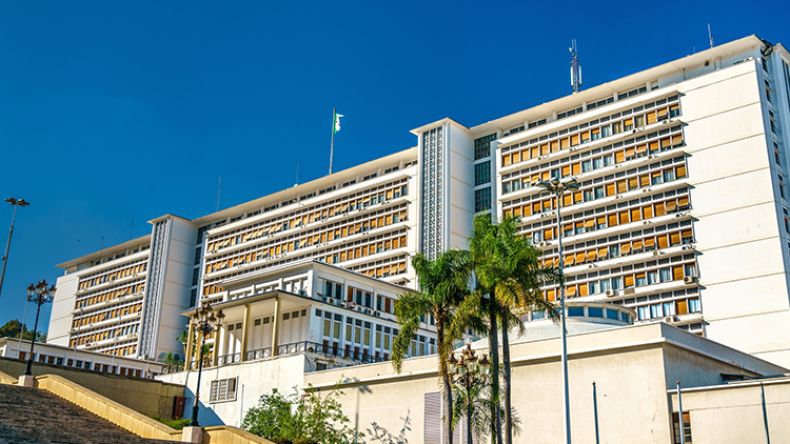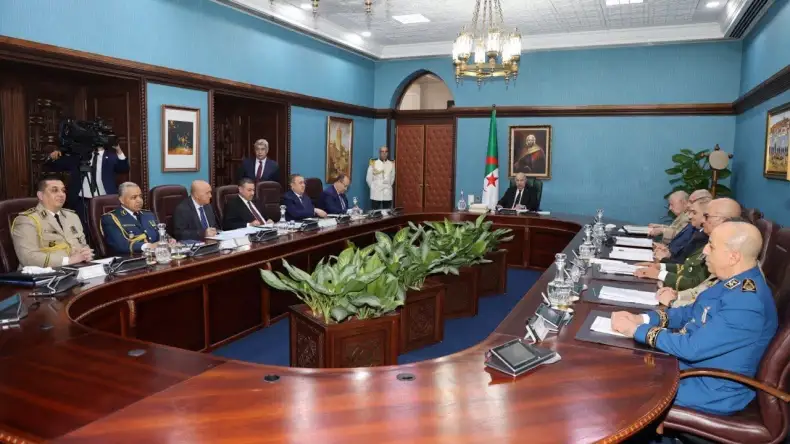
President Abdelmadjid Tebboune, also serving as President of the Republic, Supreme Commander of the Armed Forces, and Minister of National Defense, convened a meeting of the Supreme Security Council on Thursday. The gathering was held in Algiers, bringing together key security officials to discuss pertinent matters concerning the nation's well-being. This session marks a regular engagement for the council, which addresses national security concerns under the direct leadership of the head of state. The President's multifaceted role shows the critical importance and high-level attention given to these security deliberations. The meeting was a significant event, noting the continuous efforts to maintain stability and preparedness across Algeria.
Council Membership Details
The Supreme Security Council in Algeria comprises several high-ranking officials, reflecting a broad spectrum of governmental and security leadership. The President of the Republic chairs the council, providing ultimate oversight and direction. Its core membership also includes the Prime Minister or Head of Government, who plays a key role in implementing policy decisions. Key security and legal figures form another essential part of its composition, specifically the Chief of Staff of the Army, the Minister of Justice, the Minister of Interior, and the Minister of Foreign Affairs. Each of these officials brings a unique perspective and area of expertise to the council's discussions, ensuring a full approach to national security. Additionally, the Director of the Presidency's Office participates in the council's deliberations, according to official statements, serving as a vital link to the presidential administration.
Further expanding its operational and intelligence representation, the Gendarmerie Commander is a member of the Council, contributing insights from national law enforcement and public order. Other critical security directors also join these meetings, including the Director General of Security, responsible for general policing and public safety. The Director General of Documentation and External Security provides key intelligence on foreign threats and geopolitical developments, while the Director General of Internal Security focuses on domestic intelligence and counter-terrorism. The Director General of Counter-Sabotage and the Central Director of Army Security are also integral parts of the Supreme Security Council, ensuring full oversight of national security matters and military intelligence. This extensive membership ensures that all aspects of national defense and internal security are thoroughly considered during council sessions.
Mandate and Meeting Frequency
The Supreme Security Council convenes in ordinary sessions to address matters pertaining to national security, according to official procedures. These meetings are held whenever the need arises, encompassing both internal and external dimensions of national security. This flexible scheduling allows the council to respond promptly to emerging threats or evolving situations, maintaining a proactive stance on national defense. The council's mandate allows it to decide on any issue considered relevant to the country's safety and stability, granting it broad authority to shape security policy. Its operational framework ensures that critical security concerns are deliberated and decisions are made in a timely manner, which is key for effective national protection. The council's ability to convene as necessary shows its role as a flexible and responsive body designed to protect Algeria's interests across various security landscapes. This approach facilitates a full review of potential threats and challenges, enabling a coordinated response from the highest levels of government and security agencies.
National Security Focus
The Supreme Security Council meeting, chaired by President Abdelmadjid Tebboune, concentrated on evaluating the general situation within Algeria and the broader regional context. Discussions during the session addressed various facets of national security, with particular attention given to internal stability and external challenges. The council reviewed the preparedness of security forces and discussed strategies for safeguarding the country's interests against a backdrop of complex regional dynamics. This focus aligns with the body's primary role in advising the President on critical security decisions and coordinating national efforts. Attendees deliberated on measures necessary to maintain order and protect national assets, ensuring the continued safety and prosperity of the Algerian people. The President's oversight ensures that all security operations and policy directions are coordinated at the highest level of government, reinforcing the nation's resilience against potential threats.