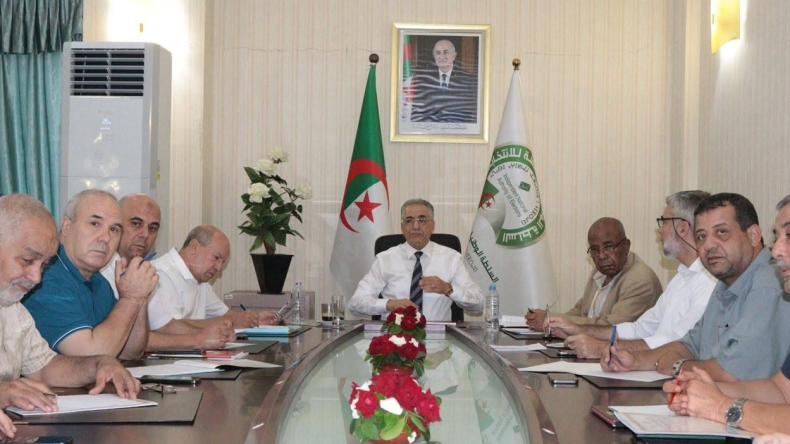
Algeria's Ministry of National Education has officially released the organizational and pedagogical arrangements for a new English language curriculum specifically designed for middle schoolers in their second year. This significant announcement by the ministry implements ministerial reference number 19, which is dated July 27, 2026. The full framework outlines the structure, methodology, and implementation strategies for the updated curriculum, signaling a key development in language education across the nation's middle schools.
Curriculum Goals and Structure
The new curriculum seeks to establish a gradual and consistent development of competencies in the English language across all educational levels within the middle school stage, according to the Ministry of National Education. A primary objective of this updated framework is to facilitate a gradual and homogeneous building of competencies in English, recognized as a living global language, across all educational levels of the same stage. This approach aims to ensure that students acquire language skills progressively and uniformly throughout their middle school years.
Its pedagogical approach integrates both communicative and writing methods, emphasizing a holistic development of language proficiency. The new curriculum specifically requires an integrated pedagogical approach, combining both communicative and writing approaches to foster well-rounded language skills. Instruction will utilize three primary educational methods to achieve these goals: the textbook, oral communication and discourse comprehension, and the development of writing skills. These methods are designed to provide a balanced learning experience, covering various aspects of language acquisition.
To support this instructional model, three specific teaching tools are mandated for use. These include the student textbook, which serves as the core learning material, a didactic guide specifically designed for teachers to aid in lesson planning and delivery, and an audio resource provided as digital support. This digital audio resource is key for enhancing oral comprehension and communication activities, allowing students to engage with authentic English sounds and dialogues. The ministry has allocated 3.5 hours per week for teaching the English subject. This weekly teaching time of 3.5 hours is to be distributed evenly and flexibly across the week, with a clear emphasis on avoiding the consolidation of lessons into single, lengthy blocks. This ensures that students engage with the language regularly and in manageable segments, optimizing learning retention and engagement.
Implementation and Teacher Training
The General Directorate of Education has requested education directors to implement five distinct procedural measures to facilitate the successful introduction of the new English curriculum for second-year middle school students. These measures are meticulously designed to ensure a smooth transition and the effective delivery of the updated academic content across all institutions. This proactive strategy shows the ministry's commitment to a smooth rollout and consistent application of the new educational standards.
As a critical part of the implementation strategy, inspectors are specifically obligated to provide full training to teachers. This training will cover the new curriculum's content in detail, as well as its specific implementation mechanisms, ensuring educators are fully prepared. This aims to equip educators with the necessary skills and understanding to teach the material effectively and adapt to the new methodologies. Coordination meetings for English teachers are mandated to be held regularly. These meetings are key for addressing any diagnosed learning difficulties that students may encounter with the new curriculum, providing a collaborative platform for educators. These sessions will serve as a vital platform for educators to share insights, discuss challenges, and strategize collective solutions to enhance student learning.
The curriculum framework also stipulates that any learning difficulties identified through ongoing assessment will be promptly diagnosed and addressed with specific remedial plans. This proactive and supportive approach aims to ensure that all students can meet the learning objectives set forth by the new curriculum. To support these extensive efforts, teachers and middle school principals are explicitly required to download the new English curriculum for the second year of middle school. Alongside the curriculum, they must also download the accompanying didactic guide from the national education sector's official information system. This mandatory step ensures that all relevant personnel have immediate and direct access to the official, up-to-date materials and guidelines necessary for effective implementation.
Context and Ministerial Directives
A ministerial dispatch, dated September 3rd and bearing the number 453, was issued, outlining the full framework for the curriculum and providing further directives. The Ministry of National Education confirmed that the newly launched English curriculum is specifically intended to replace the previous version, signifying a complete overhaul of the existing program. This replacement reflects the ministry's commitment to modernizing language education and aligning it with contemporary pedagogical best practices.