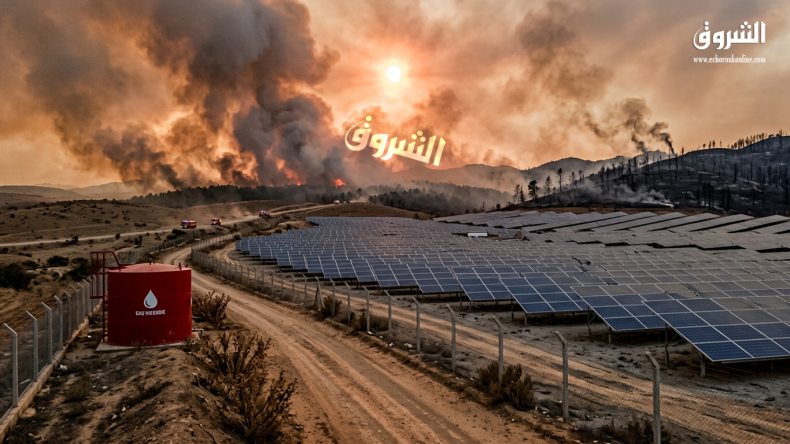
Algeria's solar power plants confront an escalating challenge from forest fires, which have increased in frequency across the country in recent years. This growing threat is particularly pertinent as Algeria continues to invest significantly in renewable energy as part of its national development strategy. The specialized platform 'Al-Taqah' (Energy) has reported extensively on this critical issue, noting the increasing vulnerability of the nation's solar infrastructure. The report shows profound concerns over the potential impact of these environmental incidents on the country's ambitious renewable energy projects, especially as Algeria actively expands its solar capacity to meet growing energy demands and diversify its energy mix. This situation brings into sharp focus the urgent need for strong protective measures for solar installations, adapting to and mitigating risks amidst evolving climate patterns that contribute to more frequent and intense fire seasons. The integration of solar energy is a cornerstone of Algeria's long-term energy vision, making the safeguarding of these assets critical.
Rising Fire Risks Globally
The risks associated with forest fires are no longer confined solely to Southern Europe, a region historically prone to such events. Instead, their frequency and intensity have intensified across various parts of the continent and in several Arab region countries. This includes Algeria, where the trend of increasing fire incidents has been particularly noticeable and concerning in recent years. This rise in fire occurrences is unfolding amid more frequent and prolonged heatwaves and droughts, conditions that severely exacerbate fire risks. These extreme climatic conditions are partly linked to global climate change, which contributes to creating environments that are more susceptible to ignition and rapid fire spread. The geographical expansion of fire-prone regions shows a broadening challenge for critical infrastructure, including vital renewable energy installations, extending beyond historically affected areas. This global phenomenon notes the imperative for adaptive strategies and enhanced fire prevention measures to be implemented across a wider geographical scope, requiring international cooperation and localized innovations in fire management.
Essential Protection Measures
Protecting solar power stations from the destructive potential of forest fires necessitates a full package of measures, implemented proactively and reactively. These measures fundamentally include reducing vegetation and other flammable materials within and around the plant, ensuring clear and efficient access for emergency services, providing adequate fire-fighting equipment on-site, and establishing strong prior coordination with local authorities and fire brigades. Maintaining short vegetation within the solar plant's perimeter is identified as a primary and continuous step in fire prevention. For large-scale facilities or those situated adjacent to dense forest areas, digging trenches can be a key physical barrier to prevent fire ingress or egress.
A mandatory 5-meter wide corridor for emergency services must be provided on both sides of the fence surrounding the solar plant, ensuring unhindered access for firefighting apparatus and personnel. Most vegetation maintenance and mandatory shrub removal work is strategically carried out within a 50-meter radius around the fence of the solar photovoltaic power plant. The fundamental goal of shrub removal is not to indiscriminately cut trees or eliminate vegetation entirely, but rather to selectively reduce the amount of highly flammable plants and materials present that could act as fuel for a fire. This targeted approach helps to create defensible spaces and reduce fuel loads.
Solar power plant operators are often faced with the complex task of balancing stringent fire safety requirements with other critical regulations, such as those pertaining to species protection, environmental compensation requirements, and local laws mandating large-scale shrub removal. This requires careful planning and often consultation with environmental experts. Removing plant clippings and other organic debris from the site after maintenance is an additional, yet vital, step to further reduce the accumulation of flammable materials. Innovative and sustainable methods like using sheep for vegetation maintenance can naturally contribute to reducing flammable materials within the plant's perimeter, offering an eco-friendly alternative to mechanical clearing.
Additional critical measures include the installation of dedicated water tanks for firefighting purposes. These can be either a regulatory requirement imposed by local authorities or a voluntary measure adopted by operators to enhance safety. It is key that these water tanks are strategically located and easily accessible from outside the plant's fence, ensuring quick use by fire brigades without any delay, thereby facilitating a rapid and effective response in the event of an emergency. This immediate availability of water can be a decisive factor in containing a fire before it escalates.
International Prevention Examples
France, a country with significant experience in managing forest fires, implements stringent legal commitments to clear shrubs in many vulnerable areas. These measures are designed to reduce flammable plant material and significantly mitigate fire intensity and spread. Such practices include maintaining appropriate gaps in vegetation between properties and wildlands, regular pruning of trees to remove lower branches that can act as ladder fuels, and diligently removing cut branches and other debris. These full practices aim to effectively create firebreaks and limit the fuel available for wildfires, thereby protecting both natural landscapes and infrastructure.
In a proactive effort to address specific risks, the Aquitaine Forest Fire Protection Agency in France published a specialized guide specifically tailored for solar photovoltaic system operators. This detailed guide outlines a series of specific measures designed to ensure the safety of these critical facilities and substantially reduce the risks of fire spread. The agency's publication serves as an authoritative reference for best practices in fire prevention within solar installations, particularly those located in fire-prone regions. It offers detailed guidance on effective site management, operational procedures, and emergency preparedness, providing a valuable template for other regions facing similar challenges.
Challenges and Future Outlook
The period spanning from late spring to early summer is generally considered the most suitable window for conducting essential maintenance work on solar farms, primarily due to favorable weather conditions. However, this specific timing can present significant logistical challenges for operators, making it difficult to find specialized and available contractors to perform the necessary fire prevention work. This scarcity of skilled labor and resources during peak demand periods adds a layer of complexity to the timely and effective implementation of key fire prevention measures. The worsening impacts of climate change, manifested through more extreme weather events and an increasing risk of forest fires, show the growing importance of protecting solar power stations as vital components of sustainable energy systems. The precise nature and scope of these required protective measures are not universal; they vary significantly depending on local environmental conditions, specific site characteristics, and regulatory frameworks. This necessitates tailored approaches for each individual installation, requiring detailed risk assessments and customized prevention plans to ensure optimal safety and operational continuity.