Southern Lebanon experienced a dangerous military escalation on Monday morning, prompting Israeli Prime Minister Benjamin Netanyahu to inform United States President Donald Trump that Israeli forces would not withdraw. Netanyahu explicitly told Trump that the Israeli army intends to remain in its current field positions within Lebanese territory. This decision, as communicated by Netanyahu, is aimed at securing Israel's borders and preventing future threats originating from the area. The stated objective behind maintaining the military presence is to ensure the security of Israeli territory against potential aggressions. Prime Minister Netanyahu emphasized that this stance is key for the defense of Israeli communities along the border.
Southern Lebanon Under Fire
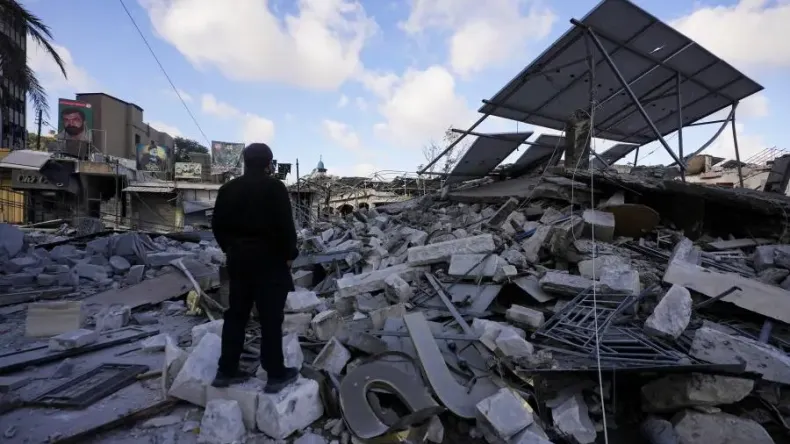
The military escalation on Monday morning saw significant activity across southern Lebanon. An Israeli occupation army drone targeted a civilian car in the town of Kfar Tibnit in southern Lebanon, causing multiple civilian injuries. This strike contributed to the heightened tensions in the region. Following this incident, the towns of Kfar Tibnit and Nabatieh Al-Fawqa subsequently endured heavy artillery shelling. This shelling resulted in significant material damage to various properties and vital facilities within the two localities, impacting the daily lives of residents. The intensity of the shelling showed the severity of the ongoing conflict.
Separately, the Israeli army conducted two large explosions near the town of Al-Khiyam. These explosions were directed towards the strategic Al-Dardara area, with the stated objective of destroying infrastructure there. The targeting of infrastructure indicates a broader military strategy beyond direct engagements. These actions by the Israeli army were part of a series of operations in the border region.
Concurrently, Hezbollah announced it had carried out a series of what it described as qualitative military operations. These operations targeted Israeli army gatherings and armored vehicles located in several sensitive southern areas. Hezbollah further stated that its forces also targeted an Israeli artillery position situated in the border town of Al-Odaissa, noting a direct response to Israeli military movements. These operations, according to Hezbollah, were executed with precision and aimed at specific military targets.
Israel's Unwavering Stance
The Hebrew newspaper 'Yedioth Ahronoth' quoted high-level political sources who stated that Prime Minister Benjamin Netanyahu unequivocally told US President Donald Trump that Israel has no intention of withdrawing from Lebanese territory at the present time. This communication shows Israel's current stance amid the escalating tensions. The Prime Minister's direct message to the US President signals a firm commitment to maintaining the current military posture. Netanyahu's assertion to Trump explicitly conveyed that the Israeli army will remain in its current field positions within Lebanese territory, a decision made to secure the entity's borders and prevent future threats. This position reflects a strategic imperative for Israel, viewing its presence as essential for national security.
In a separate development, an Israeli drone dropped a sonic bomb over the town of Haretz, located in the Bint Jbeil district. This action was reportedly intended to intimidate local residents, adding a psychological dimension to the military operations. Additionally, the Israeli army detonated a booby-trapped vehicle and a remote-controlled drone along the road connecting Haretz and Tibnin in southern Lebanon, further indicating military activity in the area. These detonations suggest efforts to clear or secure routes within the operational zone.
Hezbollah's field statements confirmed that its forces targeted Israeli movements on the southern outskirts of Majdal Zoun. These operations were also directed at the direct vicinity of Al-Khiyam detention center, as well as the areas of Tayr Harfa, Qalaat al-Shaqif, and the strategic Ras al-Bayada site, according to Hezbollah. The detailed list of targeted locations by Hezbollah indicates a wide-ranging operational scope in response to Israeli actions. These engagements highlight the ongoing clashes between the two sides across various points along the border.
Broader Geopolitical Context
Prime Minister Benjamin Netanyahu stressed that his government is not bound by any international agreement or regional understandings that might impose a withdrawal from strategic locations recently controlled by the Israeli army. This statement suggests an independent operational stance regarding military deployments, prioritizing Israel's perceived security needs above external pressures. The Prime Minister's declaration reinforces the idea that Israel reserves the right to act unilaterally in matters of its defense. This position could have significant implications for future diplomatic efforts in the region.
Separately, Israeli National Security Minister Itamar Ben-Gvir confirmed that Israel is not obligated by external diplomatic arrangements. Ben-Gvir affirmed, "The agreement expected to be signed soon between Iran and the United States of America does not bind the entity in any way." This declaration notes Israel's position on a potential international accord, indicating a policy of non-adherence to agreements perceived as not serving its national interests. The statements from both Netanyahu and Ben-Gvir collectively paint a picture of an Israeli government determined to maintain its operational freedom and strategic autonomy, especially concerning its presence in southern Lebanon and broader regional security dynamics.