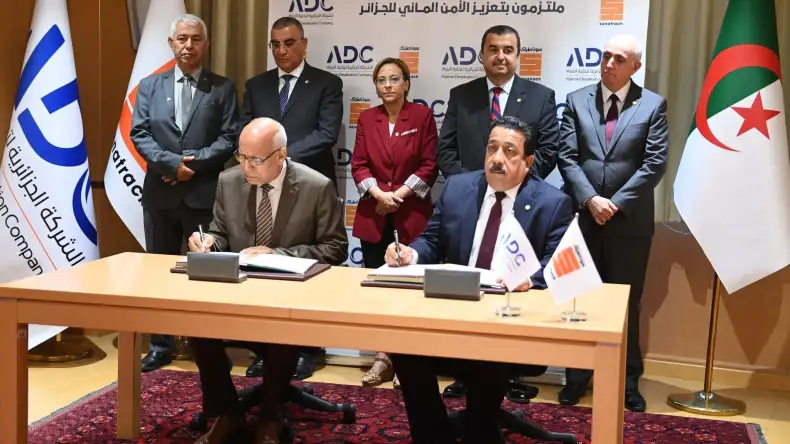
Algeria signed three framework agreements to enhance scientific research and innovation in its water desalination sector, a key move overseen by Minister of State, Minister of Energy and Mines Mohamed Arkab, Minister of Environment and Water Resources Kaouter Krikou, and Minister of Public Works and Infrastructure Abdelkader Jellal. The agreements were officially announced on June 15, 2026, marking a significant step in the nation's efforts to bolster its water resources. The signing ceremony showed the high-level governmental commitment to addressing Algeria's water challenges through advanced scientific and technological approaches.
Mr. Arkab stated, "These agreements embody a shared will to consolidate cooperation and integration between the various national actors to serve the objectives of sustainable development and enhance water and environmental security." He further elaborated on the broader national strategy, adding that Algeria's National Water Strategy 2021-2030, implemented under presidential directives, prioritizes the diversification of water sources and significantly strengthens reliance on non-conventional resources, particularly seawater desalination. This strategic direction aims to build resilience against climate variability and increasing water demand. Mr. Arkab emphasized the forward-looking nature of these initiatives, stating, "The new agreements lay the foundation for a phase based on knowledge, innovation, and scientific research," noting the critical role of intellectual capital in national development.
Strategic Vision and Current Capacity
Algeria has adopted a clear strategic vision as part of its National Water Strategy 2021-2030, which places a strong emphasis on diversifying water sources and increasing reliance on non-conventional resources, most notably seawater desalination. This full strategy is designed to ensure long-term water security for the nation's growing population and economic needs. The country currently possesses a strong infrastructure for water desalination, boasting a total production capacity of approximately 3.85 million cubic meters per day of desalinated water. This substantial output presently addresses about 42 percent of the drinking water requirements for Algerian citizens, demonstrating the sector's key contribution to public welfare.
Recognizing the increasing importance of this resource, significant efforts are underway to elevate the proportion of desalinated water to 60 percent of the country's total water needs by 2030. This ambitious target indicates a continued and intensified focus on expanding this vital resource and integrating advanced technologies into its production. The strategic vision also encompasses the development of new desalination plants and the optimization of existing facilities to meet future demands efficiently and sustainably. The commitment to this strategic direction underlines Algeria's proactive approach to securing its water future.
Details of the New Partnerships
The three framework agreements represent a concerted effort to foster collaboration across various national institutions, each bringing unique expertise to the water desalination sector. One of the three framework agreements establishes a key cooperation with the National Observatory for Environment and Sustainable Development. This partnership is specifically designed to focus on strong environmental monitoring and to actively promote sustainable development practices within the water desalination sector, ensuring that expansion does not compromise ecological balance. The National Observatory will play a key role in assessing the environmental impact of desalination projects and guiding mitigation strategies.
A second agreement involves the General Directorate for Scientific Research and Technological Development. Its primary purpose is to actively encourage and fund applied scientific research projects and to foster technological innovation relevant to improving water desalination processes and infrastructure. This collaboration aims to drive advancements in areas such as energy efficiency, membrane technology, and waste management within desalination plants, pushing the boundaries of current capabilities.
The third agreement links the initiative with Kasdi Merbah University of Ouargla, a prominent academic institution. This collaboration aims to significantly strengthen the relationship between the university and economic institutions, specifically through the development of specialized training programs, providing academic supervision for research projects, and fostering joint research ventures in the field of water desalination. This partnership is expected to cultivate a new generation of skilled professionals and researchers, directly addressing the sector's human capital needs.
Collectively, these meticulously crafted agreements are designed to achieve several key objectives. They seek to develop innovative technological solutions for water desalination, thereby enhancing efficiency and reducing operational costs. They aim to significantly enhance environmental monitoring capabilities related to these operations, ensuring ecological responsibility. Crucially, these partnerships are also geared towards training national competencies, thereby building a skilled workforce to support the sector's growth, sustainability, and long-term self-sufficiency.
Official Statements and Future Outlook
The framework agreements were formally established between the Algerian Company for Water Desalination, a specialized branch of the Sonatrach group, and several distinguished national institutions and reference bodies. These agreements are precisely designed to provide full support for scientific research, promote innovation across the entire value chain, foster sustainable development practices, and ultimately enhance water security across Algeria. The Sonatrach group, a national energy giant, has explicitly stated its strong intention to prioritize scientific research, innovation, and technological development within its future strategic planning, recognizing these as fundamental pillars for national progress.
Minister of State, Minister of Energy and Mines Mohamed Arkab affirmed the profound importance of this integrated approach, stating, "Sonatrach group places scientific research, innovation, and technological development at the core of its future strategy, based on its conviction that achieving sustainable development and strengthening national sovereignty in vital fields passes through investing in knowledge, encouraging national competencies, and consolidating cooperation between economic institutions and research centers and universities." This emphasis notes a significant strategic shift towards knowledge-based solutions for national development and strong resource management, moving beyond traditional approaches. The collaboration with these national institutions is intended to ensure a coordinated, multi-faceted effort in effectively addressing Algeria's complex water challenges, paving the way for a more secure and sustainable future.