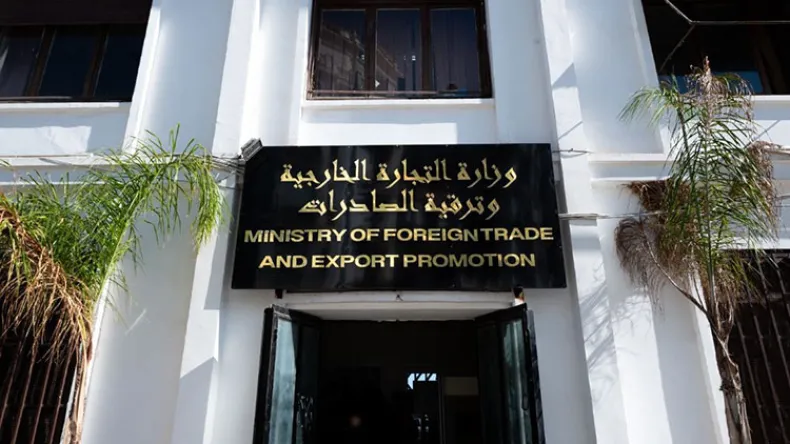
The Ministry of Foreign Trade and Export Promotion's digital platform has identified unusual indicators, including the complete disappearance of employee declarations during April, May, and June 2026. This advanced digital platform, specifically designed to enhance oversight, actively monitors for such anomalies. The system plays a key role in integrating previously disparate data sources, linking information such as worker numbers, company addresses, business registrations, required documents, declared capabilities, and import requests. This full integration allows the platform to provide a holistic view of trade activities, thereby aiming to monitor and detect discrepancies and anomalies in trade declarations with greater precision. The objective is to foster transparency and ensure compliance within the import-export sector.
Employee Data Discrepancies Emerge
Companies had initially registered their workers with social security services from January to March 2026, establishing a baseline of employment data. This period immediately preceded the platform's detection of the missing employee data. Following this three-month absence, employee declarations then reappeared on the Ministry's platform starting in July 2026. The data continued to be present until the end of September 2026, marking a period where employee information was once again submitted through the system after its earlier, unexplained disappearance. This fluctuating pattern in employee data submission immediately raised red flags within the Ministry's monitoring systems.
Coincidence With Import Processing
The disappearance of employee declarations from April to June 2026 was not an isolated event; it critically coincided with the timeframe designated for submitting and evaluating estimated import programs. The Ministry's platform identified this overlap as a critical period during which significant trade activities were being processed and approved. Further analysis of the import declarations submitted during this coincident period revealed a concerning pattern: a repetition of information across various operators. Specifically, addresses, locations, key data points, or document formats were found to be identical or highly similar among different entities submitting import requests. This suggested a potential lack of independent operations or coordinated, possibly illicit, submissions rather than genuine, distinct business activities. These anomalies have prompted closer scrutiny by the Ministry of Foreign Trade and Export Promotion, indicating a need for deeper investigation into the nature of these interconnected submissions.
Platform's New Verification Focus
In response to these findings, the Ministry of Foreign Trade and Export Promotion's digital platform has significantly shifted its operational focus. The platform has moved beyond merely checking for document completeness, which was a primary function in earlier iterations. Instead, its enhanced capabilities now concentrate on verifying the consistency of submitted information with an institution's actual economic reality. This new, more strong approach aims to differentiate organizations demonstrating actual activity and genuine capabilities from those with indicators requiring further verification due to suspicious or inconsistent data. The platform's enhanced scrutiny is specifically designed to ensure that import declarations align credibly with the operational capacity and legitimate business activities of the entities submitting them, thereby preventing the misuse of trade mechanisms.
Implications for Trade Oversight
Several concerning cases have emerged where institutions with a very limited number of workers have submitted import requests for substantial sums. This significant discrepancy between workforce size and the scale of declared import activities raises serious questions about the operational capacity and legitimacy of these entities. The Ministry of Foreign Trade and Export Promotion's platform is meticulously designed to identify such inconsistencies, moving beyond simple document checks to assess the economic reality of trade declarations. The overarching goal is to distinguish institutions with verifiable actual activity and capabilities from those whose indicators require immediate and thorough verification. This sharpened focus aims to ensure that import requests are genuinely aligned with the actual capabilities and workforce of the submitting organizations, thereby tightening oversight on trade operations and preventing potential misuse of import mechanisms for illicit gains or circumvention of regulations. This proactive monitoring is essential for maintaining the integrity of the nation's trade system.