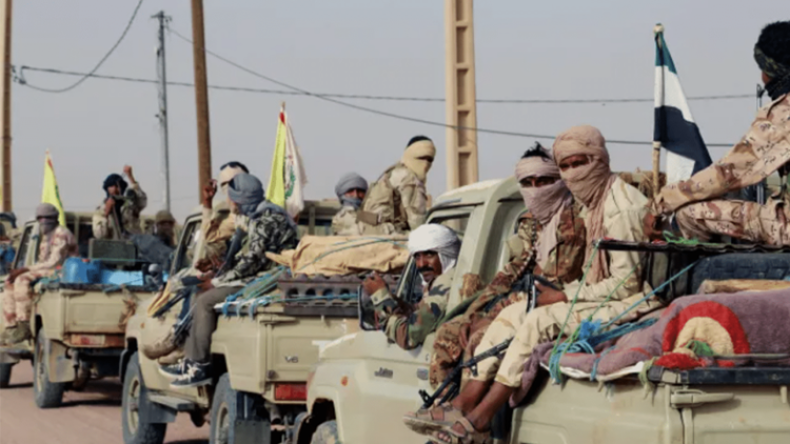
Mali's security crisis continues, leaving the country's future in a delicate and fragile balance amidst internal complexities and external pressures. The nation has been experiencing a multi-layered conflict, where state authority intersects with armed groups of varying backgrounds. This ongoing instability poses significant challenges to the West African state, with the security crisis in Mali ensuring the country's future remains in a delicate and fragile balance between these internal complexities and external pressures. The crisis has transformed since the repercussions of the Malian coup of 2012 into a state crisis in every sense of the word, profoundly altering the nation's trajectory and governance.
Evolving Security Landscape
The crisis in Mali has transformed from the repercussions of the 2012 Malian coup into a state crisis in every sense of the word. Since the 2012 coup, Mali has experienced a gradual path towards prioritizing the logic of militarization as a primary framework for crisis management. This trend deepened following the coups of August 18, 2020, and May 24, 2021. The nation has witnessed this gradual shift towards a military-centric approach, moving away from political and diplomatic solutions as primary tools for managing its multifaceted challenges and confronting the persistent threats to its sovereignty.
A significant shift in Mali's security landscape occurred with the withdrawal of the French 'Barkhane' operation. The end of the operation was announced in August 2022, marking a key moment for the nation's defense strategy. This withdrawal led to a new pattern of security replacement, primarily through external partners such as the Russian 'Wagner' group. The departure of French forces created a vacuum that Mali sought to fill by diversifying its alliances and operational support, fundamentally reshaping its international security partnerships.
New roles emerged with the presence of the Russian 'Wagner' group in Mali. The country diversified its security partners, notably engaging with the 'Wagner' group since late 2021. This strategic pivot reflects Bamako's determination to regain control over its territory and counter the growing influence of various armed factions. In response to the evolving situation, the Malian army has resorted to carrying out counter-military operations from its positions in Bamako, aiming to assert its authority and protect key areas. The engagement with new partners like the 'Wagner' group was a direct consequence of the changing geopolitical landscape and the urgent need for enhanced security capabilities, particularly following the French withdrawal. This strategic reorientation shows Mali's efforts to adapt to a complex security environment and address the persistent challenges posed by various non-state armed groups. The Malian army's actions from its positions in Bamako are a clear indication of its intent to maintain control and push back against the expansion of militant groups.
Stalled Peace Efforts and Armed Groups
The authority in Bamako maintains a limited and pressured presence, while groups such as Al-Qaeda in the Islamic Maghreb and ISIS in the Greater Sahara have expanded their influence in Mali's peripheries and fragile areas. The effectiveness of political solutions has declined, leading to the freezing of the 2015 Algiers Agreement for peace in Mali. There has been a clear decline in the path of the Algiers Agreement, signed in June 2015, with some of its provisions frozen since 2023. This stagnation in peace efforts has created a fertile environment for armed groups to consolidate their power and extend their reach across vast swathes of the country, challenging the central government's authority.
In the country's north and center, groups like Al-Qaeda in the Islamic Maghreb are active, posing a persistent threat to stability. ISIS is expanding in the Greater Sahara, operating with a logic of violent competition against its rivals, further destabilizing regions already grappling with insecurity. Beyond these broader groups, local movements of an ethnic and political nature are present in areas such as Kidal, adding another layer of complexity to the conflict. The Algiers Agreement for peace in Mali was initially based on a political settlement that included decentralization and power-sharing mechanisms. However, the implementation of these provisions has faltered, leading to a deterioration of previously established understandings and a loss of momentum for reconciliation. The increased activity of ISIS in the Greater Sahara has further complicated the situation, intensifying the competition among armed groups and exacerbating the humanitarian crisis in affected regions. This expansion of influence by various armed groups notes the urgent need for a full and effective strategy to restore peace and stability.
In the Kidal and Gao regions, Azawad movements have carried out concentrated attacks against army positions, challenging the state's territorial integrity. The increased activity of ISIS in the Greater Sahara has further complicated the security situation across the region, creating a volatile and unpredictable environment. The expansion of these groups into fragile areas notes the urgent need for a renewed and effective approach to peacebuilding. The continued pressure on Bamako's authority contrasts sharply with the growing influence of these various armed groups in the country's peripheries, showing the severe challenges to state control and the protection of civilian populations. The decline in the effectiveness of political solutions, particularly the freezing of the Algiers Agreement, has inadvertently paved the way for this expansion, contributing to a more fragmented and dangerous security landscape.
Algeria's Mediation Role and Regional Stakes
Algeria's role as a regional mediator in Mali has declined, despite its extensive experience in managing mediations since 2014. This decline in Algeria's mediation efforts, which had been a cornerstone of regional stability initiatives, has left a significant void. A new escalation subsequently occurred in Mali's North after April 25, 2026, further showing the fragility of the security situation. Algerian President Abdelmadjid Tebboune addressed the situation in media interviews, stating that the Malian president "لم يُسئ إلى الجزائر" (did not harm Algeria). This statement reflects Algeria's perspective amid the complex diplomatic landscape, attempting to navigate the delicate relationship between the two nations, even as its traditional mediation role diminishes.
The decline of Algeria's mediation efforts and the peace path it championed opens the door for the further expansion of armed actors within Mali. This situation also risks an increased overlap of regional and international agendas in the country, complicating future stability efforts. The decreased involvement of a key regional player like Algeria, coupled with new escalations, suggests a more fragmented approach to resolving the crisis. The potential for external powers to pursue their own interests within Mali's borders is heightened, making a unified and coherent response even more challenging. The long experience Algeria brought to managing mediations since 2014 had been a stabilizing factor, and its diminished role is a cause for concern for regional observers, signaling a potential for greater instability and external interference. The statement by President Abdelmadjid Tebboune, while aiming to clarify Algeria's stance, also notes the diplomatic intricacies and the need for careful navigation in a region fraught with tensions.
The Path Forward
The 2015 Algiers Agreement for peace in Mali is widely regarded as the most capable framework for rebuilding trust between the Malian state and local movements. Its provisions offer a structured path toward reconciliation and stability. Despite recent setbacks and the freezing of some aspects since 2023, the agreement remains a critical reference point for future peace initiatives. Its original design aimed to address underlying grievances and foster dialogue, elements that are still considered essential for Mali's long-term recovery. Re-engagement with this framework could provide a basis for de-escalation and a return to political solutions for the country's multifaceted crisis, offering a tangible pathway out of the current quagmire.
The agreement, based on a political settlement involving decentralization and power-sharing, provides a blueprint for a more inclusive governance structure. Reinvigorating its implementation could help bridge the divide between the central government and local communities, addressing the root causes of the conflict. The decline of this peace path, however, undeniably opens the door for the expansion of armed actors and the overlap of regional and international agendas within Mali, further complicating the prospects for lasting peace. A concerted effort to revive the Algiers Agreement, perhaps with renewed international and regional support, is seen by many as key to preventing further deterioration and setting Mali on a more stable trajectory, emphasizing the urgent need for a return to diplomatic and political engagement to resolve the protracted crisis. The faltering implementation of the agreement's provisions has led to a deterioration of previous understanding paths, making its revival all the more critical for future stability.