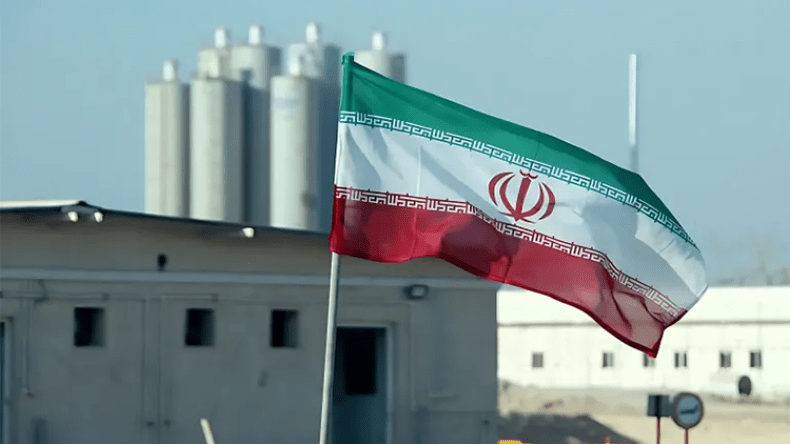
Malek Bennabi (1905–1973), an Algerian engineer and civilizational analyst, developed a framework that researchers assert remains relevant for understanding current global events. His extensive body of work, spanning over twenty volumes published in three languages, offers a unique lens through which to examine societal dynamics. According to analysts, Bennabi's framework dissects contemporary issues including the situations in Gaza, Iran, Lebanon, Yemen, Iraq, the Gulf, and the West. Algerian researcher in international relations and author Amir Nour, alongside independent Algerian journalist and geopolitical analyst Laala Bechetoula, point to Bennabi's insights as particularly pertinent today, offering a rigorous non-Western perspective. Bennabi himself famously stated, "Il n’y a pas de colonisation sans colonisabilité," which translates to "There is no colonization without colonizability." He further elaborated on this concept, asserting, "Pour se libérer de l’effet, il faut se libérer de la cause," meaning "To free oneself from the effect, one must free oneself from the cause." These ideas form a core part of Bennabi's enduring analysis of societal decline and resurgence, emphasizing internal conditions as critical determinants of a society's fate.
Bennabi's analytical toolkit includes key concepts such as 'colonisability', the 'civilizational triad', 'Mondialisme', 'ideological struggle', and the 'pipeline of betrayal'. These tools provide a full grammar for decoding complex geopolitical landscapes and understanding the structural decline of hegemonic powers.
A Life of Intellectual Pursuit
Malek Bennabi was born on January 1, 1905, in Constantine, Algeria. His intellectual journey led him to study electrical engineering in Paris from 1930 to 1935, a period during which he honed his analytical skills and observed the complexities of colonial power dynamics firsthand. He continued his studies in electrical engineering in Paris during the 1930s, laying a foundation for his later, more philosophical explorations.
Bennabi wrote 'Les conditions de la renaissance' in 1947, shortly after his detention in April of that year by French colonial authorities. His book 'Les conditions de la renaissance' was subsequently published in 1949, following its completion after his detention. This work, alongside many others, cemented his reputation as a profound thinker concerned with the trajectory of post-colonial societies.
Among his published works are 'Le Phénomène coranique' (1947), 'Vocation de l’Islam' (1954), 'L’Afro-asiatisme' (1956), 'La lutte idéologique dans les pays colonisés' (1962), 'Naissance d’une société' (1962), 'Le problème de la culture' (1959), 'Le problème des idées dans le monde musulman' (1970), and 'Perspectives algériennes' (1964). Posthumous collections further expanded his accessible oeuvre, including 'Colonisabilité et Mondialisme'. Bennabi lived in exile in Cairo starting in 1956, a period during which he continued his prolific writing. It was in Cairo that he completed 'La lutte idéologique dans les pays colonisés' in 1960, a critical examination of the internal and external forces shaping colonized nations. He returned to Algeria in 1963, following the country's independence, and was appointed director of Higher Education, where he sought to implement his ideas for societal development.
Malek Bennabi died on October 31, 1973, in Algiers, the city where he was also born. He is buried in Algiers alongside other notable Algerian figures, including Cheikh Mohamed Bachir El Ibrahimi and Dr. Ahmed Taleb El Ibrahimi, signifying his esteemed place in Algerian intellectual history. Bennabi famously articulated his view on colonialism, stating, "Il n’y a pas de colonisation sans colonisabilité," which translates to "There is no colonization without colonizability." He further expanded on this idea, emphasizing, "Pour se libérer de l’effet, il faut se libérer de la cause," meaning "To free oneself from the effect, one must free oneself from the cause." This foundational assertion underlines his belief in the primacy of internal factors in shaping a society's destiny.
Core Analytical Concepts
Malek Bennabi's analytical framework centers on several key concepts, including 'colonisability,' which he described as an internal condition pre-existing and enabling colonization. This state is characterized by the decomposition of social links, a paralysis of moral and intellectual faculties, and a loss of initiative within a society. Bennabi specified that 'colonisability' is a social and historical phenomenon, distinct from any racial characteristic, emphasizing that it is a condition that any society can fall into, rather than an inherent trait. This concept notes the internal vulnerabilities that, according to Bennabi, make a society susceptible to external domination.
A core tenet of his thought involves civilizational paralysis, which he argued occurs when the fundamental synthesis of "Man, Earth, and Time" breaks down. This civilizational triad was defined by Bennabi in his 1970 work, 'Le problème des idées dans le monde musulman'. Within this triad, Man is understood as the moral subject, Earth represents the material resources available to a society, and Time encompasses the duration and historical context in which a civilization develops. When these three elements fail to integrate effectively, a society loses its ability to generate momentum and progress, leading to stagnation and decline.
Bennabi also introduced the term 'intellectomane' to describe intellectuals who imitate foreign ideas without genuine assimilation. He viewed such individuals as becoming vectors of cultural domination rather than contributors to authentic societal development. The concept of the 'intellectomane' was articulated in his 1962 book, 'La lutte idéologique', where he critiqued the uncritical adoption of external ideologies that did not align with a society's own cultural and historical context.
His analysis extended to the concept of 'Mondialisme,' which Bennabi defined in his 1959 publication, 'Le problème de la culture'. This term contributes to his broader understanding of global dynamics and influences on societies, particularly how hegemonic powers attempt to impose their norms and values under the guise of universality.
Bennabi famously articulated his view on colonialism, stating, "Il n’y a pas de colonisation sans colonisabilité. Pour se libérer de l’effet, il faut se libérer de la cause." This translates to, "There is no colonization without colonizability. To free oneself from the effect, one must free oneself from the cause." This statement encapsulates his belief that internal vulnerabilities are prerequisite to external domination, and that addressing these internal factors is essential for liberation and genuine renaissance.
Further elaborating on societal vulnerabilities, a passage concerning the 'pipeline of betrayal' appeared in a preface written by Bennabi on February 10, 1973. This concept notes his concern with internal mechanisms that can facilitate external exploitation or control. Bennabi described the 'pipeline of betrayal' as a structural system connecting Arab and Islamic capitals, through which money, demagoguery, and submission to external powers circulate. He identified two forms of betrayal: those that destroy the spirit, such as values, ethics, and social cohesion, and those that destroy the means, including institutions, resources, and productive capacities. Bennabi's concepts collectively form a framework for diagnosing societal stagnation and proposing pathways toward renaissance and self-determination.
Critique and Legacy
Malek Bennabi developed a full set of analytical tools, including concepts such as 'colonisability', the 'civilizational triad', 'Mondialisme', 'ideological struggle', and the 'pipeline of betrayal', to dissect the dynamics of societal decline and resurgence. His 'civilizational triad' specifically identified three fundamental elements: Man as the moral subject, Earth representing material resources, and Time as the duration and historical context. Bennabi's extensive intellectual output comprises over twenty volumes published across three languages, demonstrating the breadth and depth of his analytical framework and his commitment to understanding complex social phenomena.
His concept of 'colonisability' faced direct opposition in Algeria, as evidenced by the Charter of Algiers of 1964, which targeted and stigmatized the term. This opposition showed the controversial nature of his ideas, particularly his emphasis on internal factors during a period focused on external colonial structures. Despite this, Bennabi's contributions gained international recognition. He was at one point considered for a Nobel Prize, although the specific category or year was not disclosed, indicating the high regard in which his intellectual contributions were held by some international circles.
Bennabi's work is seen by some researchers as a foundational precursor to later academic concepts. For instance, some scholars suggest his ideas on cultural influence and internal vulnerabilities predated and arguably paralleled aspects of what Joseph Nye would later describe in his book 'Soft Power'. This comparison indicates the foresight and originality of Bennabi's analysis, positioning him as a pioneering figure in civilizational studies. Bennabi himself articulated his core belief on the relationship between internal conditions and external domination, stating, "Il n’y a pas de colonisation sans colonisabilité. Pour se libérer de l’effet, il faut se libérer de la cause." This translates to, "There is no colonization without colonizability. To free oneself from the effect, one must free oneself from the cause," showing his emphasis on internal reform as a prerequisite for true liberation and societal flourishing.
Contemporary Relevance
Malek Bennabi's analytical grammar is presented as the most rigorous non-Western framework for decoding conflicts in the Middle East and understanding the structural decline of Western hegemony. His insights provide a powerful lens for examining the internal dynamics that contribute to external vulnerabilities and the challenges faced by nations in the global arena. His concept of 'Mondialisme' describes a strategy by hegemonic powers to impose their norms and values under the guise of universality, a phenomenon that remains highly relevant in discussions of globalization and cultural influence today. Bennabi also detailed the 'pipeline of betrayal' as a structural system connecting Arab and Islamic capitals, facilitating the circulation of money, demagoguery, and submission to external powers. He identified two forms of betrayal: those that destroy the spirit, such as values, ethics, and social cohesion, and those that destroy the means, including institutions, resources, and productive capacities. These concepts offer a critical framework for analyzing the complex interplay of internal weaknesses and external pressures that continue to shape the geopolitical landscape, making Bennabi's work a vital resource for understanding contemporary global turmoil.