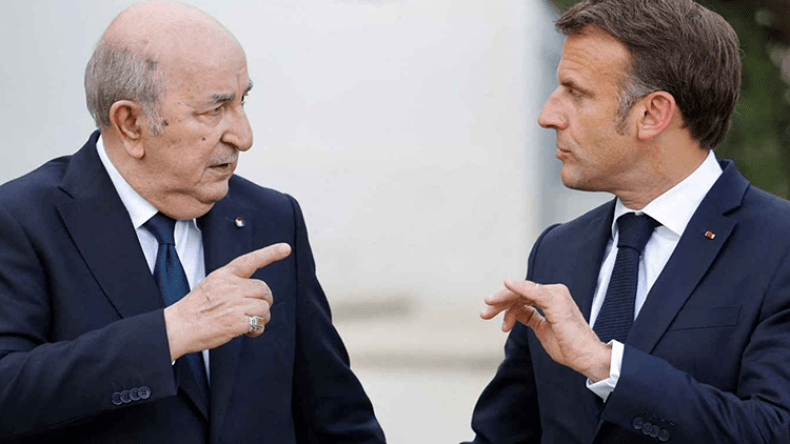
French President Emmanuel Macron's policy towards Algeria has been described as "volatile" by historian Benjamin Stora, who states that Macron's stance on Western Sahara "destroyed everything." Stora noted that Macron's approach is characterized by "sharp fluctuations and and, generally, an impatience inconsistent with a long-term issue," according to an interview. He added that Macron initially "showed a genuine desire to move forward" by acknowledging state responsibility for the disappearance of Maurice Audin and the use of torture. However, Stora said, Macron's efforts "stopped with his recognition of the alleged sovereignty of the Moroccan regime over Western Sahara in October 2024," despite previous Algerian cooperation on a joint historians' committee. This abrupt shift, according to Stora, has had profound negative consequences for the carefully cultivated diplomatic relationship between France and Algeria.
Macron's Diplomatic Initiatives
President Emmanuel Macron undertook several initiatives aimed at strengthening France's relationship with Algeria. His efforts included visits to Algeria between 2017 and 2022, notably in December 2017 and August 2022, to foster closer ties. These high-level visits showed a strategic push to mend historical wounds and forge a new basis for bilateral cooperation. During these diplomatic engagements, Macron acknowledged France's state responsibility for the disappearance of Maurice Audin and the use of torture during the Algerian War, a significant step in addressing historical grievances that have long strained relations between the two nations. This acknowledgment was seen by many as a key gesture of reconciliation.
His outreach also extended to honoring Algerian demonstrators killed on October 17, 1961, a tragic event that remains a sensitive point in Franco-Algerian memory. This act further signaled a desire for reconciliation and a willingness to confront painful aspects of their shared past. Macron delivered a speech at the Élysée Palace on March 19, 2022, as part of these diplomatic efforts, reiterating his commitment to fostering a renewed partnership. These gestures facilitated a period of cooperation, during which Algerians had agreed to form a joint committee of historians with France to examine their shared past. This initiative was considered a "real step forward" by Benjamin Stora. President Tebboune, despite prevalent anti-French sentiment within Algeria, supported this historical cooperation, demonstrating a political will to engage in this sensitive process.
Historical Context and Memory
The historical relationship between France and Algeria is marked by significant events and demographic shifts, which continue to resonate in contemporary politics. During the Algerian War, approximately 1.5 million French conscripts were involved, noting the massive scale of the conflict. Concurrently, an estimated 2 million Algerians were displaced out of a total population of 9 million, showing the immense human cost and societal disruption caused by the war. This period continues to influence political discourse in both nations, shaping national identities and foreign policy approaches.
Algeria consistently featured as a significant topic in French presidential campaigns during the era of Charles de Gaulle, reflecting its profound importance in French national life and political debate. Its historical weight often resurfaced in political discussions and electoral strategies, demonstrating how deeply intertwined the destinies of the two countries remained. More recently, Algeria became a campaign issue during Nicolas Sarkozy's 2007 presidential bid. Sarkozy's campaign specifically addressed Algeria, reportedly seeking to garner votes from supporters of the National Rally party, then known as the National Front. This strategic appeal to voters concerned with immigration and national identity showed the enduring political salience of the Algerian question in France. The legacy of the conflict and its societal impacts thus remain a recurring theme in French political life, often influencing electoral outcomes and public opinion.
The Western Sahara Miscalculation
Historian Benjamin Stora stated that French President Emmanuel Macron did not properly calculate his stance on the Western Sahara issue approximately two years prior. Stora emphasized that Macron's approach to Algeria, which he characterized as "volatile," exhibited "sharp fluctuations and, generally, an impatience inconsistent with a long-term issue." Macron's recognition of the Moroccan regime's alleged sovereignty over Western Sahara in October 2024 abruptly halted his previous initiatives with Algeria. Stora explained that Macron's approach, which included acknowledging state responsibility for the disappearance of Maurice Audin and the use of torture, as well as honoring Algerian demonstrators killed in 1961, "stopped with his recognition of the alleged sovereignty of the Moroccan regime over Western Sahara in October 2024." This decision, made without sufficient consideration for Algeria's historical position and regional interests, effectively undermined years of diplomatic effort.
Stora noted that Algerians had begun cooperating, particularly by agreeing to form a joint committee of historians, which he described as a "real step forward." He added, "President Tebboune believed in this firmly, and despite anti-French sentiment in Algeria, he maintained this position until France retreated from its stance on Western Sahara." This retreat from a neutral position on Western Sahara was perceived as a betrayal by Algerian authorities, leading to a significant deterioration in relations. In 2024, the possibility of cutting diplomatic ties caused concern among dual nationals, noting the tangible impact of this diplomatic rift on individuals and communities. Benjamin Stora's critical assessment of Macron's policy was featured in an interview for a three-page file on Algeria published by L'Opinion newspaper, titled "2027, Algeria: Battlefield of the Presidential Elections." This title itself suggests the continuing and perhaps escalating role of Algeria in French domestic politics.