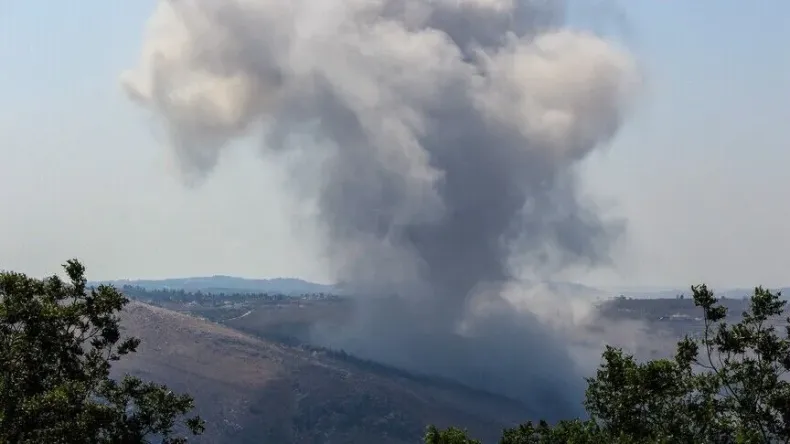
Israeli forces bombarded southern Lebanon and conducted incursions with tanks and bulldozers on Thursday, destroying homes and infrastructure in several areas, according to Lebanese state media. The Agence nationale de l'information libanaise (NNA) reported explosions in locations including Al-Musha, Mansouri, and Majdal Zoun. Lebanese authorities state that Israeli aggression against Lebanon has been ongoing since March 2. This sustained conflict has resulted in over 4,000 deaths and more than 12,000 injuries. Additionally, the aggression has displaced over one million people from their homes, creating a significant humanitarian crisis in the region.
Details of Attacks
Zionist occupation forces exploded homes and infrastructure in the "East" and "Fourth" neighborhoods of the Al-Musha area, situated between Mansouri and Majdal Zoun, utilizing barrels containing highly destructive explosive materials, the Lebanese National Information Agency (NNA) reported. These explosions caused extensive damage to residential properties and vital infrastructure, further exacerbating the living conditions for residents in the affected communities. The use of such materials indicates a deliberate strategy to inflict widespread destruction in these areas.
Israeli combat aircraft conducted two airstrikes in the Harj Ali Taher area, located in the Nabatiyeh district. These aerial bombardments targeted specific locations within the district, contributing to the overall destruction reported by local authorities. The precision of these airstrikes, as observed by the NNA, suggests a targeted military operation.
Israeli artillery had earlier targeted the town of Mansouri, where a Merkava tank and a D9 bulldozer advanced into the town, according to the news agency. The presence of heavy military equipment like the Merkava tank and the D9 bulldozer indicates a significant ground operation designed to clear paths and potentially establish new positions. Following these ground movements, Israeli military vehicles were also observed transporting booby-trapped containers towards the area, raising concerns about the potential for further explosive devices to be deployed in the vicinity.
In a separate incursion, Israeli forces advanced into the Halta Farm, within the Hasbaya district of the Nabatiyeh governorate. There, they surrounded several homes and prevented some residents from leaving, the agency stated. This action by Israeli forces effectively contained residents within their homes, limiting their movement and access to external areas. The agency did not specify the duration of this containment or the number of residents affected. A Zionist drone deployed two sound bombs on the Azziyeh-Mansouri road, causing loud explosions intended to create panic or disorientation among the local population. Israeli forces further carried out explosions in the towns of Hadatha and Wadi Baraachit on Thursday, adding to the list of areas subjected to destructive operations. Simultaneously, drones were reported flying over the Tyre region at dawn, conducting surveillance or reconnaissance activities across a broader area of southern Lebanon.
Israeli Military Claims
The Israeli army stated its forces achieved "operational control" both above and below ground in the heights of Ali al-Taher in southern Lebanon. This claim implies a significant military achievement in the strategic area. The military indicated that forces from its 36th division had recently worked to "clear two underground routes" in the area, which it described as being within a "security zone." The objective of clearing these underground routes, according to the Israeli army, was to neutralize perceived threats emanating from beneath the surface. During the operation, the army claimed that a number of Hezbollah members were killed, while others reportedly fled the area, suggesting a successful engagement against the militant group. The Israeli army further stated it would continue its operations within what it refers to as a "security zone" in southern Lebanon, signaling its intent to maintain its presence and conduct further military activities in the designated area. This ongoing commitment to operations within the "security zone" notes the persistent nature of the conflict in the border region.
Context and Occupation
Israel maintains occupation of areas in southern Lebanon, with some of these occupations dating back decades and others established since its offensive against Lebanon between 2023 and 2024. This long-standing presence has been a source of continuous tension and conflict in the region. During the current offensive, Israel has reportedly extended its occupation further into Lebanese territory, an action that has drawn condemnation from Lebanese authorities and international bodies. This expansion of occupied territory represents a shift in the operational boundaries and a deeper penetration into Lebanese sovereignty. The Israeli newspaper Maariv cited an Israeli security source last Saturday, who stated that Israel had no intention of withdrawing from the Ali al-Taher heights area. This position was maintained despite reported American pressure regarding the withdrawal, indicating a firm stance by Israel on its military presence and control over strategically important locations. The continued occupation and expansion of Israeli forces in southern Lebanon remain central to the ongoing conflict and humanitarian challenges faced by the Lebanese population.