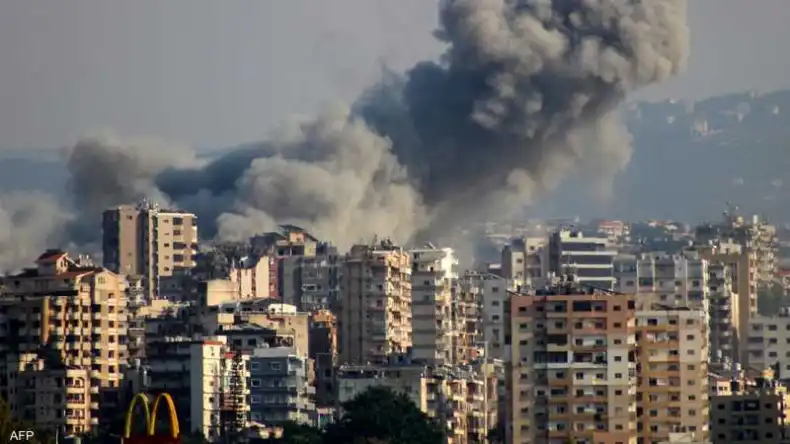
The Israeli army announced on Sunday that it launched raids on the southern suburb of Beirut, targeting a Hezbollah headquarters. The military operation occurred in the Lebanese capital's southern district, a known stronghold for the Iran-backed group. The army's statement confirmed that a specific Hezbollah command center was struck during these Sunday raids. These operations by the Israeli army on the southern suburb of Beirut on Sunday were part of a broader response to recent aggressions. The Israeli army specifically announced on Sunday that it targeted a Hezbollah headquarters during the raid it launched on the southern suburb of Beirut, showing the precision of the military action.
Hezbollah's Response and Israeli Justification
The Israeli army stated, "We precisely attacked Hezbollah's terrorist infrastructure in the southern suburb of Beirut a short while ago." This operation followed the entry of three drones into Israeli airspace earlier on Sunday. Authorities suspected Hezbollah launched these drones, which entered Israeli airspace in separate operations. Two of these drones crashed in the north of the 'entity' without causing any casualties, while the fate of the third was not immediately specified. The drone incidents, which involved Hezbollah launching aerial targets towards the 'entity's' territory, preceded the Israeli military action in Beirut. This news was published on June 14, 2026.
Command and Control Directives
The Israeli army is currently conducting raids on Hezbollah targets within the Beirut suburb area, acting under directives issued by Prime Minister Benjamin Netanyahu and Defense Minister Israel Katz. These operations are a direct response to Hezbollah's recent firing towards Israeli territory. Prime Minister Netanyahu and Defense Minister Katz have both emphasized a policy of zero tolerance regarding Hezbollah's aggressive actions. Their directives underpin the ongoing military engagement in Lebanon's capital, signaling a firm stance against any incursions or attacks. The Israeli Prime Minister Benjamin Netanyahu and Defense Minister Israel Katz specifically emphasized zero tolerance for Hezbollah's firing towards Israeli territory, reinforcing the strategic importance of these retaliatory strikes. The military actions are a clear message that such provocations will not be left unanswered.
Army Spokesperson's Statement
The Israeli army's raid on Hezbollah's headquarters in the southern suburb of Beirut was conducted in response to earlier actions by Hezbollah. Hezbollah had launched aerial targets towards Israeli territory earlier on Sunday, directly prompting the military's response. The military operation specifically targeted the command center following these aerial incursions, noting a direct link between Hezbollah's actions and the Israeli retaliation. An army spokesperson reiterated that the precision strike aimed to neutralize a facility central to Hezbollah's operational capabilities following the drone incidents. The spokesperson further detailed that the decision to target the headquarters was made after careful assessment of the threat posed by the aerial incursions.
Broader Security Context
The targeted Hezbollah headquarters in the southern suburb of Beirut was reportedly used to advance terrorist plots. According to the Israeli army, these plots were aimed at citizens of the 'state of the entity' and military forces operating in southern Lebanon. This claim provides significant context for the Israeli military's decision to strike the command center in the Lebanese capital. The targeted headquarters was identified as a key operational hub for Hezbollah, key for planning and executing various illicit activities. The operation shows ongoing security concerns related to Hezbollah's activities in the region, particularly its alleged planning against Israeli civilians and soldiers. The Israeli military maintains that such preemptive strikes are necessary to protect its borders and populace from hostile actions originating from Lebanese territory. The intelligence gathered indicated that the command center played a vital role in coordinating these alleged terrorist plots, making it a legitimate military target.