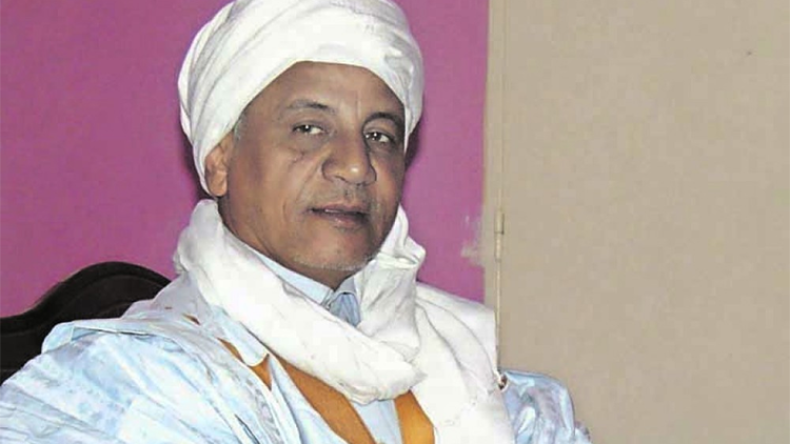
An article titled "تجاهل متعمد للأدوار العلمية والروحية للجزائر وموريتانيا" (Intentional Neglect of the Scientific and Spiritual Roles of Algeria and Mauritania) has been published, according to Mohamed Salem Ould Mohamed El Yaacoubi. Mohamed Salem Ould Mohamed El Yaacoubi explicitly stated, "تجاهل متعمد للأدوار العلمية والروحية للجزائر وموريتانيا." The article posits that conditions are currently favorable for Algerian-Mauritanian cohesion to reclaim the historical roles of the two nations within the region. This perspective suggests a potential reassertion of influence for Algeria and Mauritania, building on their shared past and leveraging their deep-rooted historical and spiritual connections. The Mauritanian writer and researcher, Mohamed Salem Ould Mohamed El Yaacoubi, emphasized the opportune moment for such a collaborative effort, noting the potential for both nations to restore their significant historical standing in the region.
Algeria's Historical Influence
Algeria is considered one of the most significant origins from which Sufi orders entered the land of Shinqit, according to an article published recently. The piece, titled "Intentional Neglect of the Scientific and Spiritual Roles of Algeria and Mauritania," outlines Algeria's historical spiritual contributions. This assertion shows Algeria's key role as a spiritual wellspring, fostering the growth and dissemination of Islamic mysticism across West Africa. The article elaborates on how Algeria served as a key point of origin, influencing the religious landscape of neighboring territories, including Mauritania, historically known as Shinqit.
The article notes Algeria's position at the center of the Islamic world, noting its possession of extensive libraries and cities replete with knowledge and eminent scholars. This central role facilitated the dissemination of Islamic scholarship and spiritual traditions throughout the wider region. Its intellectual and religious institutions served as key hubs for learning and the development of Sufi thought, attracting scholars and students from across the Islamic world. The presence of these vast repositories of knowledge and the intellectual vibrancy of its urban centers cemented Algeria's status as a beacon of Islamic learning and spirituality, contributing significantly to the intellectual heritage of the continent.
Among the Sufi orders that became most widespread after entering the region are the Qadiriyya, Shadhiliyya, and Tijaniyya. These orders, originating or significantly influenced by Algerian religious scholarship, played a key role in shaping the spiritual landscape of West Africa. Their teachings and practices spread widely, establishing a deep spiritual connection that endured over centuries. The Qadiriyya order, one of the oldest and most widespread, found fertile ground for expansion through Algerian influence. Similarly, the Shadhiliyya order, known for its emphasis on spiritual purification and ethical conduct, and the Tijaniyya order, with its distinct liturgical practices and emphasis on the Prophet Muhammad, all flourished due to the intellectual and spiritual currents emanating from Algeria. The article emphasizes that Algeria was the first source of jurisprudential, scientific, and spiritual schools that spread throughout Africa and played a critical role in preserving Islam across the continent. This foundational role ensured the continuity and vitality of Islamic knowledge and practice in the region.
Morocco's Historical Claims
The article, published on June 14, 2026, addresses historical claims made by Morocco concerning the Tijaniyya order. Morocco has consistently attempted to assert a fallacious thesis regarding the Tijaniyya order's reference. This claim involves Morocco stating the order's origin and source, which is Algeria. The publication suggests Morocco's narrative intentionally disregards Algeria as the direct place of origin for the Tijaniyya order and Mauritania's historical contributions to its expansion. This ongoing attempt by Morocco to redefine the historical narrative surrounding the Tijaniyya order is presented as a deliberate misrepresentation.
The article states Morocco overlooks Mauritania's significant role in the order's spread across the African continent. Mauritania is acknowledged for its part in disseminating the Tijaniyya order, contributing to its wide acceptance and influence throughout Africa. The Tijaniyya order, of Algerian historical origin, spread through Mauritania, with Sheikh Sidi Mawlud Fall Al-Musawi Al-Ya'qubi Al-Shinqiti playing a major role. This notes the interconnectedness of religious movements and their diffusion across national borders, particularly between these two nations. The article shows that Morocco has long sought to impose a fallacious thesis regarding the reference of the Tijaniyya order, claiming its origin and source, which is Algeria, and overlooking Mauritania's role in its famous spread throughout the African continent. This persistent claim by Morocco is presented as an attempt to appropriate a significant aspect of Algerian and Mauritanian spiritual heritage, disregarding historical evidence and the contributions of key figures like Sheikh Sidi Mawlud Fall Al-Musawi Al-Ya'qubi Al-Shinqiti, who was instrumental in the order's propagation.
Call for Algerian-Mauritanian Cooperation
Mauritanian writer and researcher Mohamed Salem Ould Mohamed El Yaacoubi asserted that Algeria serves as the primary source for jurisprudential, scientific, and spiritual schools that disseminated across Africa and contributed to the preservation of Islam. El Yaacoubi's statement shows Algeria's historical significance in shaping religious and intellectual traditions throughout the continent. This perspective notes a shared cultural and spiritual heritage between Algeria and Mauritania. The strong historical ties, rooted in shared spiritual traditions and intellectual exchange, provide a solid foundation for renewed cooperation.
The Tijaniyya order, recognized for its Algerian historical origins, saw its spread significantly aided by Mauritania. Sheikh Sidi Mawlud Fall Al-Musawi Al-Ya'qubi Al-Shinqiti played a major role in its propagation through Mauritania, further extending its reach. This historical trajectory illustrates the interconnectedness of religious movements and their diffusion across national borders, particularly between these two nations. The article emphasizes that the current conditions are favorable for Algerian-Mauritanian cohesion to reclaim the historical roles of the two countries in the region, suggesting a strategic alliance built on their shared past and mutual interests. This cohesion would not only reassert their historical influence but also foster greater regional stability and cultural exchange. The article discussing these points totals 90 words.