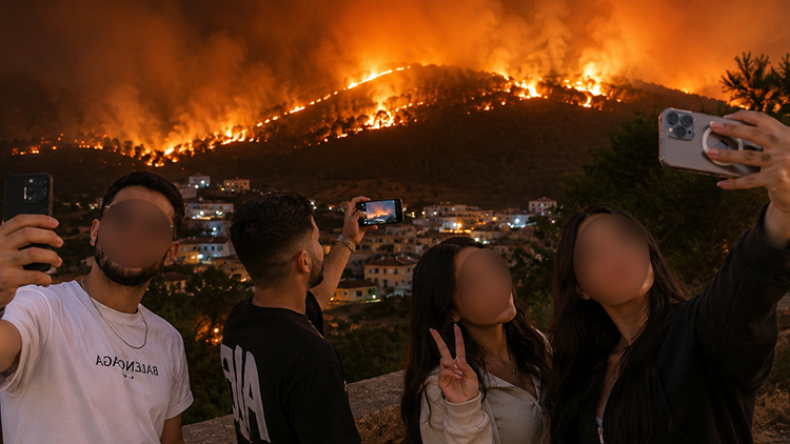
Families in Jijel faced fear, loss, and displacement due to recent fires, while some influencers visited the affected areas with cameras to capture photos and videos. This behavior sparked widespread anger among Algerians, who criticized the influencers for trivializing the tragedy. Social media users circulated numerous posts expressing outrage over influencers appearing in devastated areas solely for photographic opportunities. Many online commentators emphasized that Jijel is not merely a backdrop for photos, and the suffering of families should not be exploited as an opportunity for personal fame. Indeed, the prevailing sentiment was that Jijel is not a backdrop for photos, and the tragedies faced by families are emphatically not opportunities for personal fame or increased visibility. This strong reaction noted a deep-seated respect for human dignity and a rejection of perceived opportunism.
Disaster as a Backdrop
Some followers perceived the actions of certain digital influencers as resembling a tourist trip rather than a genuine solidarity visit. These influencers were criticized for turning the tragedy in Jijel into an opportunity for tourism or a photoshoot. Many Algerians view Jijel as a national wound that should be treated with respect and not exploited. Public sentiment emphasized that Jijel requires tangible assistance, not individuals utilizing its devastated landscape as a backdrop for photographs. The widespread anger that erupted on social media over these actions showed the profound disconnect between the influencers' perceived intentions and the public's expectations during a crisis. Posts circulating widely suggested that the disaster was being treated as mere scenery for rapid content creation or an opportunity to capture striking images, rather than a somber event requiring genuine empathy. For many Algerians, Jijel is a province afflicted by disaster, in need of comfort and aid, rather than a stage for entertainment or self-promotion. They firmly believe that Jijel needs help, not people using its ashes as photo backgrounds.
One specific instance that drew heavy criticism involved an influencer who was observed with friends, laughing, and smearing her face with charcoal to give the impression of being directly in the affected zones. She was also seen riding a horse that appeared either burnt or exhausted, further fueling public outrage. Critics noted that the core issue was not the documentation of the fires or their impact, but rather the inappropriate manner of filming and the perceived transformation of genuine suffering into entertainment or a platform for self-display. This particular incident became a stark symbol of the perceived insensitivity, crystallizing the public's frustration. The concern was not with the act of reporting or showing the devastation, but with the method and motivation behind it, which many felt trivialized the immense suffering.
The Contrast of True Aid
True fame, according to social media users, is measured by the impact on people's lives rather than by the quantity of photos or social media likes. Many online commentators emphasized that individuals genuinely seeking to assist can do so effectively without documenting every step with a photoshoot or portraying themselves as heroes. They asserted that those who want to help can do so without turning every step into a photoshoot or making themselves heroes, focusing instead on the tangible outcomes of their efforts. This perspective noted a desire for authenticity and genuine altruism over performative acts.
In contrast to those criticized for trivializing the tragedy, some influencers chose to utilize their public platforms and reach to provide tangible support to the affected communities in Jijel. These individuals concentrated their efforts on collecting donations, sourcing essential necessities, and directly supporting families impacted by the fires. These influencers focused on practical aid, providing necessities and support to affected families. Their actions demonstrated a different approach to engagement with the disaster, prioritizing the needs of the victims over personal visibility. This distinction was key for many Algerians, who value solidarity as a deep-rooted principle that does not require cameras or advertisements, especially during times of crisis.
A significant outcome of these efforts was the rapid mobilization of resources. Some influencers, operating both within Algeria and internationally, successfully collected approximately 1.75 billion centimes (175,000,000 Algerian Dinars) within a 24-hour period. This financial aid was directed towards assisting the victims and supporting recovery efforts in Jijel, providing a stark contrast to the earlier criticized behaviors. This swift and substantial collection of funds showcased the powerful positive potential of social media platforms when wielded with responsibility and genuine intent, offering a beacon of hope amidst the devastation.
Digital Responsibility and Dignity
The discussion around influencer conduct noted the perceived decline in the human meaning of content when the camera's focus overshadows individuals and personal photos take precedence over victims' feelings. Commentators noted a clear distinction between a journalist documenting an event according to professional standards and an influencer who might transform a location into a platform for self-promotion. Many Algerians asserted that during times of crisis, their solidarity is a deeply ingrained value that does not depend on cameras or advertising. They argued that when the camera becomes more important than the person, and personal photos more important than victims' feelings, content inevitably loses its human meaning.
A core message from the public was that human dignity should not be compromised for the sake of increased online engagement. This principle, that human dignity should not be the price for greater interaction, resonated deeply across social media platforms. The debate also showed the significant responsibility carried by influencers with substantial followings, often numbering in the thousands or millions, given that their actions can be emulated by others. Influencers who have thousands or millions of followers bear a greater responsibility, as their actions can indeed be imitated, setting a precedent for public conduct. There was a widespread call for influencers to demonstrate respect for both the affected locations and the people, urging them to act with greater awareness and a sense of responsibility in their public conduct. This collective appeal for ethical engagement reflects a broader societal expectation that digital platforms, and those who wield influence on them, should uphold moral standards, particularly in moments of collective grief and vulnerability. The public's reaction served as a powerful reminder that while digital reach offers unparalleled opportunities, it also comes with a profound obligation to act with empathy and integrity.