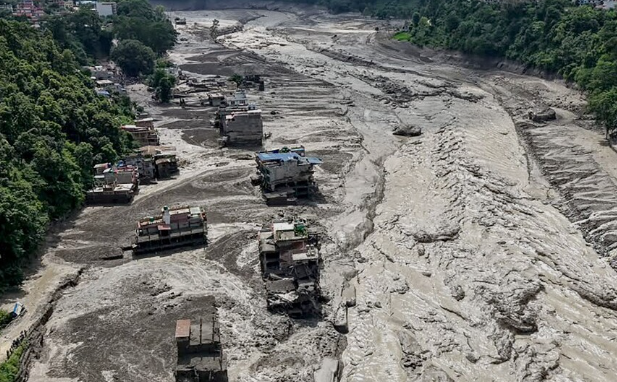
At least 384 tourists and travelers were reported missing near the Nepal-China border after a mudslide occurred around 8:30 AM local time. The incident, which struck with devastating force, has led to a significant search and rescue operation in the rugged Himalayan region. Eight people have been confirmed dead in the incident, adding to the grim toll of the disaster. Eight bodies were found in Nepal's Nuwakot and Dhading districts following the event, showing the immediate and tragic impact on local communities. The mudslide's timing, early in the morning, likely caught many residents and travelers unprepared, contributing to the high number of missing individuals.
Devastation Along Border Crossing
The mudslide caused extensive destruction, sweeping away essential infrastructure. Police stations, customs offices, and several private homes were swept away in the mudslide, leaving a trail of devastation. The disaster occurred near the Gyirong post, a major land crossing between Nepal and China, which is a critical artery for trade and tourism between the two nations. The mudslide severely impacted infrastructure, cutting off roads leading to the Gyirong post on the Chinese side, effectively isolating the area. Beyond physical damage to structures and roadways, communications and electricity supply were also disrupted in the affected area, further complicating relief efforts and assessment of the damage. Due to the significant impact and the potential for further cascading effects, emergency alerts were issued for communities located downstream. These warnings extended as far as Chitwan, a district in Nepal that borders India, indicating the potential for widespread consequences from the event and the need for vigilance in a broader geographical area.
Diverse Nationalities Affected
The 384 individuals reported missing following the mudslide near the Nepal-China border include nationals from multiple countries, noting the international scope of the tragedy. Among those unaccounted for are citizens of Nepal, India, the United Kingdom, South Africa, Australia, and the Netherlands. This diverse group of missing persons shows the Gyirong post's role as a significant international transit point. The incident occurred near the Gyirong post, a significant land crossing, affecting a diverse group of travelers and residents in the border region who were either working, traveling, or living in the vicinity. Search and rescue efforts are ongoing, but the multinational nature of the missing persons notes the broad impact of the disaster and the global concern it has generated. The presence of tourists from several continents indicates the popularity of the route for international travel and adventure.
Rescue Efforts and Challenges
Rescue operations are facing significant hurdles due to the remote and rugged terrain near the Nepal-China border. The mudslide, which swept away infrastructure and disrupted communications, has complicated access to the affected areas, making the deployment of aid and personnel extremely difficult. Efforts to locate the 384 missing individuals, including nationals from Nepal, India, the United Kingdom, South Africa, Australia, and the Netherlands, are underway in challenging conditions, with teams navigating treacherous landscapes and unstable ground. The incident occurred near the Gyirong post, a critical land crossing between Nepal and China, further emphasizing the strategic importance of restoring access and communications.
Search teams are contending with damaged roads and a lack of electricity, making it difficult to deploy heavy machinery and maintain consistent contact with personnel on the ground. The scale of the devastation, which includes swept-away police stations, customs offices, and private homes, indicates the severity of the task at hand and the extensive resources required for recovery. Emergency alerts were issued for communities downstream, including Chitwan in Nepal, suggesting the potential for further complications in the broader region if floodwaters or additional landslides occur. Authorities are coordinating efforts to overcome these logistical obstacles and enhance the effectiveness of the ongoing search and rescue missions, facing a race against time to find survivors amidst the debris and difficult conditions.