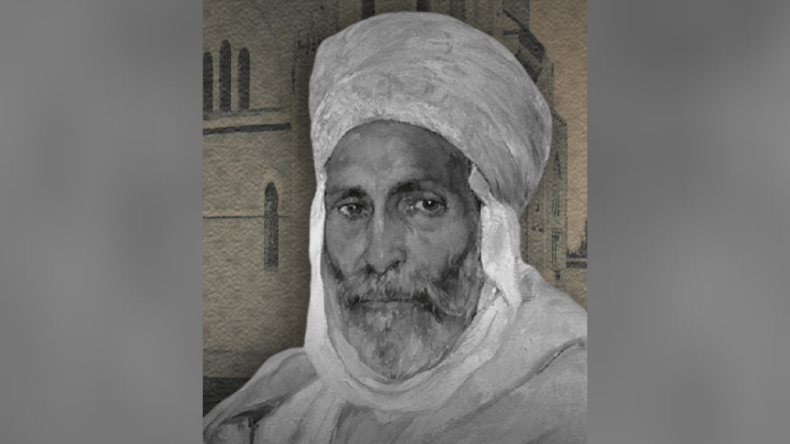
The municipality of Yesser, Boumerdes Wilaya, organized a significant cultural event on Thursday, May 7, 2026, to honor the esteemed scholar, Sheikh Abdul Rahman Al-Tha'alibi. This event served as a tribute to a figure whose intellectual contributions profoundly shaped his era and continue to resonate today. Sheikh Al-Tha'alibi was born in Yesser in 786 AH (1385 AD), a detail that firmly roots his origins in the region. His remarkable life of scholarship and spiritual guidance concluded with his passing in 875 AH (1471 AD). During his extensive travels, Sheikh Al-Tha'alibi made a key decision to settle in Algiers after reportedly hearing a verse about a 'good land and a grateful servant.' This spiritual inspiration guided him to the city that would become deeply intertwined with his legacy. Indeed, his profound knowledge, unwavering piety, and significant spiritual influence led to Algiers becoming widely known as the 'City of Sidi Abdul Rahman,' a testament to his enduring impact on the urban landscape and its inhabitants.
A Scholar's Journey
Sheikh Abdul Rahman Al-Tha'alibi lived during a transformative period known as the post-Almohad era. This historical epoch followed the significant division of the powerful Almohad state into three distinct and influential entities: the Hafsid state, the Zayyanid state, and the Marinid state. This fragmentation created a dynamic intellectual and political landscape in which Sheikh Al-Tha'alibi's scholarship flourished. His scholarly journey commenced with foundational studies in his hometown, Yesser, and continued in other prominent centers of learning such as Bejaia and Tunis. These early educational experiences laid the groundwork for his future intellectual pursuits. Further broadening his academic horizons, he subsequently resided in the prestigious institutions of Al-Azhar in Cairo and the holy cities of Hijaz, where he immersed himself in advanced religious and scientific studies, further expanding his knowledge base.
His intellectual peregrinations extended beyond North Africa and the Arabian Peninsula. During his travels, Sheikh Al-Tha'alibi visited significant cultural and intellectual hubs like Sham (Greater Syria) and Turkey. In these diverse regions, he not only benefited immensely from the local intellectual discourse but also actively contributed to it, engaging with scholars and sharing his profound insights. His reputation as a formidable scholar grew with each journey. He later returned to Tunis, where his expertise was widely recognized, and he was considered the most knowledgeable scholar in the Prophetic Hadith, a critical branch of Islamic studies. Beyond his direct academic contributions, Sheikh Al-Tha'alibi also played a key advisory role, serving as a consultant to one of the sultans of the powerful Songhai state, which was located in present-day West Africa. This role notes his influence extending into political and administrative spheres, demonstrating the practical application of his wisdom.
Vast Intellectual Output
Sheikh Abdul Rahman Al-Tha'alibi is credited with an astonishing intellectual output, authoring approximately ninety books. These works covered a diverse array of scientific fields, showcasing the breadth and depth of his knowledge. His extensive literary contributions include notable works that have become foundational texts in Islamic scholarship. Among these is 'Al-Jawahir Al-Hasan fi Tafsir Al-Qur'an', a full and influential commentary on the Quran, which continues to be studied for its insights. Another significant work is 'Al-Anwar fi Ayat Al-Nabi Al-Mukhtar', which meticulously focuses on the signs and miracles of the chosen Prophet, Muhammad (peace be upon him). Al-Tha'alibi's scholarly influence was not confined to his written works; it also extended powerfully through his students, many of whom became prominent figures in their own right, carrying forward his intellectual torch. Among his most distinguished pupils were Imam Muhammad ibn Yusuf Al-Sanusi, an eminent theologian known for authoring the seminal work 'Al-Aqida Al-Sanusiya', a foundational text in Ash'ari theology. Another significant student was Muhammad ibn Abd al-Karim Al-Maghili, a highly influential scholar and reformer whose teachings impacted West Africa. These students, through their own works and teachings, further disseminated Sheikh Al-Tha'alibi's intellectual legacy across generations and regions.
Misconceptions and Neglect
Despite his immense scholarly contributions, it is regrettable that some Algerians have neglected Sheikh Abdul Rahman Al-Tha'alibi's extensive knowledge. Instead of focusing on his profound academic and spiritual heritage, they have, at times, attributed various superstitions and myths to him. These folkloric narratives often overshadow his true intellectual achievements. One such anecdote, frequently cited, alleges a fantastical story that "his cow eating one of his visitor's lions." Such mythical narratives have regrettably contributed to a deviation from his authentic scholarly legacy, blurring the lines between historical fact and popular folklore. This specific mythical story was notably cited by the French Orientalist Henri Klein. Klein's mention of the anecdote further notes the widespread presence of such folkloric accounts surrounding Sheikh Al-Tha'alibi, starkly contrasting with his actual, verifiable intellectual contributions and the rigorous academic life he led.
Preserving True Legacy
Recognizing the importance of rectifying these misconceptions and honoring his true legacy, the author suggests several initiatives. One key proposal is that Boumerdes University should be formally named after Sheikh Abdul Rahman Al-Tha'alibi, thereby permanently associating a leading educational institution with his name. Additionally, it is proposed that his name be given to other religious or educational institutions, ensuring his memory is enshrined within centers of learning. A significant development already underway is the construction of a large mosque in Ras El Oued, Bordj Bou Arréridj, which is proudly bearing Sheikh Al-Tha'alibi's name. This mosque will serve as a lasting monument to his spiritual and scholarly significance. The author also proposed the organization of a national or even international conference dedicated to Sheikh Abdul Rahman. Such a conference would provide a key platform for academic discourse, allowing scholars to delve into his works, discuss his impact, and re-evaluate his contributions. The reprinting of his numerous works is advocated, making his invaluable texts accessible to a new generation of students and researchers. These concerted initiatives aim to highlight and preserve his authentic scholarly contributions against prevailing misconceptions, ensuring that Sheikh Abdul Rahman Al-Tha'alibi is remembered for his true intellectual and spiritual grandeur.