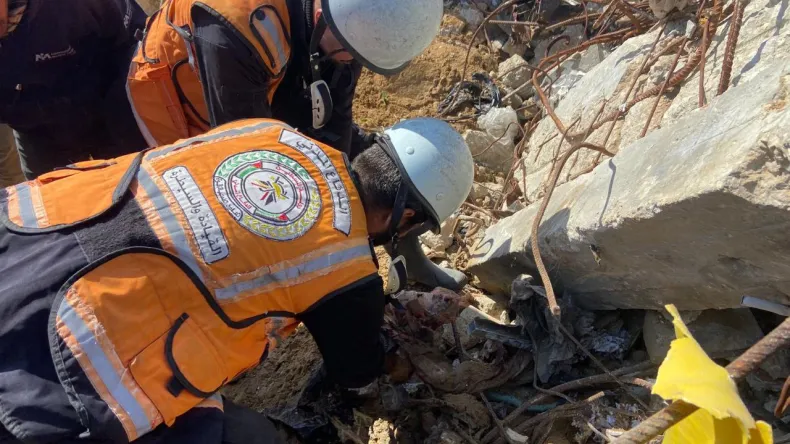
On Sunday, civil defense teams in the Gaza Strip retrieved the remains of 17 martyrs from under the rubble of homes destroyed by what was described as the Zionist aggression in the Gaza and Middle Governorates. The recovery operation was conducted amidst ongoing damage to infrastructure across the region, noting the persistent challenges faced by humanitarian workers. These efforts are part of a broader, continuous operation to locate and extract victims from the extensive destruction.
Sunday's Retrieval Efforts
Sixteen martyrs were retrieved from under the rubble of homes in the Al-Zaytoun and Yarmouk neighborhoods in Gaza City. These specific areas have witnessed significant damage to residential structures. An additional martyr was retrieved from the Nuseirat camp in the central Gaza Strip, where recovery efforts are also intensely focused. These retrieval efforts followed extensive destruction in the area, leaving many buildings collapsed or severely damaged. The teams worked meticulously to navigate the hazardous conditions presented by the shattered structures.
Earlier on Sunday morning, September 6, the bodies of approximately 100 martyrs, including 70 children, were buried in the Al-Zaytoun neighborhood of Gaza City. This mass burial shows the tragic scale of loss affecting the civilian population. The burials took place as civil defense teams continued their work to locate and retrieve bodies from damaged structures across the Gaza Strip. The ongoing operations highlight the widespread impact on residential areas in the region, with many families displaced and communities devastated.
Previous Recovery Operations
On Saturday, civil defense teams retrieved the remains of 13 martyrs from under the rubble of destroyed homes. Among these, 8 were from the Al-Zaytoun and Yarmouk neighborhoods in Gaza City, areas consistently affected by the destruction, while 5 others were found in the Nuseirat camp. The Civil Defense in Gaza has announced an extensive operation to retrieve bodies from destroyed buildings, beginning with the Engineers Tower in Nuseirat camp, which was targeted in November 2023. This strategic focus on specific sites aims to systematically clear debris and recover remains. Mahmoud Bsal, spokesperson for the Civil Defense, stated, "Approximately 150 bodies were retrieved in a previous phase" from the Engineers Tower, indicating the significant human toll from that single incident. This ongoing effort follows earlier recoveries from various damaged structures across the Gaza Strip, reflecting a sustained commitment to accounting for the missing.
Challenges and Scale of Loss
Accessing the bodies has been a significant challenge, as they were deeply buried under layers of rubble since their homes were targeted, according to the Palestinian Information Center. The difficulty in reaching destroyed areas and a significant shortage of heavy equipment have previously hindered retrieval efforts, prolonging the suffering of families awaiting news of their loved ones. Rescue teams currently lack the necessary machinery and tools to adequately address the extensive scale of destruction across the Gaza Strip, making their work arduous and slow. The Palestinian Information Center further noted that the overwhelming amount of rubble has made recovery operations exceptionally difficult for civil defense teams, requiring immense effort and posing risks to the rescuers themselves. It is estimated that more than 8,000 bodies are still unaccounted for, remaining under the debris of destroyed buildings throughout the territory, a stark indicator of the widespread devastation.
Witness Accounts
The 6-story Engineers Tower, a structure previously targeted, housed over 350 people before its destruction, illustrating the significant human density in the affected residential buildings. The extensive damage to such multi-story residential buildings has complicated recovery efforts for civil defense teams searching for individuals trapped under debris, as the structural instability and volume of rubble present formidable obstacles. The scale of destruction continues to pose significant challenges for humanitarian operations in the region, demanding substantial resources and international support to address the ongoing crisis.