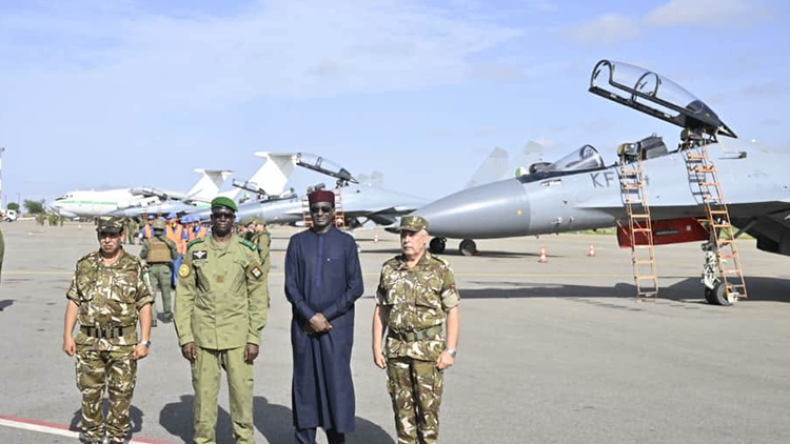
French media outlets are closely scrutinizing Algeria's recent decision to send warplanes to the authorities in Niger. This move, which involved the dispatch of military aircraft, has drawn significant attention from prominent publications such as Le Monde and Marianne, which are extensively reporting on the development. Algeria's dispatch of military aircraft to Niger is being presented by these media sources as a notable departure from the country's established foreign policy and traditional stances regarding military interventions in the region. This action is seen as a significant shift in Algerian foreign policy, prompting considerable discussion and analysis across French media.
Le Monde's Scrutiny of Policy Shift
The influential French newspaper Le Monde dedicated two articles to this unfolding development on consecutive days, reflecting the gravity with which it views the situation. One of these pieces was authored by the journalist Frédéric Bobin, who offered an in-depth analysis of Algeria's actions. Le Monde characterized the event as "a historic and unprecedented turning point in Algerian foreign policy," showing the perceived magnitude of the shift. The publication observed that Algeria appears to be moving from a long-standing practice of "secret mediation in grey areas" to "claiming its right to openly assist a threatened friendly state." This marks a significant change in how Algeria projects its power and influence abroad. Prior to this, Le Monde had already described the event as a "public military display outside its borders," noting the overt nature of Algeria's intervention.
The French magazine Marianne also weighed in with a strongly worded opinion, titling its article "Algeria crosses a red line it had drawn for over fifty years." This headline encapsulates the sentiment among some French commentators that Algeria has abandoned a deeply entrenched principle of non-intervention. French channel TV5 further contributed to the media coverage, consulting experts for their perspectives on the implications of Algeria's actions. This extensive media attention comes amidst accusations from some parties who claim Paris is orchestrating the coup attempt in Niger, adding a layer of complexity to the regional dynamics and the narrative surrounding France's role. The focus of these media outlets suggests a deep concern within France regarding the evolving geopolitical landscape in the Sahel and Algeria's assertive new role.
Regional Influence and French Concerns
Paris considers the region its "backyard," a perspective that historically has informed its reactions to regional developments and its foreign policy in the Sahel. Observers suggest that the French are particularly bothered by Algeria's growing influence in the Sahel, perceiving it as a direct challenge to their traditional sphere of influence. This concern arises as French influence in the Sahel is reportedly declining, facing an increased presence and competition from Russian, Chinese, and Turkish actors. The perceived erosion of French authority, coupled with Algeria's assertive posture, creates a tense environment for Paris.
Algeria shares a significant land border with Niger, extending for 1,200 km. This substantial geographical proximity shows Algeria's inherent interest in the stability of its southern neighbor. The military support provided by Algeria to Niger is viewed by some as a strategic move to assert its regional standing amid shifting geopolitical dynamics. The perceived decline of French influence in the region, coupled with Algeria's assertive posture, contributes to the alarm expressed in French media outlets. This strategic move by Algeria is interpreted not just as a response to Niger's immediate needs, but also as a broader statement about its role and ambitions in the region. The growing presence of other global powers further complicates the situation, creating a multi-polar environment where traditional influences are being challenged.
Algeria's Strategic Rationale
Algeria acted after receiving a direct request from Niger's ruling authorities for military support, indicating a formal engagement between the two nations. This move aligns with Algeria's constitutional amendments from 2020, which permit military operations abroad when national security is deemed to be under threat. These amendments represent a significant legal and political shift, allowing Algeria greater flexibility in deploying its military forces beyond its borders under specific conditions. Algeria seeks to resolve issues with its southern neighbors to provide necessary support, a strategy that shows its regional ambitions to foster stability and security in its immediate vicinity.
The recent diplomatic and military interactions suggest Algeria is actively pursuing its strategic interests in the Sahel region, aiming to stabilize its immediate neighborhood and project influence. Niger's Prime Minister Ali Mahamane Lamine Zeine and Minister of Defense General Salifou Modi recently received an Algerian delegation, indicating direct engagement and high-level coordination between the two nations. This face-to-face interaction notes the seriousness and directness of Algeria's commitment. The Algerian government's stated aim is to address instability proactively, seeing the security of its southern neighbors as intrinsically linked to its own national security. This approach marks a more interventionist stance compared to its historical foreign policy, where mediation and non-military solutions were often preferred. The decision to send warplanes, therefore, is not merely an isolated act but part of a broader, constitutionally backed strategy to safeguard Algerian interests and enhance its regional leadership in a volatile environment.