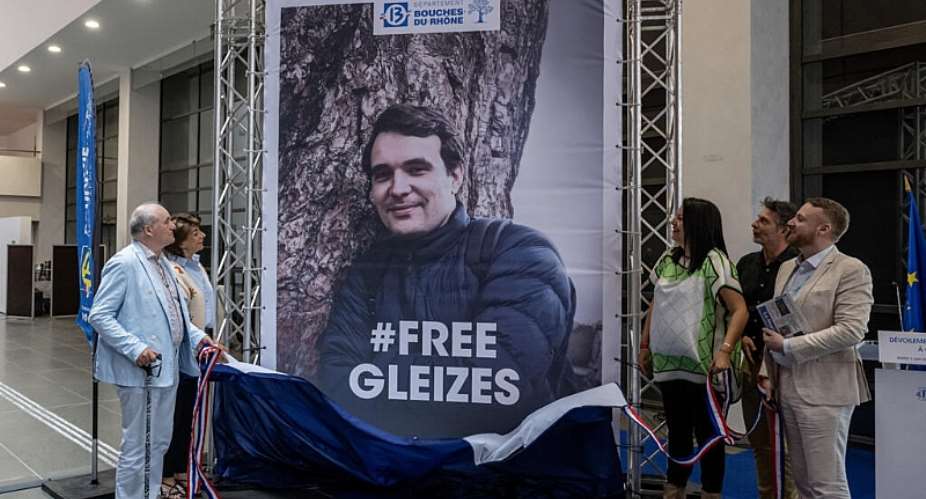
French journalist Christophe Gleizes, 37, remains imprisoned in Algeria one year after his arrest in May 2024. He was detained in the North African country and has since spent a full year in custody. The prolonged detention of the 37-year-old journalist has drawn significant international attention and concern from various human rights organizations and sporting bodies. FIFA president Gianni Infantino has voiced optimism regarding Gleizes' situation, expressing hope that the journalist would be granted a presidential pardon, an outcome that supporters believe could bring an end to his lengthy incarceration.
The one-year mark of Gleizes's imprisonment notes the persistent challenges faced by journalists operating in complex geopolitical environments and shows the ongoing efforts by his family and international advocates to secure his release. His case has become a focal point for discussions about press freedom and judicial processes in Algeria.
Legal Battles and Detention
Christophe Gleizes was initially arrested in Algeria in May 2024, marking the beginning of a complex legal ordeal that has kept him in detention for an entire year. Following his arrest, he was placed under judicial supervision, a common legal step in Algerian proceedings, before his conviction. This period of supervision preceded the formal sentencing that would significantly alter his life. On June 29, 2025, Algerian courts sentenced Gleizes to seven years in prison after finding him guilty of “glorifying terrorism.” This charge, which led to such a severe sentence, has been a major point of contention for his supporters and human rights organizations, who argue for his innocence and the unjust nature of his detention.
The legal process continued with several appeals. Gleizes later withdrew an appeal before Algeria's Court of Cassation in March, a decision that further complicated the understanding of his legal strategy and the potential pathways to his release. Separately, in May, Algerian courts rejected an appeal filed by the public prosecutor's office. This rejection maintained the existing legal status of the case, meaning the seven-year sentence remained in effect and was not subject to an increase, but also did not offer immediate relief for Gleizes. The rejection of the public prosecutor's appeal showed the firmness of the initial judicial decision, leaving the journalist and his supporters to explore other avenues for his freedom, such as a potential presidential pardon. The sequence of legal actions and counter-actions has kept Gleizes in a state of prolonged uncertainty, with each court decision scrutinized by those advocating for his release.
International Appeals and Support
Christophe Gleizes, a journalist who contributes to the magazines So Foot and Society, has been the subject of intense international advocacy since his incarceration. His professional background, including his contributions to respected publications, has lent weight to the calls for his release. Reporters Without Borders (RSF) has been particularly vocal, asserting that Gleizes has been unjustly detained for a full year. The organization has consistently called for his release, noting his case as a critical example of press freedom violations. RSF's persistent advocacy shows the global concern for journalists' safety and their ability to report freely without fear of arbitrary detention.
FIFA, the international governing body for football, had previously accredited Gleizes to cover the World Cup competition, a testament to his professional standing in sports journalism. The World Cup commenced on June 11 and is scheduled to conclude on July 19, meaning Gleizes has been unable to fulfill his professional duties for an event he was specifically accredited to cover. The FIFA president's expression of hope for a presidential pardon further emphasizes the high-level attention his case has drew within the international sporting community. The journalist's detention has drawn attention from various international bodies and human rights organizations, all of whom are closely monitoring the developments in his case.
Beyond professional and human rights concerns, Gleizes's personal circumstances have also been noted by his advocates. These include the fact that his grandmother is 102 years old. Such details have been cited by supporters appealing for his release on humanitarian grounds, hoping to evoke compassion and show the human toll of his prolonged absence from his family. The ongoing detention marks a significant period for the journalist, prompting continued calls for a resolution from his supporters and various international entities, who remain hopeful for a positive outcome that would see him reunited with his loved ones and resume his journalistic career.
Family's Enduring Hope
Christophe Gleizes was working on a report about Jeunesse Sportive de Kabylie (JSK), an Algerian football club, at the time of his arrest. This professional assignment, focused on a local sports team, makes the charge of "glorifying terrorism" particularly perplexing to his family and supporters. The journalist's parents, Sylvie and Francis Godard, have consistently expressed their profound hope for his release, particularly as his detention extends beyond a year. Their public statements and private pleas have kept the spotlight on their son's plight, demonstrating the deep personal impact of his incarceration.
The family's efforts to maintain contact and support Christophe are unwavering. Gleizes's brother visited him on Sunday at Kolea prison, offering a direct connection to his family amid the ongoing legal proceedings. Such visits are key for the morale of those detained and provide vital updates to the family on his well-being. The family's sustained efforts and the recent visit show the personal toll of his prolonged incarceration, not only on Christophe himself but also on his entire family. They continue to monitor developments closely, holding onto the prospect of a resolution, such as the presidential pardon mentioned by FIFA President Gianni Infantino, which could bring an end to this challenging chapter. The emotional strain on Sylvie and Francis Godard, coupled with the humanitarian appeal centered on his 102-year-old grandmother, paints a poignant picture of a family striving for justice and reunion.