All forms of government and private newspapers globally are inherently influenced by various external forces, according to a claim central to the discussion on press freedom. This perspective suggests that media entities cannot operate independently of economic and financial lobbies, which exert significant influence through funding and advertising. These powerful financial entities, whether individual benefactors, corporate advertisers, or institutional investors, often hold sway over the editorial direction and content choices of media organizations. Decision-making centers, including political bodies and powerful institutions, are asserted to play a key role in shaping media narratives and editorial lines. These centers, encompassing governmental structures, international organizations, and influential think tanks, possess the capacity to guide public discourse through various means, including access to information, official statements, and strategic communication. The claim also notes the impact of ideological and political lobbies, arguing that these groups consistently seek to align media content with their specific agendas and viewpoints. These ideological and political forces, ranging from advocacy groups to partisan organizations, actively work to promote their narratives, often finding receptive platforms within media outlets that share or can be swayed by their perspectives.
Historical Roots of Communication
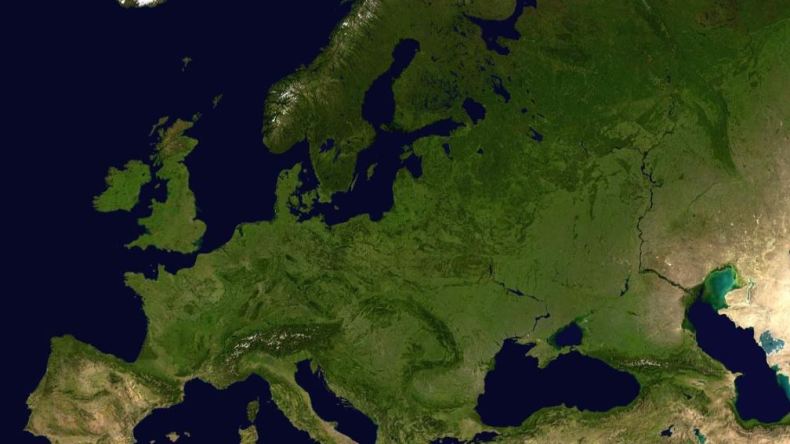
Europe initiated its period of discoveries, driven by the advancements of the First and Second Industrial Revolutions, primarily in France, Britain, and Germany. These industrial transformations provided the technological and economic impetus for widespread societal changes, including the evolution of communication. Prior to these industrial transformations, the printing press, introduced by Gutenberg in the mid-15th century, had already facilitated printing tasks. This invention marked a key moment in the dissemination of information, making written material more accessible and laying the groundwork for mass communication. The printing press's ability to reproduce texts at an unprecedented scale dramatically changed how knowledge, ideas, and news could be shared across populations. The subsequent advent of the steam engine, followed by electricity, significantly revolutionized the world of communications across Europe, America, and other relatively developed nations. The steam engine facilitated faster transportation of printed materials and people, while electricity enabled instantaneous communication over long distances through technologies like the telegraph, profoundly altering the speed and reach of information exchange. This technological evolution coincided with the first period of globalization, which emerged in the mid-18th century and experienced substantial expansion from the mid-19th century onward. This era of increasing global interconnectedness, fueled by advancements in communication and transportation, created a fertile ground for the media to expand its reach and influence across national borders. The interplay between technological innovation and global expansion fundamentally reshaped the landscape of news dissemination and public opinion.
The Unseen Hand of Ownership
Media outlets, according to a central claim in discussions about press freedom, inherently defend the interests of their funders or owners. This perspective suggests that expecting fairness or neutrality from such outlets is unrealistic. The argument posits that financial backing and ownership structures inevitably steer editorial lines and content in directions favorable to these stakeholders. Whether owned by large corporations, wealthy individuals, or partisan groups, media organizations often find their reporting and commentary reflecting the priorities and perspectives of those who control their financial lifeline. This can manifest in subtle biases, selective reporting, or overt promotion of certain viewpoints, making a truly objective stance challenging to maintain. The economic imperative to secure funding or satisfy owners often overrides the journalistic ideal of impartial reporting, leading to a media landscape where vested interests can profoundly shape the public narrative.
Another claim notes that media organizations frequently align themselves with their respective countries' foreign policies. This alignment is asserted to occur even when these policies might not serve the best interests of the media's own domestic audience. This phenomenon can be observed in the way international events are framed, the emphasis placed on certain geopolitical narratives, and the portrayal of foreign nations or conflicts. The implication is that nationalistic narratives or state-sanctioned viewpoints can supersede independent journalistic inquiry, potentially leading to a lack of critical examination of government actions abroad. This can result in a homogenized media perspective on international affairs, where dissent or alternative viewpoints are marginalized, and the public receives a narrative that supports the state's strategic objectives rather than a full and balanced account.
A significant claim within this discourse is that no absolute freedom is supported within any existing system. This challenges the notion of unrestricted press freedom, suggesting that all media operations are subject to various constraints, whether they be legal, economic, political, or social. These limitations are viewed as inherent to the structure and functioning of media within any given societal framework. These constraints can include censorship laws, economic pressures from advertisers, political interference, or societal norms and expectations that dictate what is considered acceptable public discourse. Consequently, the idea of a press operating without any boundaries or external influences is largely theoretical, as practical realities always impose some form of limitation on expression.
The Limits of Expression
Media campaigns have historically preceded significant geopolitical actions, including colonial invasions, wars, and settlements, often framing these actions as justified under the principle of freedom of expression. These campaigns frequently served to shape public opinion, generating consent or support for aggressive foreign policies by portraying them as necessary, righteous, or even humanitarian endeavors. Such historical precedents demonstrate how media can be instrumentalized to legitimize actions that have profound and often devastating consequences. The extent to which certain ideas are accepted, received, or forgiven within any given society is fundamentally shaped by its prevailing political and ideological culture. This cultural framework dictates the boundaries of public discourse, determining what narratives gain traction and what perspectives are suppressed or dismissed. The political and ideological culture of a society acts as a filter, influencing how information is interpreted and what forms of expression are deemed permissible or even laudable. Consequently, the scope of freedoms related to media, expression, and communication is not absolute but is instead limited and predetermined within any societal context. These limitations define what can be openly discussed or broadcast, reflecting the established norms and power structures. This inherent predetermination means that even in societies that champion free speech, there are always unspoken or explicit boundaries that shape the permissible range of ideas and opinions, ultimately serving the interests of the dominant political and ideological forces.