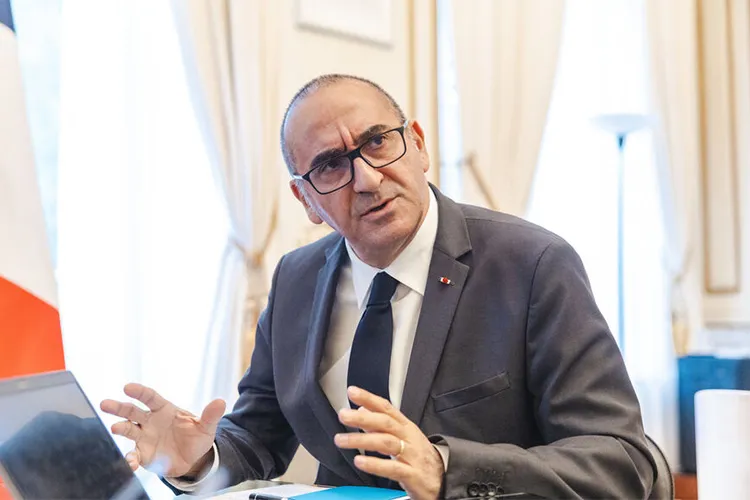
French Interior Minister Laurent Nuñez has clarified aspects of the 1968 migration agreement between Algeria and France, addressing concerns regarding the exploitation of its provisions. The intervention by Mr. Nuñez came in response to written question number 01567, submitted by Senator Fabien Genet of the "Republicans" party on October 10, 2024. The minister's official response was subsequently published in the Official Journal of the French Senate on September 3, 2026. This intervention by the French Interior Minister was specifically aimed at addressing the perceived exploitation of the agreement's clauses, particularly by certain political factions.
Mr. Nuñez stated that the "Franco-Algerian agreement signed on December 27, 1968, concerning the movement, employment, and residence in France of Algerian nationals and their families, does not include any reference to the necessity of Algeria’s commitment to receive its nationals expelled from French territory." He further noted that cooperation between the two nations regarding the identification of Algerian nationals and the return of foreign individuals is structured by the 1994 consular convention and a separate cooperation agreement protocol. This clarification from the Interior Minister sought to delineate the precise scope and limitations of the long-standing bilateral accord.
Senator's Question and Diplomatic Context
Senator Fabien Genet's inquiry into the 1968 migration agreement coincided with a period of significant political and diplomatic tension between Algeria and Paris. This friction began two months prior to the question, following Algeria's decision to recall its ambassador. Mr. Genet, a member of the "Republicans" party, had sought to amend the 1968 agreement to include an obligation for Algeria to accept its nationals expelled from French territory. The senator's question, registered on October 10, 2024, noted the ongoing challenges in bilateral relations and the practical implications for France's immigration policy.
Mr. Genet claimed that Algeria suspended the issuance of consular permits for receiving expelled nationals at the beginning of 2023. This alleged suspension occurred amidst a complex political and diplomatic crisis in bilateral relations, which led to a notable reduction in consular permits issued in 2024, reaching their lowest levels. Consular cooperation between the two nations only began to resume following French Interior Minister Laurent Nuñez's visit to Algeria in February 2026. The minister's visit marked a key step in re-establishing channels for dialogue and addressing the practical difficulties that had emerged. The resumption of these discussions was a direct response to the diplomatic impasse that had hindered the effective management of returns.
Legal Framework for Returns
The Franco-Algerian agreement, signed on December 27, 1968, specifically addresses the movement, employment, and residence of Algerian nationals and their families within France. French Interior Minister Laurent Nuñez clarified that this foundational agreement "does not include any reference to the necessity of Algeria’s commitment to receive its nationals expelled from French territory." Mr. Nuñez's statement shows that the 1968 pact, while governing broad aspects of Algerian presence in France, does not explicitly mandate Algeria's acceptance of repatriated individuals. This distinction is key for understanding the legal intricacies surrounding expulsions and returns between the two countries.
The legal text governing the return of nationals, as referenced in Senator Fabien Genet's inquiry, primarily stems from the consular convention signed between France and Algeria on April 27, 1994. This convention, rather than the 1968 agreement, provides the framework for such procedures. Cooperation regarding the identification of Algerian nationals and the return of foreigners is organized not only by the 1994 consular convention but also by a specific cooperation agreement protocol. These additional legal instruments are essential for facilitating the practical aspects of managing immigration and repatriation, particularly concerning individuals who do not have the right to remain in France. The minister's clarification aimed to redirect focus to the appropriate legal instruments governing these complex processes.
A decline in the number of deportees from France to Algeria was recorded beginning in 2020. This reduction was attributed to the health crisis associated with the Corona pandemic, which impacted international travel and administrative processes. Following this period, a gradual return to normal operations commenced in March 2022. This saw an increase in consular permits issued by Algerian diplomatic missions, facilitating some returns. However, the number of consular permits for deportation remains lower than levels observed in previous times, indicating that full normalcy in these procedures has not yet been restored. The number of consular permits dropped to its lowest levels in 2024, coinciding with a complex political and diplomatic crisis in bilateral relations, further exacerbating the challenges in managing returns. The resumption of consular cooperation, initiated by Laurent Nuñez's visit to Algeria in February 2026, was a direct effort to address these persistent difficulties and improve the rate of returns.
Calls for Agreement Review
French Interior Minister Laurent Nuñez has announced the appointment of a committee tasked with reviewing the 1968 migration agreement. This initiative comes as an implementation of instructions from the President of the Republic and the Prime Minister. Mr. Nuñez stated that the goal of this review is "to obtain common positions on all pending issues." The formation of this committee signals a formal effort to re-evaluate aspects of the long-standing bilateral pact. This full review aims to address various outstanding matters and ensure the agreement remains relevant and effective in the current context of bilateral relations.
The move to review the 1968 agreement follows earlier calls from prominent political figures. Former French Prime Minister Édouard Philippe had previously advocated for a full review of the accord. These calls for a re-evaluation highlight ongoing discussions within French political circles regarding the efficacy and terms of the agreement, particularly concerning migration and repatriation matters between France and Algeria. The establishment of the review committee shows the French government's commitment to finding mutually agreeable solutions and adapting the framework to contemporary challenges.
Broader Political Concerns
Exploitation of the 1968 agreement by the right and far-right aimed to provoke the French public and stimulate debate on Algeria, a development that coincided with French presidential elections. Amidst these political dynamics, Chems-eddine Hafiz, the Rector of the Great Mosque of Paris, expressed concern regarding the increasing prominence of Algeria and Islam as daily topics in French political and media debates. His statement noted the broader implications of these discussions on public sentiment and inter-community relations. The ongoing scrutiny of the migration pact thus extends beyond legal and diplomatic circles, becoming intertwined with domestic political agendas and societal concerns within France. The minister's clarification and the subsequent announcement of a review committee are therefore not only responses to diplomatic challenges but also acknowledgements of the significant domestic political discourse surrounding migration and Franco-Algerian relations. This broader context shows the multifaceted nature of the issues at play, influencing both policy decisions and public perception.