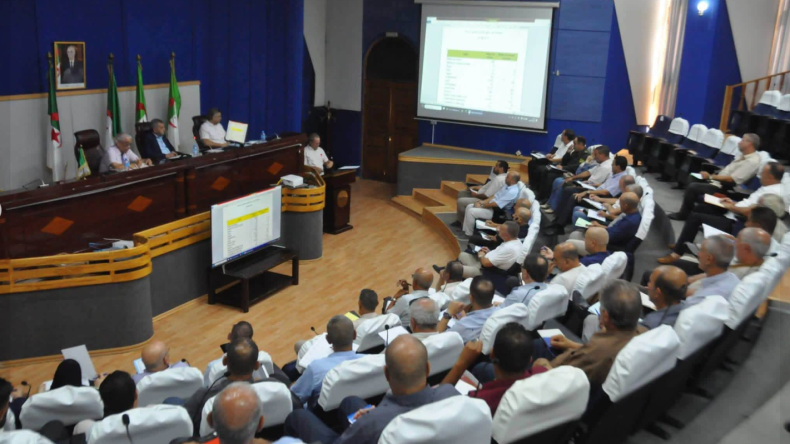
Algerian authorities have initiated coordination meetings in wilayas affected by recent wildfires to address the aftermath, focusing on damage assessment, compensation, and infrastructure repair. These localized meetings are a key component of the government's response to the widespread destruction. Officials are working to meticulously evaluate the extent of losses incurred by residents and local economies. The sessions aim to expedite the approval of compensation packages for those impacted by the fires. Plans also include the rehabilitation and repair of essential damaged networks, ensuring a swift restoration of services to the affected communities.
On-the-Ground Coordination Efforts
The ongoing coordination efforts across fire-affected wilayas are being implemented under direct instructions from President of the Republic, Mr. Abdelmadjid Tebboune. These directives are further reinforced by Minister of Interior, Local Assemblies and Transport, Kamel Beldjoud, who has issued his own set of guidelines to streamline the response. The President's instructions show a commitment to providing immediate relief and support to communities devastated by the wildfires. Officials on the ground are working to translate these high-level directives into actionable plans for recovery and assistance. This centralized approach aims to ensure a unified and efficient response mechanism, facilitating the rapid deployment of resources and aid to those most in need. The operational framework established by Mr. Tebboune and Mr. Beldjoud prioritizes swift damage assessment, timely compensation, and the urgent restoration of critical infrastructure. Local authorities are tasked with executing these instructions to mitigate the impact of the fires and support affected residents.
Goals of Expedited Recovery
The measures implemented by Algerian authorities are designed to expedite the compensation process for affected citizens and ensure the prompt restoration of essential services. This full approach seeks to facilitate a rapid return to normalcy in regions impacted by recent wildfires. Efforts are concentrated on streamlining administrative procedures to ensure that financial aid reaches those in need without undue delay. Simultaneously, resources are being allocated to repair and rebuild critical infrastructure, including utilities such as electricity, water, and communication networks. The government's objective is to mitigate the long-term effects of the fires by swiftly re-establishing vital community functions and supporting residents in rebuilding their lives and livelihoods. This coordinated response shows a commitment to efficient recovery operations, aiming to stabilize communities as quickly as possible.
Presidential and Ministerial Directives
The Ministry of Interior, Local Assemblies and Transport issued a statement detailing the measures being taken in response to the wildfires. The Ministry affirmed that "in implementation of the instructions of the President of the Republic, Mr. Abdelmadjid Tebboune, aimed at taking care of and compensating those affected by the forest fires, and in embodiment of the directives of the Minister of Interior, Local Assemblies and Transport, Saïd Saayoud, aimed at accelerating the completion of care operations and field monitoring of their progress, follow-up operations and evaluation of various measures taken to restore conditions to normal continue across the affected wilayas."
The Ministry added that coordination meetings are being held at the level of the concerned wilayas, "dedicated to monitoring the progress of damage assessment operations, studying and approving compensation, and repairing and rehabilitating damaged networks." Officials reviewed "the outcome of interventions carried out on the ground, identified shortcomings and priorities according to the degree of damage and recorded needs, while emphasizing the necessity of accelerating the pace of work and interventions, and strengthening coordination between the various concerned services and institutions." The Ministry concluded that these operations fall within the framework of "continuous field follow-up to ensure effective care for those affected, guarantee the restoration of essential services, and accelerate the disbursement of compensation, allowing life to return to normal in the affected areas as soon as possible."