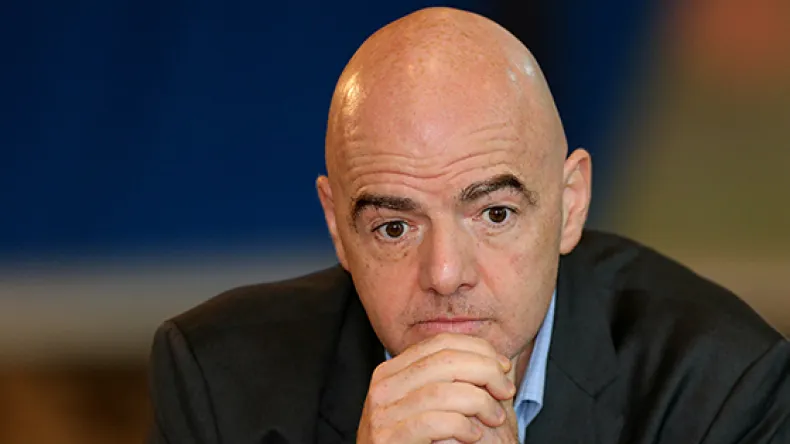
FIFA President Gianni Infantino dedicated an empty chair to French journalist Christophe Guezou during the World Cup in Mexico. The gesture occurred as Mr. Infantino faced scrutiny over human rights issues. He previously described criticisms regarding human rights as "نفاق" (hypocrisy). Mr. Infantino also stated that he felt like an "عامل مهاجر" (migrant worker).
Selective Justice and Hypocrisy
The article criticizes FIFA's response to the situation in Palestine, where athletes were killed and stadiums destroyed, contrasting it with the action taken on the Algerian judicial case. The article states that FIFA's President Gianni Infantino's actions in Mexico were "not just a fleeting humanitarian gesture. It was a calculated political act, carried out under the spotlight of the World Cup, on the eve of the opening match. And in the name of a sports institution that is supposed not to interfere in the affairs of states, nor to exert public pressure on their judicial and sovereign authorities." It further notes, "When the FIFA President dedicated an empty chair to the French journalist Christophe Guezou (كريستوف غليز), and publicly called for him to be granted a 'presidential pardon' in Algeria, he was not speaking as a guardian of football, but as an international lobbyist who chose to use the global football stage to influence an Algerian judicial case decided by a court and confirmed by an appeals court." The article contends, "The issue is that the FIFA President, at the head of an institution that is supposed to be a global sports body, placed himself above borders, above the judiciary, and above the sovereignty of an independent state, and decided to turn a football conference into a platform for symbolic pressure on Algeria."
FIFA imposed only a financial fine and rejected the Palestinian request to suspend the Israeli federation due to clubs operating in occupied settlements. The article notes that Infantino did not "suddenly discover the value of freedom, nor did his conscience suddenly awaken to the fate of journalists. This same man presided over a FIFA that remained silent, hesitated, or maneuvered in bloodier cases, and cases more directly connected to sport itself." It adds, "When it came to Israel, neutrality became sacred, and the phrase 'football does not solve geopolitical problems' became a sufficient excuse to wait." However, "when it came to an Algerian judicial file, Infantino found his voice completely, his platform completely, and his symbolism completely." The article concludes, "This is not humanity. This is selectivity. And it is not courage. It is soft alignment."
Human Rights Watch described FIFA's promises to compensate migrant workers as "blatant lies." The organization stated that FIFA's promises regarding migrant worker compensation were "blatant lies," and that most violations were "foreseeable and preventable." The article asserts, "Infantino wanted to leave an empty chair in the name of a French journalist. But he revealed, without realizing it, the empty moral chair at the heart of FIFA itself." It describes this as "not an isolated event," but "a new chapter in FIFA's history, where it speaks of neutrality when it suits it, and abandons it when neutrality becomes a burden on its relationship with centers of influence." The article emphasizes that "Algeria is a sovereign state, with its institutions, judiciary, laws, and its security and political judgment." It maintains that "Algeria is not required to apologize for its sovereignty" or "to explain to every head of a sports organization the meaning of judicial independence, nor the meaning of a state bearing the consequences of a long history of attempts at infiltration, instrumentalization, and internationalization." The article concludes that "humanity is not selective," and "neutrality is not seasonal," nor "is sport a cover for settling political scores."
FIFA's Political Calculations
FIFA President Gianni Infantino publicly called for a "presidential pardon" for Christophe Guezou in Algeria. This intervention concerned an Algerian judicial case that had been decided by a court and confirmed by an appeals court, according to the article. Mr. Infantino's actions in Mexico were described as a "calculated political act, carried out under the spotlight of the World Cup, on the eve of the opening match." The article noted that Mr. Infantino, as head of FIFA, placed himself "above borders, above the judiciary, and above the sovereignty of an independent state," turning a football conference into a platform for symbolic pressure on Algeria.
Mr. Infantino previously stated that he felt like a "migrant worker" in Qatar and described human rights criticisms as "hypocrisy." These comments came as FIFA faced scrutiny over human rights issues during the World Cup in Mexico. The article contrasts this stance with FIFA's approach to other human rights-related situations. It posits that Mr. Infantino's intervention in the Algerian judicial file demonstrated a selective application of principles, where he found his "voice completely, his platform completely, and his symbolism completely," unlike in other cases.
In September 2024, United Nations experts submitted a formal request to FIFA to suspend the Israeli federation. This request noted concerns regarding the operations of Israeli football clubs in occupied settlements. However, FIFA's response to the situation in Palestine, where athletes were killed and stadiums destroyed, has been criticized for its perceived inaction, with FIFA only imposing a financial fine and rejecting the Palestinian request to suspend the Israeli federation. The article notes that when it came to Israel, "neutrality became sacred, and the phrase 'football does not solve geopolitical problems' became a sufficient excuse to wait."
Mr. Infantino awarded Donald Trump the first FIFA "Peace Award" in December 2025. This award further illustrated FIFA's political engagements and the choices made under Mr. Infantino's leadership regarding international figures. The article contends that Mr. Infantino did not "suddenly discover the value of freedom, nor did his conscience suddenly awaken to the fate of journalists," citing FIFA's silence and maneuvering in other "bloodier cases" more directly connected to sport.
In February 2026, Mr. Infantino called for the lifting of Russia's suspension, stating it "brought only more frustration and hatred." This statement reflected Mr. Infantino's consistent position on Russia's involvement in international football, despite ongoing geopolitical tensions. The article describes FIFA's actions under Mr. Infantino as a "new chapter in FIFA's history, where it speaks of neutrality when it suits it, and abandons it when neutrality becomes a burden on its relationship with centers of influence."
Sovereignty and International Relations
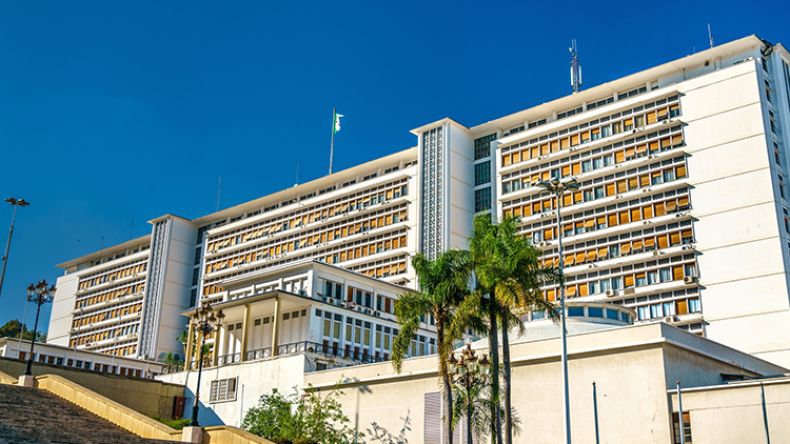
Algeria is described as a sovereign state, equipped with its own institutions, judiciary, and laws. The article asserts that Algeria is not obligated to apologize for its sovereignty, nor is it required to explain the meaning of judicial independence to the head of every sports organization. It states that Algeria should not have to clarify the implications of its long history regarding attempts at infiltration, instrumentalization, and internationalization. This perspective contrasts with FIFA President Gianni Infantino's intervention in an Algerian judicial case concerning Christophe Guezou, where he publicly called for a "presidential pardon." The article frames this action as Infantino placing himself "above borders, above the judiciary, and above the sovereignty of an independent state." It argues that turning a football conference into a platform for symbolic pressure on Algeria constitutes a political act rather than a humanitarian gesture. The article concludes that humanity is not selective, neutrality is not seasonal, and sport should not be used as a cover for settling political scores.