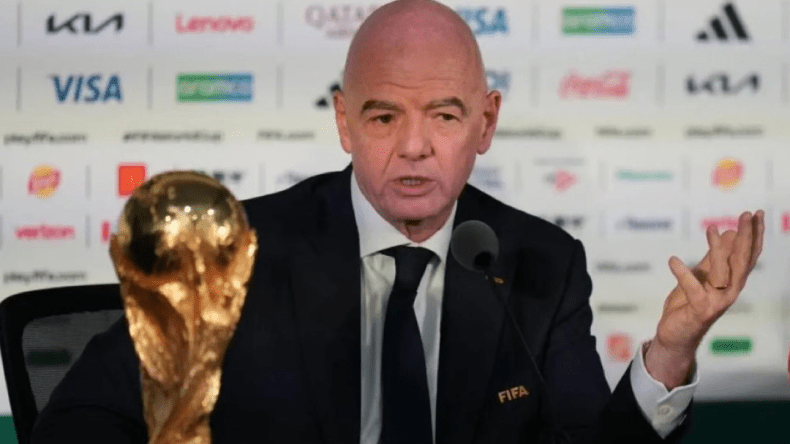
The International Football Federation (FIFA) has denied that a decision has been made regarding the stadium that will host the final match of the 2030 World Cup, despite recent claims. The organization firmly stated that no definitive choice has been finalized for the prestigious event's concluding venue. Spanish newspaper Marca quoted a FIFA spokesperson confirming that the organization has not yet finalized its choice for the venue. The spokesperson stated, "سيتم اتخاذ القرار في الوقت المناسب ." This clarification comes amid speculation about potential host stadiums for the tournament's concluding fixture, which has intensified following statements from key football officials.
Conflicting Statements Emerge
The President of the Moroccan Football Federation, Fouzi Lekjaa, sparked controversy by asserting that Morocco would host the 2030 World Cup final. Lekjaa's statement fueled speculation regarding the final venue, which is part of the joint bid involving Morocco, Spain, and Portugal. His comments diverged sharply from FIFA's official stance, which indicated that no final decision had been reached. This created immediate tension and uncertainty regarding the actual status of the decision-making process for such a key aspect of the tournament.
Spain, a co-host of the 2030 tournament, is actively campaigning to secure the final match in one of its prominent stadiums. The nation has made its intentions clear regarding its aspirations for the culminating fixture. Reports indicate Spain's strong desire to host the culminating fixture at either the Santiago Bernabéu Stadium in Madrid or the Camp Nou Stadium in Barcelona. Both venues are among Europe's largest and most iconic football arenas, making them significant contenders for the prestigious event. The drive from Spain reflects the considerable prestige and economic benefits associated with hosting the World Cup final.
Criticism from La Liga President
Javier Tebas, president of La Liga, strongly criticized FIFA for denying the possibility of the 2030 World Cup final being held in Morocco. Tebas questioned the veracity of FIFA's denial, noting the conflicting statements from involved parties. He asked directly, "لقجع يقول إن النهائي سيكون في الدار البيضاء، وفيفا يقول إن ذلك غير صحيح. إذن، من يكذب؟ هل هو رئيس اتحاد منظم للبطولة وعضو في مجلس فيفا نفسه؟ أم ينبغي لنا أن نصدق مرة أخرى النفي الرسمي الصادر عن فيفا وإنفانتينو؟" (Lekjaa says the final will be in Casablanca, and FIFA says that is not true. So, who is lying? Is it the president of a host federation and a member of the FIFA Council himself? Or should we again believe the official denial issued by FIFA and Infantino?). His remarks show the ongoing dispute surrounding the final venue decision for the 2030 tournament, bringing into question the transparency of the process.
FIFA's Stance on Future Decisions
A FIFA spokesperson, who remained unnamed, reiterated that the decision concerning the final stadium for the 2030 World Cup would be determined at the appropriate time. This position was first announced on August 5, 2026, and FIFA has consistently maintained it since. The spokesperson stated, "سيتم اتخاذ القرار في الوقت المناسب ." FIFA's communication emphasizes that no definitive choice has been made, countering claims from various federations involved in the joint bid. The organization has not provided a specific timeline for when this decision is expected to be finalized, leaving the host city and stadium for the tournament's culminating match open. This stance from FIFA aims to clarify its official position amidst ongoing speculation and conflicting statements from national football leaders, asserting its authority over the final decision-making process.